American visitors are the single best customers a Costa del Sol tour operator can have — higher budgets, longer trips, better reviewers, and genuinely curious about the history and culture rather than just looking for a beach. This guide covers everything a first-time American visitor to the Costa del Sol needs to know — the practical differences from home, the best experiences, and what the local operators actually recommend versus what shows up in generic travel guides.
🎯 Key Takeaways for American Visitors
- Tipping: Not expected in Spain the way it is in the US. 5–10% is generous for excellent service; rounding up the bill is sufficient in most cases.
- Meal times: Lunch is 2–4 PM, dinner is 9–11 PM. Eating at 6 PM means eating alone at an empty restaurant.
- Driving: Rental cars are right-hand drive with left-side traffic — same as home. Roads are excellent. Parking in cities is difficult.
- Flight connections: No direct flights from most US cities — Málaga is typically reached via Madrid, Barcelona, London, or Frankfurt.
- Language: English is widely spoken in Marbella, less so inland. Basic Spanish phrases help — and are appreciated.
The Costa del Sol is well-established as a European beach destination — mostly British, German, and Scandinavian visitors. Americans arrive less frequently but tend to engage more thoroughly when they do. The history goes deep (the Moors ruled most of Spain for 700 years and left behind a civilisation that was, at its 10th-century peak, the most sophisticated in the western world), the food is genuinely excellent, and the landscapes behind the coast are the kind of dramatic mountain scenery that Americans typically associate with a national park rather than a 90-minute drive from a beach resort.
Here’s everything you need to know to do it properly.
Table of Contents
Getting There from the United States
Málaga Airport (AGP) is the regional hub for the Costa del Sol. There are no regular non-stop flights from the US to Málaga — connections are typically through:
- Madrid (MAD) — most American carriers serve Madrid. Iberia, American Airlines, United, and Delta all fly non-stop from major US hubs. Madrid to Málaga: 1 hour by plane or 2h 30 by high-speed AVE train (the train is often the better option — city centre to city centre).
- London (LHR/LGW) — good connection point for American carriers already flying to the UK. London to Málaga is 2h 30 by plane.
- Barcelona (BCN) — some Americans connect via Barcelona. Barcelona to Málaga: 1h 20 by plane, or consider the overnight train.
- Frankfurt (FRA) — Lufthansa hub, good for American connections via German carriers.
Total journey time from most US cities: 12–18 hours including connections. Plan for a recovery day on arrival — the time difference (6 hours ahead of Eastern, 9 ahead of Pacific) combined with a long journey means the first day should be light.
See our complete guide to flying from the US to Málaga for routing options and current airline suggestions.
Where to Stay
Marbella (recommended for most American visitors)
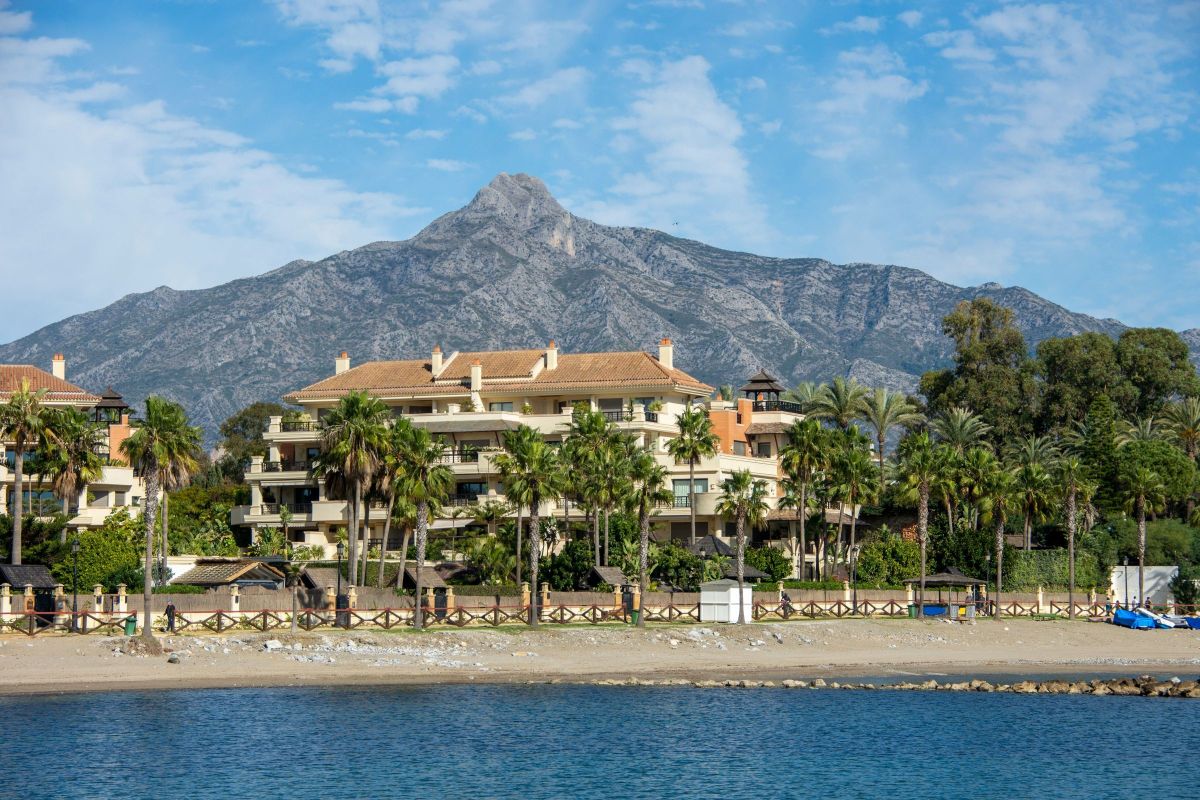
Marbella sits roughly in the middle of the Costa del Sol — 60 km from Málaga, 30 km from Gibraltar direction. The Golden Mile (between Marbella town and Puerto Banús) has the highest concentration of international five-star hotels on the Spanish coast, several of which American visitors will recognise from global hotel groups. English is universally spoken. The beach is excellent. And the day trip access is exceptional — Ronda is 65 km (1 hour), Gibraltar is 90 km (1h 15).
Málaga city
For American visitors who want more city culture — the Picasso Museum (Picasso was born here), a genuinely good restaurant scene in the old town, the Alcazaba (Moorish fortress), and a more local Spanish atmosphere than Marbella. Slightly cheaper. Better positioned for eastern day trips (Nerja, Frigiliana). 60 km from Marbella.
Practical Differences from Home
Meal times
The biggest adjustment for Americans. Spain eats on a different schedule:
- Breakfast: 8–10 AM — coffee and a pastry, not a full meal
- Lunch: 2–4 PM — the main meal of the day. Many restaurants don’t serve lunch before 1:30 PM.
- Dinner: 9–11 PM — eating before 8:30 PM means eating before Spaniards have arrived
- Tapas: Throughout the day in bars — not a meal, a snack. Order multiple rounds.
If you try to eat dinner at 6 PM you’ll find empty restaurants and staff who look at you sympathetically. Adjust to Spanish timing and you’ll eat better.
Tipping
Not structured the way it is in the US. Spanish service staff earn a living wage — they’re not relying on tips to make rent. Rounding up the bill (leaving €2–3 on a €25 meal) is perfectly normal and appreciated. 10% at a nicer restaurant for good service is generous. 20% US-style tipping is not expected and not necessary. For private tours: tipping your guide is appreciated — €50–100 for a full day if you feel the service deserved it.
Credit cards
Widely accepted everywhere in Marbella. Small tapas bars and market stalls may be cash-only. Notify your bank before travelling — Spanish chip-and-PIN sometimes triggers fraud alerts on US cards. Visa and Mastercard work everywhere. American Express is accepted at larger establishments but not universal.
Currency
Euros. The dollar/euro rate fluctuates — check XE.com for the current rate. As of 2025–2026 the rate has generally been around 1.05–1.10 USD per EUR. Airport exchange desks have the worst rates — use your bank card at any ATM.
Driving
Spain drives on the right, same as the US. Spanish roads are generally excellent — the highway network (autopistas and autovías) is modern and well-maintained. Speed limits are in km/h (110 km/h = 68 mph on motorways, 50 km/h = 31 mph in towns). Rental cars in Spain are predominantly manual transmission — if you need automatic, specify this and expect to pay a premium. Book ahead; automatic rentals have limited availability.
Electricity
220V, European two-pin plugs. US devices need a plug adapter (cheap, buy one before you go) and most modern electronics (laptops, phones, cameras) handle the voltage automatically. Hair dryers and electric shavers may need a voltage converter.
Safety
The Costa del Sol is genuinely safe for tourists. The main concerns are the same as any European beach destination: pickpocketing in crowded tourist areas (keep bags closed and phones in pockets in the old town and on busy promenades), and standard beach precautions (don’t leave valuables unattended). Violent crime directed at tourists is extremely rare. The US Department of State rates Spain as “Level 1: Exercise Normal Precautions” — the lowest advisory level.
The Historical Context Americans Should Know
Most Americans arrive in Andalusia knowing about the beaches and not much else. Here’s the 60-second history that makes everything you see more interesting:
The Romans were here first — they built the theatre in Málaga in the 1st century BC. Then the Visigoths. Then, in 711 AD, Moorish forces crossed from Morocco and took most of the Iberian Peninsula in under 10 years. For the next 700 years, Andalusia (from the Arabic Al-Andalus) was the most sophisticated civilisation in the western world — when most of Europe was in the Dark Ages, Córdoba had 600 mosques, 80 libraries, running water, and a population of half a million.
The Reconquista — the Christian re-conquest — took 700 years. Granada, the last Moorish kingdom, fell in 1492. The same year Columbus sailed west. The same year the Jews were expelled from Spain. All three events in the same year.
What you see on a day trip to Ronda, Granada, or Córdoba is the physical remnant of that 700-year overlap — mosques converted into churches, Moorish palaces with Christian additions, Arab baths next to medieval squares. The architectural palimpsest of three civilisations in the same buildings.
This is what makes Andalusia different from any other beach destination.
Best Experiences for American Visitors
🏛️ Ronda — The Most Photogenic Town in Spain
65 km from Marbella · 1 hour · Private tour from €600/group
For American visitors who’ve seen photographs of Andalusia and want the real thing — Ronda is it. The Puente Nuevo bridge over the 98-metre gorge, the whitewashed old town, the oldest bullring in Spain. It looks exactly like the photographs, and the photographs don’t capture the scale of the gorge.
The Casa del Rey Moro water mine — 200+ steps carved into the cliff inside the gorge, built in the 14th century — is specifically the kind of experience that American visitors respond to. The siege engineering backstory, the physical descent into the cliff, the sense of being inside something genuinely medieval. Budget 45 minutes and don’t skip it.
→ Book Private Ronda Day Trip · from €600 for 2 people
🪨 Gibraltar — A Different Country in Half a Day
90 km from Marbella · 1h 15 · Private tour from €890/group · Passport required
Gibraltar is the most unusual day trip from the Costa del Sol — British territory on the southern tip of Spain, 14 km from Africa, with 300 wild monkeys living on a 426-metre rock. The whole experience (crossing from Spain into the UK via a passport checkpoint, walking across an airport runway, riding a cable car to the top of a limestone monolith) is unlike anything on the American tourist trail in Europe.
American visitors specifically tend to love the Siege Tunnels — 18th-century military engineering where British soldiers carved artillery emplacements into the rock face during the 1779–1783 Spanish siege. The military history and engineering scale is exactly the kind of thing that plays well with American visitors who’ve been to places like Gettysburg or Yorktown.
Bring your US passport — full UK border control at the land crossing.
→ Book Private Gibraltar Day Trip · from €890 for 2 people
🏰 Granada & the Alhambra — The Crown Jewel
185 km from Marbella · 2 hours · Private tour from €800/group · Tickets included
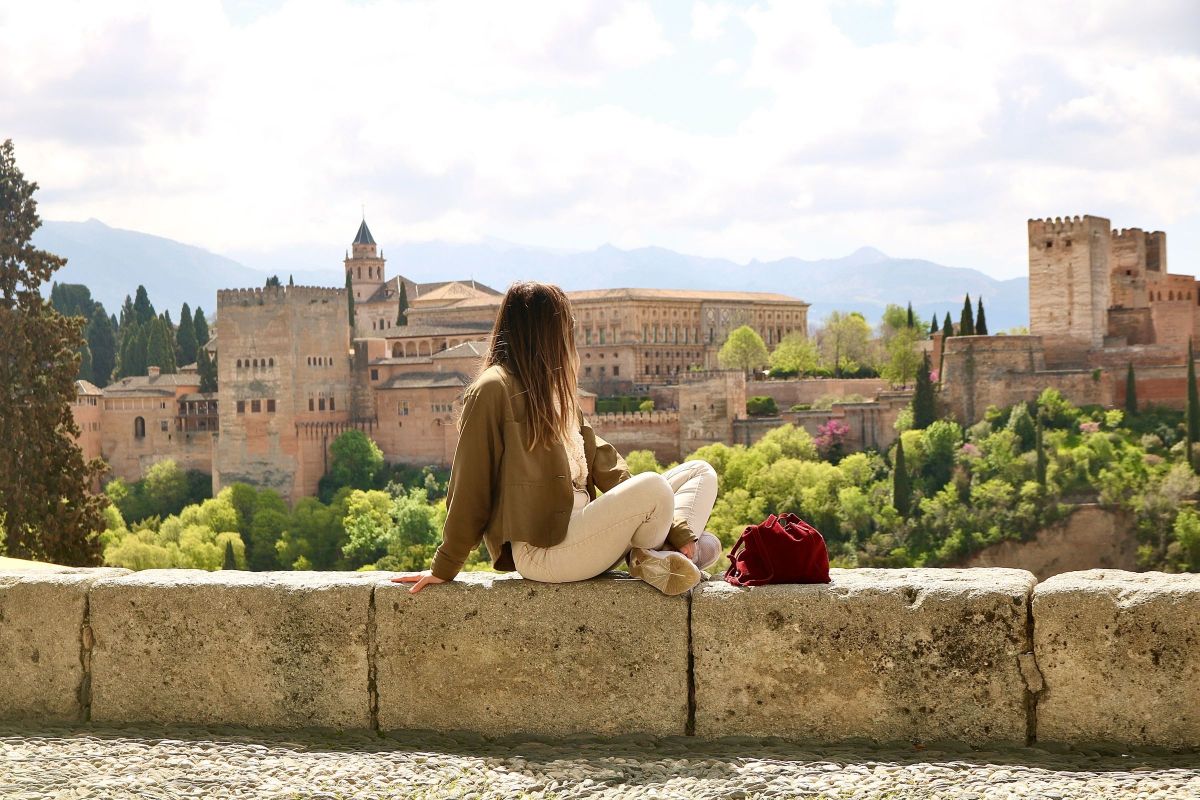
For the Alhambra specifically — American visitors consistently say it was the most impressive building they’ve seen in Europe, including the Vatican and the Eiffel Tower. The Nasrid Palaces were built by the last Moorish dynasty between 1238 and 1492 with no European architectural equivalent: carved plasterwork so intricate the mathematical patterns weren’t fully decoded by western scholars until the 20th century, fountains fed by an aqueduct from the Sierra Nevada, gardens that remain functional 600 years later.
Washington Irving visited in 1829, moved into the Alhambra, and wrote Tales of the Alhambra — the book that introduced the palace to the English-speaking world. Americans have been visiting ever since.
Book Alhambra tickets 2–3 months ahead in high season. Our private tour includes them from our operator allocation.
→ Book Private Granada & Alhambra Tour · from €800 for 2 people · tickets included

What Americans Typically Get Wrong
“We’ll just rent a car and figure it out”
Rental cars in Spain default to manual transmission. If you haven’t driven manual recently (or ever), book an automatic well in advance and expect to pay significantly more. Parking in Ronda, Frigiliana, and the old towns of most Andalusian villages is limited and often confusing. A private tour eliminates the car/parking problem entirely — your driver knows exactly where to park, or doesn’t need to park at all.
Eating at American hours
The 6 PM dinner mentioned above. The bigger issue is lunch — Americans often eat a quick sandwich at 12:30 and are confused when Spanish restaurants are closed until 1:30 PM. Adjust to local timing: proper lunch at 2 PM is one of the better experiences Spain offers, and eating at that time means eating with locals rather than with other tourists.
Underestimating how much there is to do inland
The most common regret American visitors express: “We spent all our time on the beach and didn’t see Ronda / the Alhambra / the white villages.” The coast is beautiful. The interior is extraordinary. Budget at least two day trips in any week-long stay.
Booking day trips through hotel concierges at a premium
Hotel concierges add a markup to tour bookings — usually 15–25%. Book directly with the tour operator (costaexcursions.es) and pay the same price regardless of what your hotel concierge says about “their recommended operator.” We work with hotel concierge teams throughout the Costa del Sol, but direct bookings save the markup.
Suggested 7-Day Itinerary for American Visitors
| Day 1 | Arrive Marbella — recovery day, beach, old town dinner |
| Day 2 | Ronda full day — gorge, bullring, water mine, long lunch |
| Day 3 | Marbella — Museo Ralli (free), old town, Puerto Banús evening |
| Day 4 | Granada & Alhambra — 9+ hour day, worth every hour |
| Day 5 | Gibraltar — monkeys, Rock tour, Main Street lunch |
| Day 6 | Nerja & Frigiliana — Nerja Caves, Balcón de Europa, white village |
| Day 7 | Mijas half-day — then beach afternoon, departure evening |
All day trips can be booked as private tours with door-to-door pickup from your Marbella hotel. Contact us for availability and pricing.
About Costa Excursions
Costa Excursions (costaexcursions.es) was founded in 2012 by Peter Fischer — born in Málaga, educated partly in the United States, returned to set up a private tour operation specifically designed for English-speaking visitors who want a more personal experience than a group coach excursion. American visitors make up a significant part of our clientele, and we understand what American travellers expect — punctuality, direct communication, English that doesn’t require translation, and honest recommendations rather than generic tourism.
Thomas Liedtke, who grew up in Málaga and studied in Germany, leads the majority of our tours and speaks English, German, and Spanish. 175+ five-star TripAdvisor reviews, 4.9★ average, licensed operator in Andalusia.
Reachable directly on WhatsApp at +34 651 026 027 — we respond within an hour during Spanish business hours (9 AM–7 PM CET, which is 3 AM–1 PM Eastern or midnight–10 AM Pacific).
Frequently Asked Questions
Is the Costa del Sol worth visiting for American tourists?
Yes — particularly for Americans who want European beach vacation combined with genuine history and culture. The Moorish architecture (Alhambra, Alcazaba, Ronda old town), the food culture, and the landscapes behind the coast are all genuinely distinctive. Marbella and the Costa del Sol are more accessible from the US than they may appear — a connection through Madrid or London gets you there in under 18 hours from the East Coast.
Do I need a visa to visit Spain from the US?
No — US citizens can visit Spain (and the Schengen Area) without a visa for up to 90 days within a 180-day period. Bring a valid US passport with at least 6 months’ validity beyond your planned return date. From 2025, the EU’s new ETIAS pre-travel authorisation is required — an online form similar to ESTA, approximately €7, registered at etias.com.
What is the best time of year for Americans to visit the Costa del Sol?
May, June, September, and October align well with American travel patterns — after spring break, before or after peak summer. These months have the best weather (warm sea, comfortable temperatures), manageable crowds, and the most availability for experiences like the Alhambra and Caminito del Rey. July and August are hot and crowded — fine if that’s when school holidays allow travel.
How much does a day trip from Marbella cost?
Costa Excursions private tour pricing per group: Mijas €500, Caminito del Rey €450, Ronda €600, Nerja & Frigiliana €600, Ronda Winery €600, Granada & Alhambra €800 (tickets included), Gibraltar €890. At 4 people — a common American family or friend group size — these work out to €112–222 per person, comparable to or less than a premium small-group tour with none of the scheduling constraints.
Is English widely spoken on the Costa del Sol?
In Marbella and the main tourist areas: yes, very widely. The Costa del Sol has been a British holiday destination since the 1960s and English is effectively a second official language in Marbella. In smaller inland villages (Ronda, Frigiliana, Setenil), English is less universal but sufficient for tourist interactions. Your private tour guide speaks fluent English throughout.
Is the Costa del Sol safe for American tourists?
Yes — the US Department of State rates Spain at Level 1 (Exercise Normal Precautions), the lowest advisory level. The Costa del Sol specifically is a safe, well-managed tourist destination. Standard precautions apply: keep bags closed in crowded areas, don’t leave valuables on the beach, be aware of your surroundings in busy markets. Violent crime directed at tourists is extremely rare.
Planning Your Costa del Sol Trip from the US
We work with American visitors regularly and understand what makes the difference between a good trip and a great one. Direct communication in English, honest recommendations, punctual pickups, and no surprises. WhatsApp works from the US — message us at +34 651 026 027 with your travel dates and where you’re staying and we’ll suggest the right day trips for your group. Or browse our complete tour list →. We respond within an hour during Spanish business hours.