Short answer: yes — Ronda is absolutely worth visiting. After more than 12 years running private tours from Malaga and Marbella, we’ve taken thousands of guests to Ronda, and the feedback is near-unanimous: it’s the highlight of most people’s trip to the Costa del Sol.
But “worth it” depends on what you’re after. Here’s an honest take from a local tour operator so you can decide for yourself.
Book a Private Day Trip to Ronda
Table of Contents
Why Ronda is Worth Visiting
1. The setting is unlike anywhere else in Spain
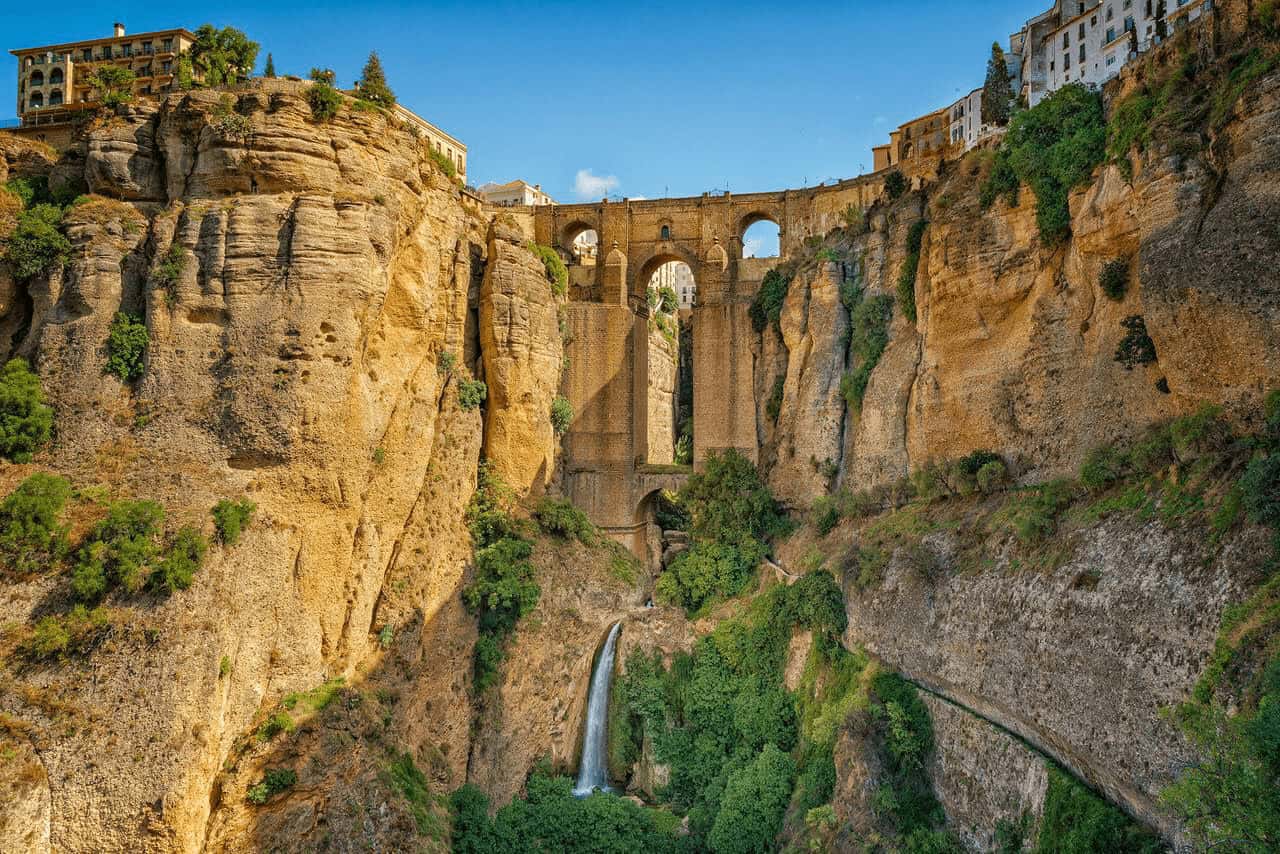
Ronda sits at 800 metres above sea level on a cliff split in two by the 100-metre-deep El Tajo gorge. The Puente Nuevo bridge spanning it is one of the most photographed spots in Spain — and the view straight down from the Balcón del Coño is genuinely vertigo-inducing. No other Andalusian town gives you this kind of drama in such a compact setting.
2. You’ll find 2,000 years of history in one walkable old town
Romans, Moors, 18th-century architects and the birth of modern bullfighting — all layered into streets you can cover in an afternoon. The Real Maestranza is the oldest bullring in Spain still in use, and the 10th-century Arab Baths are among the best-preserved on the entire Iberian peninsula. Writers from Hemingway to Orson Welles were obsessed with this place for a reason.
3. The food and wine punch above their weight
Ronda is mountain Andalusia — hearty cooking, proper rabo de toro (braised oxtail), jabalí (wild boar stew), and some of the best local goat cheeses in Spain. It’s also one of Spain’s most exciting emerging wine regions, with more than 20 bodegas producing high-altitude reds in the DO Sierras de Málaga. Few visitors know this — which means the wineries are still refreshingly uncrowded.
4. It’s close enough for a day trip
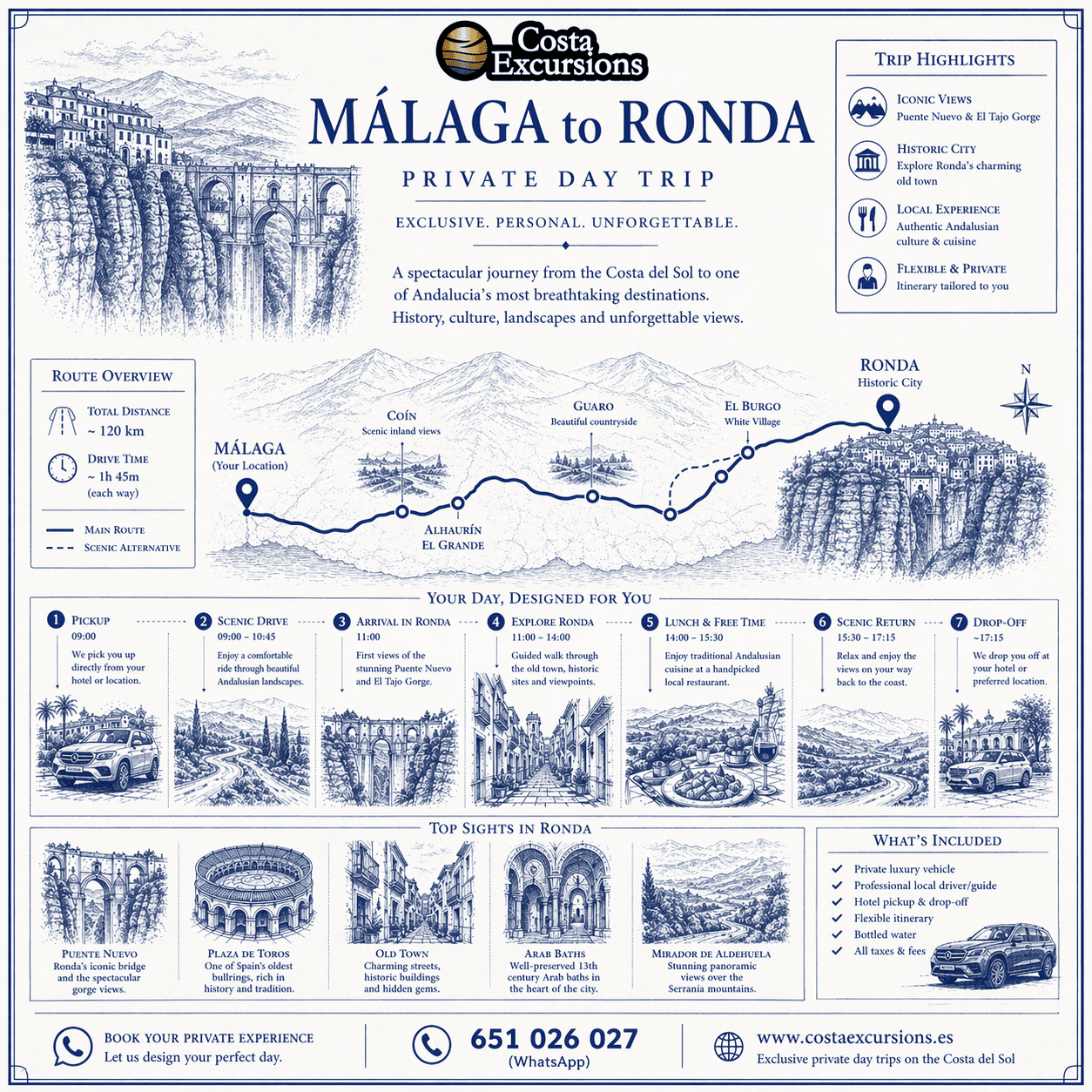
Ronda is 100 km / 90 minutes from Malaga, or about 1 hour from Marbella. You don’t have to sacrifice a full day of beach time to see it. For the full itinerary, see our complete day trip from Malaga to Ronda guide.
Who Should Skip Ronda
We’d rather be honest than oversell. Ronda is probably not the right choice for you if:
- You came to Spain purely for the beach and don’t want 3 hours of round-trip drive time
- You have serious mobility issues — the old town is steep, cobbled, and mostly inaccessible by car
- You’re looking for nightlife or a big-city vibe (Ronda is quiet after 22:00)
- You visit in mid-July or August and don’t handle heat well — temperatures regularly hit 38–40°C
- You’d rather spend a relaxed day somewhere with a slower pace — in that case, Mijas or Nerja & Frigiliana might suit you better
Is Ronda Worth Visiting as a Day Trip, or Should You Stay Overnight?
For 90% of visitors, a day trip is enough. Budget 5–6 hours on the ground and you’ll comfortably see Puente Nuevo, the bullring, the old Moorish quarter, and have a proper long lunch.
Staying overnight is worth it if:
- You want Ronda after the coach tours leave — the town empties out after 17:00 and is genuinely magical at sunset
- You’re planning to visit 2–3 wineries (tasting fatigue is real, and you need a driver anyway)
- You’re combining it with Setenil de las Bodegas or other white villages over two days
- You want to catch the Feria de Pedro Romero in early September
Is Ronda Worth Visiting in Winter?
Yes — and arguably better than summer. From November to March the weather is cool (10–17°C during the day), rarely rainy, and the town is beautifully empty. You’ll have the Puente Nuevo viewpoints almost to yourself and prices on hotels drop sharply. Bring a jacket — at 800 m altitude it can get chilly in the evenings.
Is Ronda Worth Visiting with Kids?
Yes, but with two caveats. Kids love the Mina de Agua (the 200-step staircase at Casa del Rey Moro that leads down to the river) and the dramatic bridge views. But the old town’s cobbles are tough for strollers, and there’s not much specifically kid-oriented. Best for children 6+ who can handle a fair bit of walking.
The Verdict
If you like dramatic landscapes, layered history and real Andalusian food, Ronda delivers all three in a town you can walk end to end in an hour. For most visitors on the Costa del Sol, it’s genuinely the highlight of the week.
The only real question is whether you do it yourself or with a local guide. For a full itinerary, transport options and practical tips, read our complete day trip from Malaga to Ronda guide.
Or, if you’d rather skip the driving, parking and logistics entirely, we run a private door-to-door day tour from Malaga and Marbella — pickup at your hotel or cruise terminal, local licensed guide, flexible itinerary, home in time for dinner.
Book a Private Day Trip to Ronda
Frequently Asked Questions
How long do you need in Ronda?
For the main sights (Puente Nuevo, the bullring, the old town and lunch), budget 5–6 hours on the ground. If you’re adding a winery or the Arab Baths, make it a full day. To really dig in — multiple wineries, Setenil de las Bodegas, proper dinner — stay overnight.
Is Ronda better than Seville or Granada?
It’s different, not better. Granada has the Alhambra — unmatched for Moorish architecture. Seville has the grand-city feel, flamenco and Semana Santa. Ronda wins on dramatic setting and being manageable in a single day from the coast. Most of our guests do Ronda and Granada on separate days.
Is Ronda safe for tourists?
Very. It’s a small town of around 35,000 people with extremely low crime. Normal precautions around the main viewpoints apply — mostly about not dropping your phone into the gorge.
Do I need to book anything in advance?
The bullring and Arab Baths don’t require advance tickets outside peak summer weekends. Restaurants with gorge views (Casa Don Miguel, Pedro Romero) are worth booking ahead. If you want a private guided tour, we recommend booking at least 1–2 weeks ahead in high season.
What’s the best month to visit Ronda?
May, September and October are the sweet spot — warm days, cool evenings, clear skies and manageable crowds. April is lovely but can be rainy. Avoid mid-July through August if you can — extreme heat and the highest coach-tour volume of the year.
Book Your Private Day Trip to Ronda
Discovering Ronda’s Historic Streets
As you stroll through Ronda’s old town, take the time to explore its charming streets and immerse yourself in its rich history. Here are some highlights to look out for:
- Puente Nuevo: This iconic bridge, which translates to “New Bridge,” is an architectural marvel that spans the El Tajo gorge. Don’t forget to snap some photos from the viewpoints nearby!
- Plaza de España: Visit this lively square where locals gather to socialize and enjoy tapas. It’s a great spot to people-watch and soak up the vibrant atmosphere.
- Casa del Rey Moro: Explore the fascinating Moorish palace that dates back to the 14th century. The intricate architecture and lush gardens are sure to impress.

Ronda bridge
Uncovering Ronda’s Hidden Gems
While popular attractions are a must-see, don’t overlook the lesser-known treasures tucked away in Ronda’s corners. Here are some hidden gems worth seeking out:
- Museo Lara: Delve into Ronda’s past at this quirky museum showcasing an eclectic collection of artifacts, including vintage cameras and musical instruments.
- Baños Árabes: Step back in time at these well-preserved Arab baths dating back to the 13th century. The underground chambers offer a glimpse into Islamic bathing rituals.
- Cueva de la Pileta: Venture outside Ronda to discover this prehistoric cave adorned with ancient rock paintings—an UNESCO World Heritage site.
Experiencing Local Culture
To truly understand Ronda’s identity, immerse yourself in its vibrant culture by experiencing local traditions firsthand:
- Flamenco Shows: Catch an authentic flamenco performance at one of Ronda’s intimate venues. Let the passionate music and dance transport you into Andalusia’s soul.
- Gastronomic Delights: Indulge your taste buds with traditional dishes like oxtail stew or gazpacho paired with regional wines such as Málaga sweet wine.
- Festivals: If your visit coincides with any festivities (such as Feria de Pedro Romero), join in the celebrations filled with colorful parades, bullfights, and lively street parties.
The combination of Ronda old town’s historic charm with access to pristine natural surroundings makes it a destination appealing both for cultural enthusiasts and outdoor adventurers.

Gastronomy Delights: Tapas Bars with Stunning Views & Wine Tasting Experiences in Ronda
Ronda cuisine invites you to explore authentic Andalusian flavors set against the dramatic backdrop of El Tajo gorge. The town offers numerous tapas bars with views overlooking El Tajo gorge, where the dining experience combines delicious food and breathtaking scenery. You can discover the best of these locations in our guide on the best places in Ronda for spectacular views.
Traditional dishes to try
- Jamón ibérico: Cured Iberian ham, a local specialty celebrated for its rich, nutty flavor.
- Gazpacho: A refreshing cold tomato soup perfect for warm Andalusian days.
- Fried fish: Crispy and flavorful, often served fresh from nearby coastal waters.
These dishes are best enjoyed on terraces that provide panoramic views of the gorge and Puente Nuevo bridge. Sitting at these vantage points, you engage all your senses—taste, sight, and even the gentle mountain breeze.
Local tapas bars range from rustic taverns to more modern establishments, each offering unique menus infused with regional ingredients. For a comprehensive list of some of the best restaurants and tapas in Ronda, you can refer to our detailed guide.
Ronda’s surrounding vineyards are gaining recognition for their high-quality wines. The native grape variety Tintilla de Rota produces deep red wines noted for their complexity and smoothness. Many wineries around Ronda welcome visitors for tours that explain the winemaking process—from grape harvesting to fermentation. These experiences often include private wine and tapas day tours through Ronda’s vineyards, allowing you to savor small plates paired with locally produced wines or sherries.
Wine tasting sessions typically include samples accompanied by regional cheeses such as Manchego or cured meats like chorizo. This pairing highlights the balance between Ronda’s terroir and culinary traditions. Visiting these vineyards offers insight into how geography impacts wine character, especially given Ronda’s mountainous terrain and varied microclimates.
Some notable wineries also feature tasting rooms with views over lush vineyards or rolling hillsides, providing a serene setting to unwind after exploring the historic town.
Experiencing tapas bars alongside vineyard tours grants a comprehensive taste of Ronda cuisine—one rooted in centuries-old traditions but evolving through contemporary interpretations. This blend of gastronomy and landscape makes dining here a memorable part of your visit. For more insights into exploring this beautiful town, check out our ultimate guide to Ronda.

Accessibility Tips: Getting to Ronda Easily via Public Transport or Car Rentals
Ronda’s location atop a mountain plateau might suggest it’s difficult to reach, but several practical transportation options make visiting straightforward. Whether you prefer public transport or driving yourself, getting to Ronda is manageable from major Andalusian cities.
Bus Connections
Buses provide an economical and direct way to reach Ronda from key nearby cities:
- From Malaga: Regular buses run between Malaga and Ronda, operated by ALSA and other companies. The journey typically lasts around 2 hours. Buses depart from Malaga’s main bus station (Estación de Autobuses de Málaga) and arrive at Ronda’s central bus terminal.
- From Marbella: Frequent connections link Marbella with Ronda, convenient for those staying on the Costa del Sol. Travel time averages about 1.5 hours. This route is popular among tourists wanting a mountain escape from the coastal resorts. A day trip from Marbella to Ronda is highly recommended for its scenic views and unique experiences.
- From Seville: Although farther away (approximately 2.5 to 3 hours), buses from Seville arrive in Ronda multiple times daily. This option suits travelers combining visits to Andalusia’s capital with a stop in this historic town.
Buses offer flexibility with multiple departures throughout the day and affordable ticket prices. You can buy tickets online in advance or directly at the bus stations.
Train Access
Ronda benefits from a scenic train connection that links it primarily to Malaga:
- Malaga to Ronda by Train: The train ride takes roughly 2 hours, traveling through beautiful countryside and mountainous terrain. Renfe operates this route with comfortable regional trains departing from Malaga María Zambrano station.
The train station in Ronda is located near the newer part of town, making it easy to start exploring immediately upon arrival. Trains are less frequent than buses but provide a more relaxed travel experience without traffic concerns.
Renting a Car
For greater freedom and exploration beyond Ronda itself, renting a car is highly recommended:
- Driving Routes: From Malaga or Marbella, drive north via the A-357 then A-374 highways heading into the mountains. The roads are well maintained but include winding sections reflecting the rugged terrain.
- Advantages of Car Rental: You control your schedule, can visit nearby white villages like Genalguacil or Juzcar on your own timetable, and easily access hiking trails outside of the town center.
Parking within Ronda is available but limited in the old town area; choosing accommodation with parking or using designated lots helps avoid stress.
Summary of Options
| Mode of Transport | Departure Points | Approximate Duration | Highlights |
| Bus | Malaga, Marbella, Seville | 1.5 – 3 hours | Frequent service, affordable fares |
| Train | Malaga | ~2 hours | Scenic journey, comfortable seats |
| Car Rental | Malaga, Marbella | ~1.5 hours | Flexibility for exploring surroundings |
These diverse transit choices allow you to tailor your trip according to preferences for convenience, budget, and adventure level when visiting Ronda’s captivating landscapes and historic sites.
Nearby Charming White Villages to Visit Alongside Ronda
Ronda’s appeal extends beyond its own dramatic cliffs and historic streets. The surrounding region boasts several charming white villages that complement your visit with unique cultural and artistic experiences. These villages offer a quieter, intimate look at Andalusian life and traditions, making them perfect day trips or detours.
Genalguacil: The Museum Village Near Ronda
Known as the Museum village near Ronda, Genalguacil stands out for its fusion of natural beauty and contemporary art. This small whitewashed village transforms into an open-air gallery where you can:
- Admire outdoor art installations created by artists from all over the world.
- Wander through narrow lanes featuring sculptures, murals, and creative expressions integrated with the village’s rustic architecture.
- Experience periodic art festivals that bring fresh exhibitions and cultural events to this quiet mountain town.
Genalguacil offers a peaceful atmosphere ideal for those interested in art combined with traditional Andalusian charm.
Juzcar: The Smurf Village
Juzcar brings a playful twist to the classic white village concept. Originally painted blue as part of a promotional event for The Smurfs movie franchise, this tiny village embraced its new look permanently. Highlights include:
- Bright blue houses that create a whimsical, family-friendly environment.
- Outdoor decorations inspired by the animated characters, making it especially attractive for visitors with children.
- A variety of local cafes and shops offering regional products amid the unusual backdrop.
The vibrant color scheme contrasts sharply with typical Andalusian villages, providing a unique photo opportunity and an unexpected stop on your itinerary.
Exploring these nearby villages adds depth to your travel experience when asking Is Ronda worth visiting? Their distinct personalities showcase different facets of Andalusia’s heritage—artistic innovation in Genalguacil and playful creativity in Juzcar—both easily accessible from Ronda’s central location.
When to Visit Ronda for a Less Crowded Experience?
Ronda attracts many visitors, especially during the summer months when temperatures soar. This season sees a significant influx of tourists drawn by the town’s dramatic landscapes and historic charm. However, the heat can be intense, often reaching uncomfortable levels for sightseeing or outdoor activities.
You might find a more pleasant experience by targeting these periods:
- Spring (April to May): Mild and comfortable temperatures ideal for exploring on foot, blossoming flora adds vibrant colors to the surrounding nature, fewer tourists than in peak summer providing a quieter atmosphere
- Autumn (September to October): Cool breezes make hiking in the Serranía de Ronda enjoyable, harvest season brings local festivals and fresh regional produce, reduced crowd density allows for relaxed visits to popular landmarks
Weekends tend to be busier regardless of the season because many locals return to Ronda from nearby cities. If your schedule allows, planning weekday visits can offer greater tranquility and easier access to attractions like Puente Nuevo or the Mondragón Palace.
Tips for avoiding crowds and heat:
- Start your day early to enjoy cooler mornings and softer light for photography
- Explore lesser-known paths around the gorge or venture into nearby natural parks
- Book accommodations that provide shaded terraces or pools to unwind after daytime excursions
Choosing the best time to visit Ronda depends on your preferences between weather comfort and crowd levels. Spring and autumn strike a balance, making them excellent choices for travelers who want serenity without sacrificing access to everything this unique mountain town offers.
Additionally, if you have an interest in wine, Ronda’s wineries are less crowded during these seasons, providing an excellent opportunity to explore the local wine culture without the hustle and bustle of peak tourist times.

Why Choose a Private Day Trip Option Instead?
Booking a private day trip in Ronda offers distinct advantages that elevate your travel experience beyond the typical group tour or solo exploration. Here’s why opting for a private guided tour can be the best choice:
1. Personalized Itinerary
You decide what matters most to you. Whether your passion lies in art history, architecture, gastronomy, or nature walks, the itinerary can be tailored precisely to your interests. This flexibility lets you spend more time at landmarks that fascinate you and skip those less appealing. For instance, you could explore photography spots in Ronda that are off the beaten path.
2. Flexible Timing
No pressure to stick to a strict schedule. If you want to linger longer at Puente Nuevo admiring the views or take an unhurried lunch break at a local tapas bar with panoramic vistas, a private tour accommodates it all without feeling rushed.
3. Expert Insight
A knowledgeable guide accompanies you throughout the day, providing rich context and stories behind Ronda’s historical sites and cultural nuances. This depth of understanding transforms sightseeing into an immersive journey rather than just ticking off attractions. A private tour also allows you to delve deeper into Ronda’s traditions, offering a unique perspective on its culture.
4. Comfort and Convenience
Private tours often include door-to-door transfers from your accommodation or meeting points, reducing hassle and maximizing your time enjoying the town. The smaller group size ensures personal attention and a relaxed pace.
5. Exclusive Access & Experiences
Some private tours offer special opportunities such as visits to lesser-known locations, private tastings at vineyards around Ronda, or entry to places not typically open on standard tours. For instance, the ultimate guide to the all-inclusive wine tour experience in Ronda can provide insights into exclusive vineyard experiences.
Choosing this option means every moment of your visit is crafted around your preferences with expert support enhancing your appreciation of Ronda’s unique charm. This approach reveals layers of history, culture, and natural beauty often missed when exploring independently or in larger groups.
If you’re staying in Malaga, consider taking a day trip from Malaga to Ronda for an unforgettable experience.
Is Ronda Worth Visiting?
Ronda stands out as a destination that offers compelling reasons why it should be included in your travel itinerary. Its unique geography—a mountain plateau dramatically split by the El Tajo gorge—creates breathtaking vistas that make every corner a photographic opportunity. Whether you’re an avid photographer or a casual traveler, the views from Puente Nuevo and the surrounding cliffs are unforgettable.
The town’s rich cultural heritage is visible everywhere. Historic sites like the 18th-century Puente Nuevo, Mondragón Palace, and ancient Arab Baths provide deep insights into Ronda’s Moorish and Spanish past. Museums such as Museo Lara add layers of intrigue with their diverse collections, inviting you to explore beyond surface-level tourism.
Nature lovers find plenty to enjoy as well. The nearby Serranía de Ronda mountain range and natural parks offer scenic hiking trails suitable for all levels, blending adventure with stunning landscapes. This balance between history and nature suits travelers seeking variety in one trip.
Culinary delights await discovery too. Tapas bars with terraces overlooking the gorge serve traditional Andalusian dishes like jamón ibérico and gazpacho, enhanced by local wines from nearby vineyards specializing in the native Tintilla de Rota grape. Dining here becomes an experience combining flavor with awe-inspiring panoramas.
For those interested in delving deeper into Ronda’s wine culture, consider taking a day trip to a winery in Ronda. This excursion allows you to immerse yourself in the local viticulture, tasting exquisite wines while enjoying the stunning vineyard landscapes.
Is Ronda worth visiting? For travelers wanting something beyond typical tourist spots, it delivers a mix of:
- Dramatic geography unique in Spain
- Rich historical and architectural heritage
- Picturesque old town charm with artisan shops
- Outdoor activities set in beautiful natural surroundings
- Authentic Andalusian gastronomy paired with excellent wines
Every visit reveals another layer of this fascinating town. Planning your trip today means you can tailor the experience to your interests—whether history, nature, food, or culture—and create memories that last far longer than a single snapshot.
FAQs (Frequently Asked Questions)
Is Ronda worth visiting for travelers interested in history and culture?
Absolutely! Ronda boasts a rich historical and cultural heritage, including Moorish influences that have shaped its unique architecture. Key landmarks like the 18th-century Puente Nuevo, 14th-century Mondragón Palace, Arab Baths, and Casa del Rey Moro offer deep insights into its fascinating past.
What are the must-see iconic landmarks and attractions in Ronda?
Visitors should not miss the Puente Nuevo bridge connecting the old and new towns, the historic Plaza de Toros bullring, Mondragón Palace museum with its beautiful gardens, well-preserved Arab Baths showcasing Islamic architecture, and Museo Lara featuring eclectic collections from ancient artifacts to contemporary art.
How can visitors explore the picturesque Old Town and natural beauty around Ronda?
Explore Ronda’s charming Old Town with its narrow cobbled streets, whitewashed houses adorned with colorful flower pots, lively plazas with fountains and statues, and artisan shops offering traditional crafts. Outdoor enthusiasts can enjoy hiking trails in the surrounding Serranía de Ronda mountain range suitable for all skill levels.
What culinary experiences does Ronda offer to food lovers?
Ronda offers delightful Andalusian cuisine at local tapas bars overlooking the stunning El Tajo gorge. You can savor dishes like jamón ibérico, gazpacho, and fried fish while enjoying breathtaking views. Additionally, nearby vineyards produce high-quality wines such as those made from Tintilla de Rota grapes, with opportunities for wine tasting paired with regional cheeses and cured meats.
What are the best transportation options to get to Ronda?
Ronda is easily accessible by public transport with regular buses from major cities like Marbella, Malaga, and Seville. There are also convenient train connections from Malaga that provide scenic access to this mountain town. Renting a car is another flexible option for exploring Ronda and nearby villages at your own pace.
When is the ideal time to visit Ronda for a less crowded experience?
The best times to visit Ronda are during spring (April-May) or autumn (September-October) when weather conditions are mild and tourist crowds are smaller. Avoiding weekends can also help travelers seeking tranquility as locals tend to visit their hometowns then. Summer months bring higher temperatures and more tourists but offer vibrant atmosphere if you prefer livelier visits.