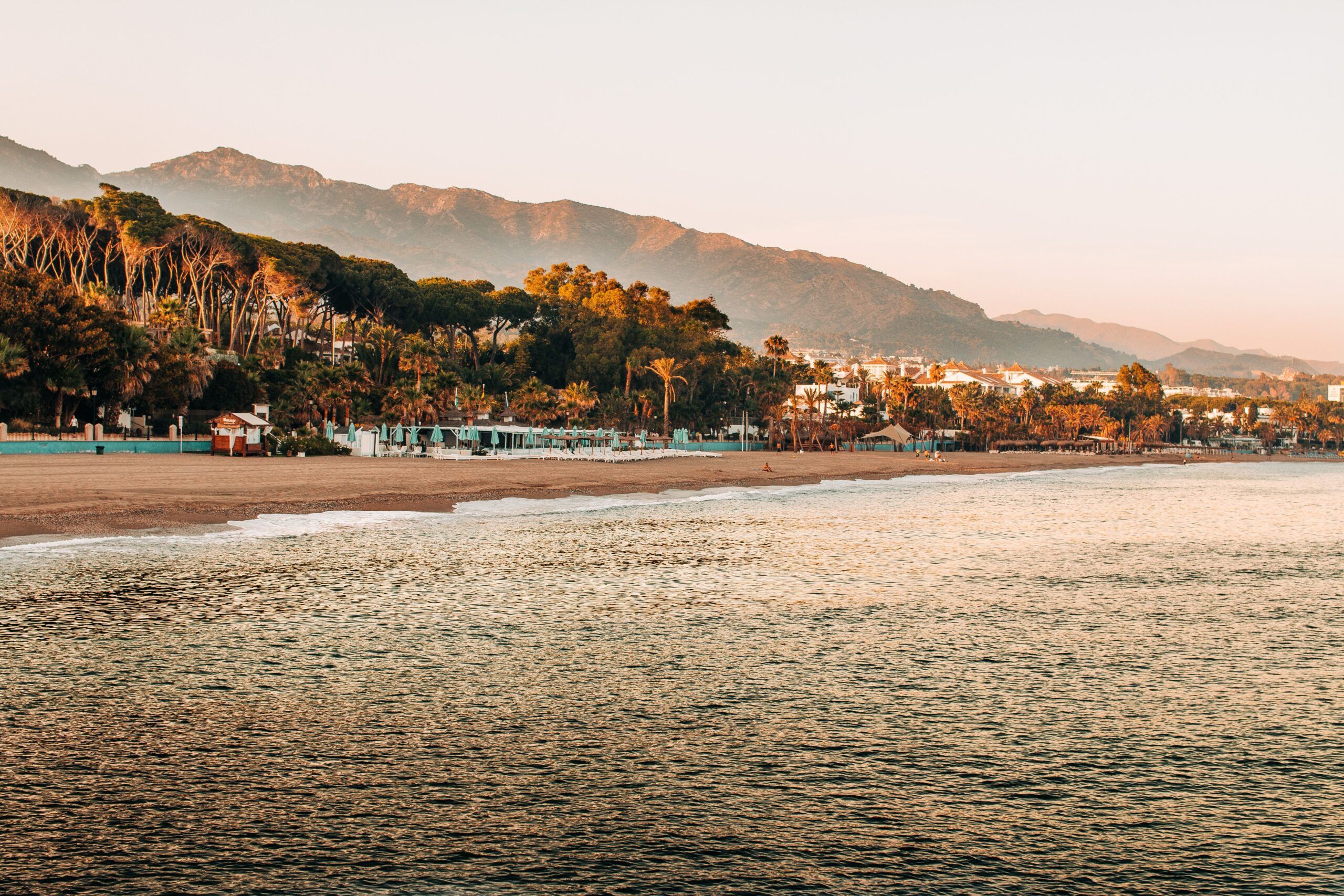
Both are Mediterranean coastlines with dramatic scenery, good food, and a reputation for luxury. That’s roughly where the similarity ends. The Costa del Sol and the Amalfi Coast solve for different things — one is built around ease of movement and day-trip access to genuinely major historical sites, the other around cliffside drama in a compact stretch of coastline with famously difficult roads. Here’s an honest comparison, not a sales pitch for either.
🎯 Key Takeaways
- Getting around: Costa del Sol — easy, private car, dual carriageways. Amalfi Coast — a single narrow coastal road (SS163), frequent summer gridlock, many visitors rely on ferries or buses instead of driving themselves.
- Day trip access: Costa del Sol wins decisively — the Alhambra, Ronda, and Gibraltar are all within 1–2 hours. Amalfi’s own day trips (Pompeii, Capri) involve ferries or the same congested road.
- Cost: Amalfi Coast runs noticeably more expensive — top hotels commonly £700–1,400+/night in peak season, and restaurant and transport prices follow. Costa del Sol offers a wider range, including genuine luxury at lower price points.
- Crowding: Amalfi’s narrow towns and single road create serious summer bottlenecks. The Costa del Sol’s wider infrastructure absorbs crowds more easily, though popular spots still get busy in August.
- Historical depth: Costa del Sol has the edge — 700 years of Moorish civilization, the Alhambra, Roman ruins, all within day-trip range. Amalfi’s history is real but more contained to the coastline itself.
Both show up on the same “best Mediterranean coastline” lists, both attract the same broad type of traveller, and both get compared to each other constantly by people trying to choose between a Spain trip and an Italy trip. They’re not really substitutes for each other, though — the experience of a week on each coast is quite different, and which one is “better” depends heavily on what you actually want from the week.
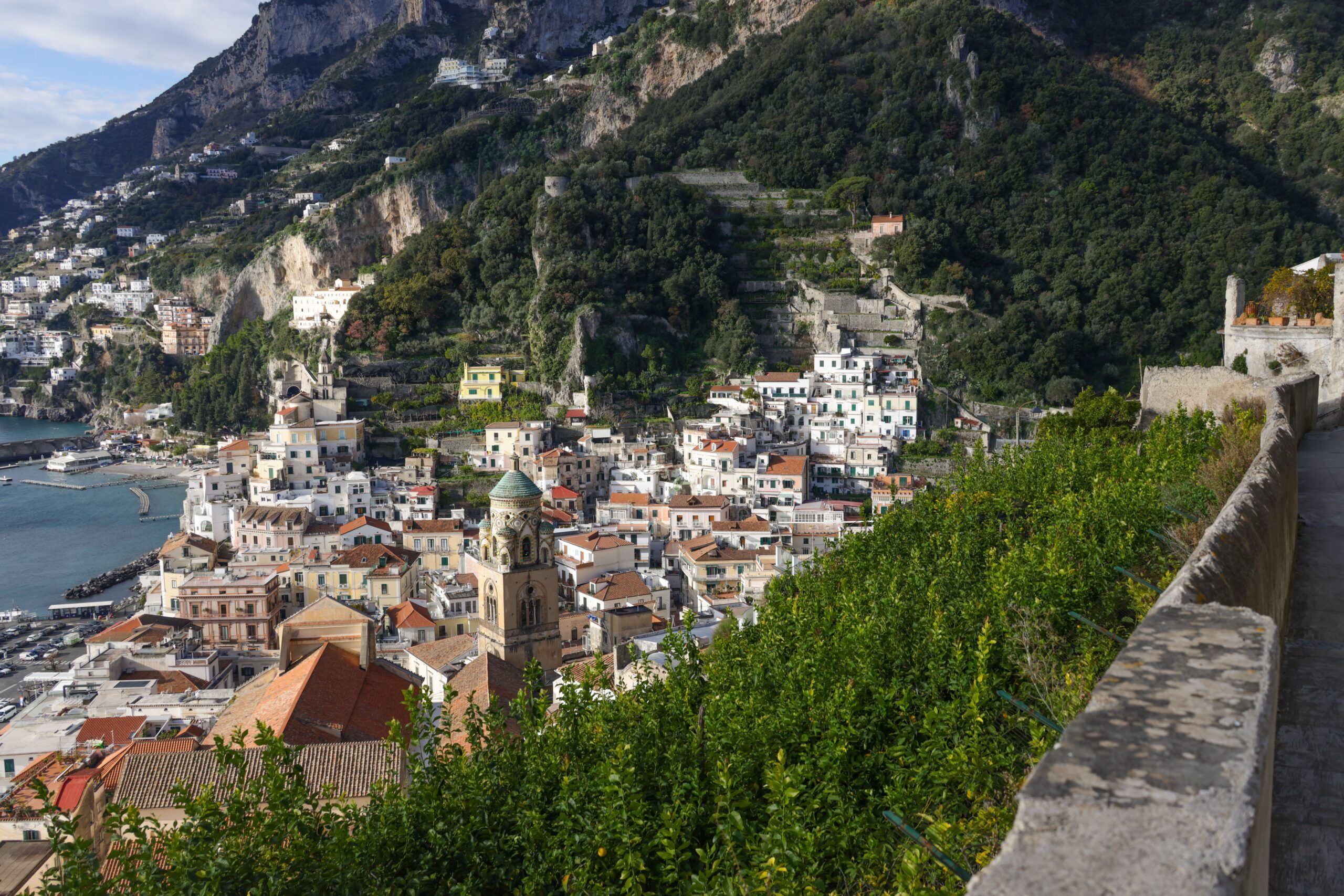
Table of Contents
Getting Around — The Biggest Practical Difference
This is where the two coasts diverge most sharply, and it’s worth understanding before anything else.
The Amalfi Coast is served by a single coastal road, the SS163, built into cliffs with hairpin turns, one lane in each direction for much of its length, and no realistic alternative route. In peak season (June–September), this road regularly gridlocks — a drive that should take 40 minutes can take two hours or more on a busy August afternoon. Many visitors avoid driving themselves entirely, relying instead on the SITA bus network, private drivers, or the passenger ferries that connect Positano, Amalfi, and Sorrento by sea — often the fastest option between towns in summer.
The Costa del Sol, by contrast, is served by the AP-7 and A-7, modern dual-carriageway roads running the length of the coast, plus a well-developed inland motorway network reaching Ronda, Granada, and beyond. Driving yourself, or being driven, is straightforward. Traffic exists — Marbella and Puerto Banús get congested on summer weekends — but nothing resembling the structural bottleneck of Amalfi’s single cliff road.
Practical implication: if the idea of relying on ferries and buses, or navigating hairpin turns in heavy traffic, doesn’t appeal, the Costa del Sol will be the less stressful week. If you specifically want the dramatic, slightly white-knuckle cliff-road experience as part of the trip, that’s a genuine part of Amalfi’s character.
Day Trip Access — Costa del Sol’s Clearest Advantage
This is the area where the two coasts differ most in substance, not just convenience.
| From Costa del Sol (Marbella/Málaga) | Distance/time |
|---|---|
| Ronda — 98m gorge, oldest bullring in Spain | 65–100 km / 1–1.3 hrs |
| Granada & the Alhambra — Nasrid Palaces, Moorish architecture | 158–185 km / 1.5–2 hrs |
| Gibraltar — British territory, wild monkeys, views to Africa | 90–130 km / 1.25–1.75 hrs |
| Caminito del Rey — cliffside gorge boardwalk | 60–90 km / 1–1.3 hrs |
| From Amalfi Coast (Positano/Sorrento) | Distance/time |
|---|---|
| Pompeii — Roman ruins | ~40 km / 1–1.5 hrs (traffic-dependent) |
| Capri — island, Blue Grotto | Ferry, ~30–50 min from Sorrento |
| Naples — city, museums, pizza | ~50 km / 1–1.5 hrs (traffic-dependent) |
| Ravello — hilltop gardens | ~10–15 km, but slow mountain road |
Both offer worthwhile day trips. The difference is in scale and reliability: Costa del Sol’s day trips reach substantially larger, more historically significant destinations (a UNESCO World Heritage Nasrid palace complex, a British overseas territory, a 700-year-old Moorish town), and the road infrastructure means the stated drive time is close to the actual drive time. Amalfi’s day trips are shorter in distance but the single-road bottleneck means “40 km” can take considerably longer than the map suggests, particularly between June and September.
Cost — A Meaningful Gap
The Amalfi Coast has a well-earned reputation as one of the more expensive coastal destinations in Europe. Iconic clifftop hotels in Positano and Ravello commonly run 700–1,400€+ per night in peak season, and this pricing tends to pull restaurant, transport, and activity costs upward across the whole area — there are budget options, but they require more searching, and the region’s fame keeps demand (and prices) high.
The Costa del Sol has genuine luxury — five-star resorts on Marbella’s Golden Mile, Michelin-starred restaurants, private villa rentals — but at a wider range of price points, with high-quality options available below Amalfi’s typical entry point for comparable comfort. Private day tours follow the same pattern: a private full-day tour to Ronda from Marbella runs from roughly €600 per group (not per person) — a private driver for a comparable Amalfi day trip is typically priced substantially higher given the region’s overall cost structure and the driving conditions involved.
Crowding
Amalfi’s geography — narrow towns built into cliffs, one road connecting all of them — means crowding compounds. A cruise ship day, a bank holiday, or simply a sunny Saturday in July can turn Positano’s main street and the SS163 into a genuine bottleneck, with knock-on effects on ferries and buses running late.
The Costa del Sol’s flatter, more spread-out geography and wider road network absorb crowds more easily. Popular spots — Puerto Banús on a summer evening, the Alhambra ticket queue, Ronda’s Puente Nuevo viewpoint at midday — do get busy, but the crowding rarely creates the structural gridlock that Amalfi’s single road produces. Arriving early at any given site (a strategy that works well on both coasts) is more reliably effective on the Costa del Sol, since there’s no single chokepoint everyone else is also stuck in.
Historical Depth
This is a genuine point of difference rather than a simple win for either side, but it’s worth being specific about.
The Costa del Sol sits within day-trip range of some of the most significant historical sites in Europe: the Alhambra (Nasrid dynasty, 13th–14th century, UNESCO World Heritage), Ronda (Roman origins, Moorish old town, 18th-century bridge), and the Roman and Moorish layers of Málaga itself. This is the physical legacy of nearly 800 years of Moorish rule in Spain, still visible and explorable in a way that few parts of Europe can match.
The Amalfi Coast’s own history is real and specific — Roman-era Pompeii and Herculaneum are nearby, the coastline has been settled since antiquity, and towns like Ravello have their own centuries of layered history — but the coast’s day-trip radius covers this history less extensively than the Costa del Sol’s radius covers Andalusia’s. Naples and Pompeii are excellent, but they’re largely a single historical narrative (Roman), whereas the Costa del Sol’s reach covers Roman, Moorish, and Christian Reconquista history within the same day-trip range.
Beaches
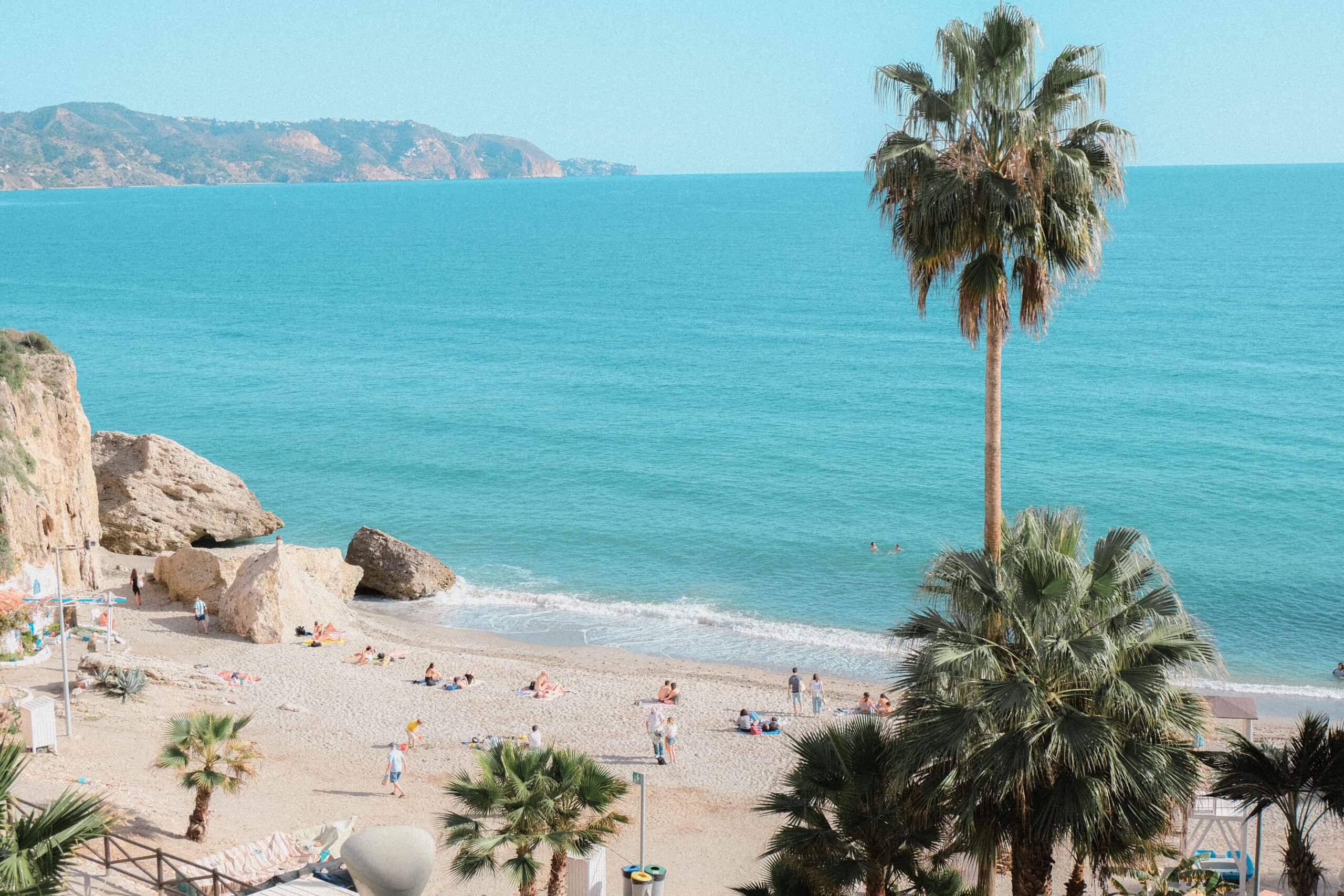
Different types of coastline entirely. The Amalfi Coast has small, often pebble or shingle beaches tucked beneath cliffs, some accessible only by boat or a steep path — dramatic settings, limited space, and often paid beach club access rather than open public sand. The Costa del Sol has long, wide sandy beaches (volcanic dark sand in places) with straightforward access, more space per visitor, and a well-developed beach club and chiringuito culture along the whole coast.
If beach space and easy access matter more to you than dramatic cliffside scenery, the Costa del Sol wins clearly. If the postcard image of small coves beneath colourful cliffside towns is the priority, Amalfi delivers something the Costa del Sol doesn’t attempt to replicate.
Which Should You Choose?
| You want… | Choose |
|---|---|
| Easy driving, straightforward logistics | Costa del Sol |
| Dramatic cliffside towns, willing to deal with traffic | Amalfi Coast |
| Day trips to major historical sites (Alhambra, Ronda, Gibraltar) | Costa del Sol |
| A tighter, more concentrated coastal experience | Amalfi Coast |
| Wide sandy beaches with easy access | Costa del Sol |
| Iconic photogenic coves and clifftop views | Amalfi Coast |
| A broader range of price points for genuine luxury | Costa del Sol |
| A shorter, more intensely scenic trip regardless of cost | Amalfi Coast |
Some travellers do both coasts in the same broader Mediterranean trip — flying into Málaga, spending a week on the Costa del Sol with day trips to Ronda and Granada, then continuing to Italy for a shorter, more concentrated few days on Amalfi. If you only have one trip to give to one coast, the honest answer is: choose the Costa del Sol if ease of movement and historical day trips matter to you; choose Amalfi if the cliffside scenery itself is the whole point and you’re comfortable with the driving conditions and cost that come with it.
Planning a Costa del Sol trip?
We run private day tours from Marbella and Málaga to Ronda, Granada, Gibraltar, and the Caminito del Rey — door-to-door hotel pickup, no need to navigate anything yourself. Browse all tours → or WhatsApp us at +34 651 026 027
Frequently Asked Questions
Is the Costa del Sol better than the Amalfi Coast?
Different rather than better. The Costa del Sol offers easier logistics (modern dual-carriageway roads vs Amalfi’s single congested cliff road), better day-trip access to major historical sites (the Alhambra, Ronda, Gibraltar all within 1–2 hours), wider sandy beaches, and a broader range of price points. The Amalfi Coast offers more concentrated cliffside drama, iconic small coves, and a distinct Italian coastal character that the Costa del Sol doesn’t attempt to replicate.
Is the Amalfi Coast more expensive than the Costa del Sol?
Generally, yes. Amalfi Coast luxury hotels commonly run £700–1,400+ per night in peak season, and restaurant, transport, and activity costs tend to follow suit given the region’s high demand and limited space. The Costa del Sol has genuine luxury options but at a wider range of price points overall, with quality alternatives below Amalfi’s typical entry cost.
Which is easier to get around, the Costa del Sol or the Amalfi Coast?
The Costa del Sol, clearly. It’s served by modern dual-carriageway roads (AP-7, A-7) with straightforward driving. The Amalfi Coast relies on a single narrow coastal road (SS163) that regularly gridlocks in peak season, leading many visitors to use ferries or buses instead of driving themselves.
Which has better day trips, the Costa del Sol or Amalfi?
The Costa del Sol offers day trips to substantially larger historical sites — the Alhambra in Granada, the Ronda gorge and old town, Gibraltar — all within 1–2 hours via reliable roads. The Amalfi Coast’s day trips (Pompeii, Capri, Naples) are shorter in distance but subject to the same road congestion or require ferry crossings.
Can I visit both the Costa del Sol and the Amalfi Coast on the same trip?
Yes, though it requires a flight between Spain and Italy since they’re not connected by land in a practical way for tourists. Some travellers split a longer Mediterranean trip between a week on the Costa del Sol (with day trips to Ronda and Granada) and a shorter, more concentrated few days on the Amalfi Coast.