The short answer: since 15 July 2026, routine passport and customs checks at the land border between Spain and Gibraltar have ended. You can walk or drive across from La Línea de la Concepción without the usual stop. But you should still carry your passport: Gibraltar applies Schengen entry criteria, police can carry out non-routine checks, and arrivals at Gibraltar airport and port are checked. Gibraltar is not joining the EU or the UK Schengen area as a member. It remains a British territory.
This guide explains what changed, what it means for a day trip from Málaga or Marbella, and what is still uncertain. The treaty is newly applied, so some details are still settling. Where something is not yet clear, we say so instead of guessing, and we will update this page as procedures become clearer.
We are Peter Fischer and Thomas Liedtke. We have run private day trips to Gibraltar from Málaga and Marbella since 2015, and we cross this border regularly.
Table of Contents
Who this guide is for
This page is for visitors who are planning a trip to Gibraltar from the Costa del Sol: independent travellers who want to cross on foot, drivers who need to decide whether to park in La Línea, cruise passengers calling at Málaga, and families who want to know whether they need passports for children. The answer is the same for all of them: carry valid documents for everyone in the group, and allow extra time until the new system has settled.
Key takeaways
- Land border: routine immigration and customs checks ended on 15 July 2026, and the barriers were removed.
- Documents: still carry a valid passport. Non-routine checks are possible.
- Airport and port: entry control for arrivals applies Schengen criteria, together with Gibraltar controls.
- Status: Gibraltar is outside the EU and remains British, but Schengen border rules are applied there.
- Legal basis: the UK–EU treaty on Gibraltar is provisionally applied while formal ratification is completed.
- Queues: expected to be shorter, but not yet measured over a full season.
What actually changed on 15 July 2026
- The land border stopped routine checks. People and vehicles crossing between La Línea and Gibraltar are no longer stopped for routine passport and customs checks.
- Controls moved to the airport and port. Passengers arriving by air or sea go through Gibraltar border processing and Schengen-style entry control.
- A customs framework was set up. The treaty creates a customs union between Gibraltar and the EU, and removes tariffs and duties on goods.
- Schengen border rules apply. Gibraltar applies Schengen entry criteria, but it does not become a Schengen or EU member.
Documents: what visitors need
| Item | What to know |
|---|---|
| Passport | Carry it. Official guidance still says to travel with valid documents, and passport checks apply at the airport and port. |
| Validity (Schengen criteria) | A passport issued within the last 10 years and valid for at least 3 months after you plan to leave. Check the current requirement for your nationality. |
| UK visa or ETA | Not needed to visit Gibraltar under the new arrangements. |
| EU nationals | Passport or national ID card. |
| US and other non-EU visitors | Check whether you need a visa to enter the Schengen area. Visa-free visitors can generally cross as day visitors. |
| Other documents | Officers can ask for a return ticket, proof of accommodation, travel insurance or proof of funds. |
Does the Schengen 90/180-day rule apply?
For visitors from outside the EU who do not need a visa, time spent in the Schengen area counts toward the 90 days in any 180-day period. There is no exit stamp at the land crossing, and your time in Spain keeps counting. How time in Gibraltar itself is counted is one of the details that is still being clarified, so if you are close to the limit, check the official guidance before you travel. ETIAS, the Schengen travel authorisation, is not yet in operation, and its start date is still to be confirmed.
Is Gibraltar part of the EU, Schengen or the UK now?
| Question | Answer |
|---|---|
| EU | No. Gibraltar remains outside the EU. |
| Schengen area | Not as a member, but Schengen border rules are applied there under the treaty. |
| United Kingdom | Gibraltar remains a British overseas territory. The treaty does not change sovereignty. |
| Customs | A customs union with the EU is established, with tariffs and duties removed on goods. |
| Currency | Gibraltar and British pounds are used alongside euros, as before. |
| Driving | No change in practice for visitors. |
The practical crossing procedure from La Línea
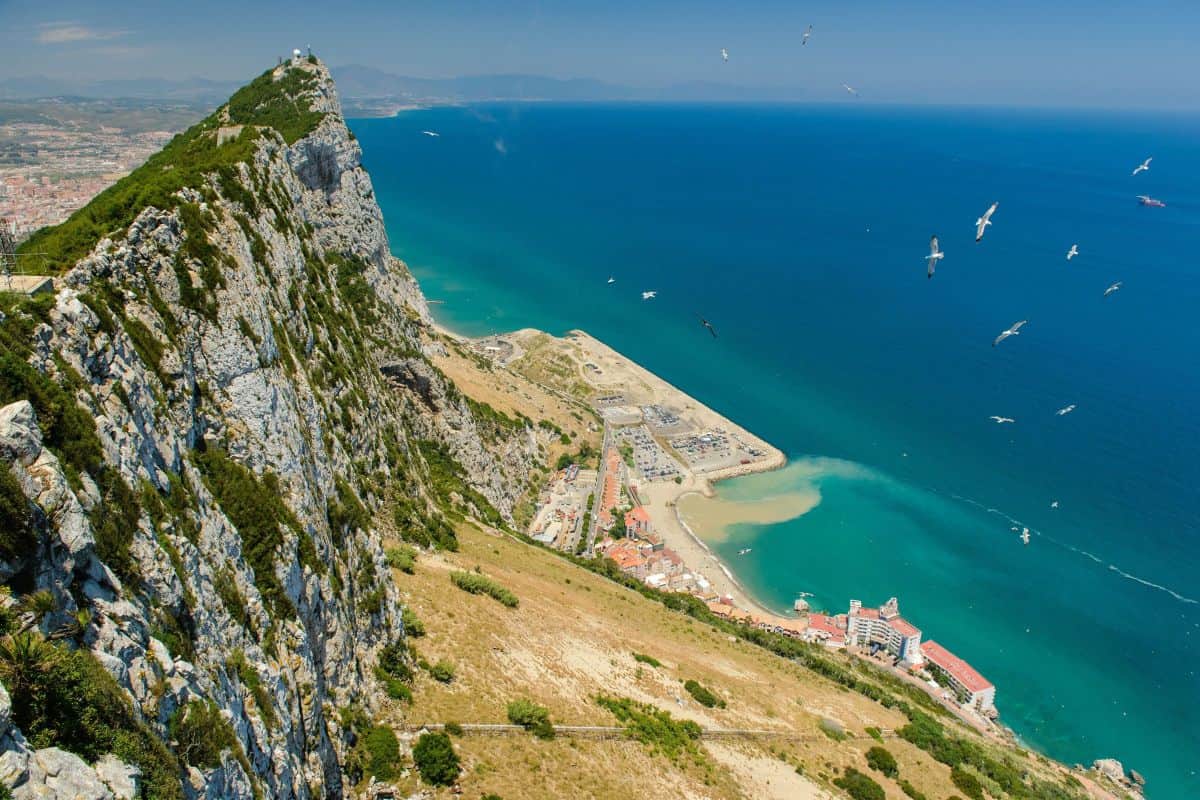
- Choose how to cross. Walking is often quicker than driving when vehicle queues are heavy. Parking in La Línea and walking is a common choice, because parking in Gibraltar is limited.
- Carry your documents. Keep your passport with you, in the original rather than a photo or scan.
- Cross without the routine stop. There is no regular passport or customs booth to queue at, but police can carry out non-routine checks.
- Mind the runway. The road and pedestrian route cross the airport runway area, and crossings pause briefly for landings and take-offs.
- Plan your return. Queue times vary through the day, so avoid commuter peaks in the morning and late afternoon, and check the live frontier cameras.
Airport and port under the new system
People arriving at Gibraltar airport or by sea go through Gibraltar border processing and Schengen entry control. Published summaries describe Spanish officers working alongside Gibraltar authorities for these checks. This matters most for cruise passengers and for anyone flying in, because these are now the places where the full passport check happens. If you arrive by land from Spain, you are not stopped for the routine check.
Customs and allowances
Because the treaty creates a customs union, goods move more freely, and the tariffs and duties that applied are being removed. Even so, you can still be checked, and personal allowances for tobacco, alcohol and similar items still apply when you go back to Spain. Published figures differ between sources, and the rules are new and may be refined, so we are not quoting a number. Check the official allowances before you buy, and keep within the limits.
What this means for a day trip or a cruise stop
| Visitor | What to expect |
|---|---|
| Private day trip from Málaga or Marbella | The land crossing should be easier, and we handle the logistics. About 130 km and 1h45 from Málaga, and about 90 km and 1h15 from Marbella. |
| Cruise passengers from Málaga | The trip starts at the cruise terminal and returns you there. We keep a generous time buffer until crossing times are clearer. |
| Independent travellers | Walk across from La Línea and carry your passport. Expect some variation in queues in the first months. |
| What does not change | Gibraltar remains British, attractions and opening times are unaffected, and the Rock, St. Michael’s Cave and the monkeys are as before. |
Our private Gibraltar day trip takes about 6 hours and starts at €890 for 2 people (per group, not per person), with a local Gibraltar guide.
Is a private tour still worth it now that the border is easier?
A faster crossing helps independent visitors, but the border was only ever part of the day. Gibraltar is compact and steep, parking is limited, and the best sights are spread across the Rock. A private day trip with a local Gibraltar guide covers the Rock, St. Michael’s Cave, the Great Siege Tunnels and the Barbary macaques, and leaves free time in the town. Door-to-door pickup from Málaga or Marbella also removes the drive, the parking search and the question of what to do at the frontier.
It also gives you someone who knows how the arrangement is working in practice. Because procedures are new, we adjust the plan to the real situation on the day, not to what was true last year.
Why this took so long
The border between Spain and Gibraltar has been a point of friction for centuries. It was closed by the Franco regime in 1969 and reopened in stages in the 1980s. In 2016, Gibraltar voted by a large majority to remain in the EU, and the UK left the EU in 2020, which made the question of the frontier urgent. Negotiations lasted for several years and led to the UK–EU treaty on Gibraltar, which is now being applied provisionally.
What is still uncertain
- Ratification. The treaty is provisionally applied, and formal ratification is still to be completed.
- Crossing times. There are no reliable measured figures over a full season.
- Spot checks. How and when police carry out non-routine checks is not yet fully clear.
- Schengen day counting. How time in Gibraltar counts for non-EU visitors is still being clarified.
- ETIAS and the EU Entry/Exit System. Their effect on non-resident visitors is still being worked out.
- Customs figures. Allowances and enforcement may be refined.
If you are travelling soon, check the official sources: the Gibraltar airport passport page, the UK government travel advice for Gibraltar, and the Gibraltar tourist board.
Tips for visitors
- Carry your passport, even if you cross on foot.
- Avoid weekday commuter peaks and Spanish long weekends.
- Check the live queue cameras before you leave.
- Do not exceed personal allowances when returning to Spain.
- Book a private day trip if you want to skip the logistics, and ask us about timings if you are arriving on a cruise.
Make it yours
Tell us where you are staying or which ship you are on, and we will advise on timings. Message us on WhatsApp, or see our private Gibraltar day trip.
Frequently asked questions
Do you need a passport to cross from Spain to Gibraltar in 2026?
Routine checks at the land border ended on 15 July 2026, but official guidance is still to travel with valid documents. Police can carry out non-routine checks, and passport checks apply when you arrive at Gibraltar’s airport or port. Carry your passport, and for non-EU visitors it is the safe choice.
What changed at the Gibraltar–Spain border on 15 July 2026?
Routine immigration and customs checks at the land frontier ended, and the physical barriers came down. Entry control for people arriving by air or sea now happens at Gibraltar’s airport and port, applying Schengen criteria alongside Gibraltar’s own controls. The UK–EU treaty on Gibraltar is being applied provisionally while formal ratification is completed.
How long does it take to cross the Gibraltar border now?
It should be faster than before, but there are no reliable measured figures yet and we will not guess. Crossing on foot has usually been quicker than driving. Avoid weekday commuter peaks, and check the live frontier queue cameras before you leave.
Can Americans visit Gibraltar from Spain without a visa?
Gibraltar now applies Schengen entry criteria, and a UK visa or ETA is not needed. US passport holders who can enter the Schengen area visa-free for short stays can generally visit Gibraltar as a day visitor, but you should check the current rules for your nationality, because the treaty is newly applied.
Are there customs checks between Spain and Gibraltar?
Routine checks at the land crossing have ended and the treaty creates a customs union, but travellers can still be checked and personal allowances for items such as tobacco and alcohol still exist. Published figures differ between sources, so check the official allowances before you buy.
Is Gibraltar part of Schengen after the 2026 treaty?
Not as a member. Gibraltar remains a British overseas territory outside the EU, but the treaty applies Schengen border rules there. Immigration control for arrivals by air and sea is carried out under Schengen criteria.
Does the border treaty affect cruise day trips from Málaga?
Our private Gibraltar day trip still starts at your hotel, apartment or cruise terminal and returns you to the same place. The land crossing should be easier, but the effect on timings is still being observed, so for cruise passengers we keep a generous time buffer for now.
Is the Gibraltar border open 24 hours?
The land frontier is open around the clock, with queue times that vary a lot through the day and week.