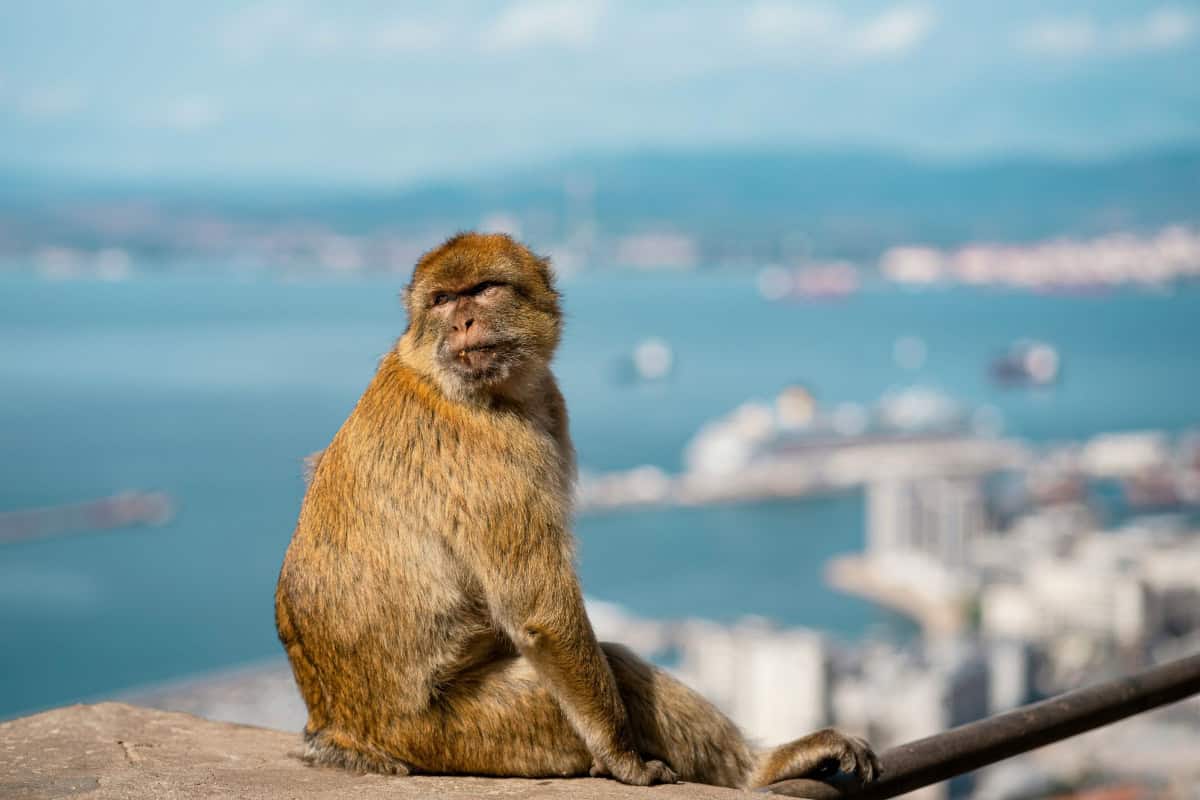
There are approximately 300 Barbary macaques living on the Rock of Gibraltar. They are Europe’s only wild monkey population, they have no fear of humans whatsoever, and they will sit on your shoulder, steal your sunglasses, attempt to open your bag, grab food from your hand, and generally behave in a way that children find hilarious and adults find either delightful or alarming depending on temperament. Here’s everything you need to know before you meet them.
🎯 Key Takeaways
- Don’t feed them. It’s illegal in Gibraltar and makes them aggressive. Fines up to £500.
- Hold your belongings. Phones, sunglasses, bags, food — they’re fast and they know what they’re doing.
- They’re wild animals. Don’t approach them, grab them, or try to force an interaction. Let them come to you.
- You’ll see them on the Upper Rock — particularly at the Apes’ Den area and around St. Michael’s Cave.
- The legend: when the monkeys leave, Gibraltar ceases to be British. The population is actively managed to prevent this.
The Barbary macaques of Gibraltar are not a zoo exhibit or a managed attraction. They’re wild animals that happen to live on a rock at the southern tip of Europe, 14 km from Africa, surrounded by a city of 34,000 people. They’ve been here for centuries. They outnumber the tourists in the early morning. They have a functioning social hierarchy, defined territories, and no particular reason to behave around humans — except that humans have been around them long enough that they’ve stopped caring.
This guide covers the practical information — where to find them, how to behave, what they’ll do, and how to get there from the Costa del Sol.
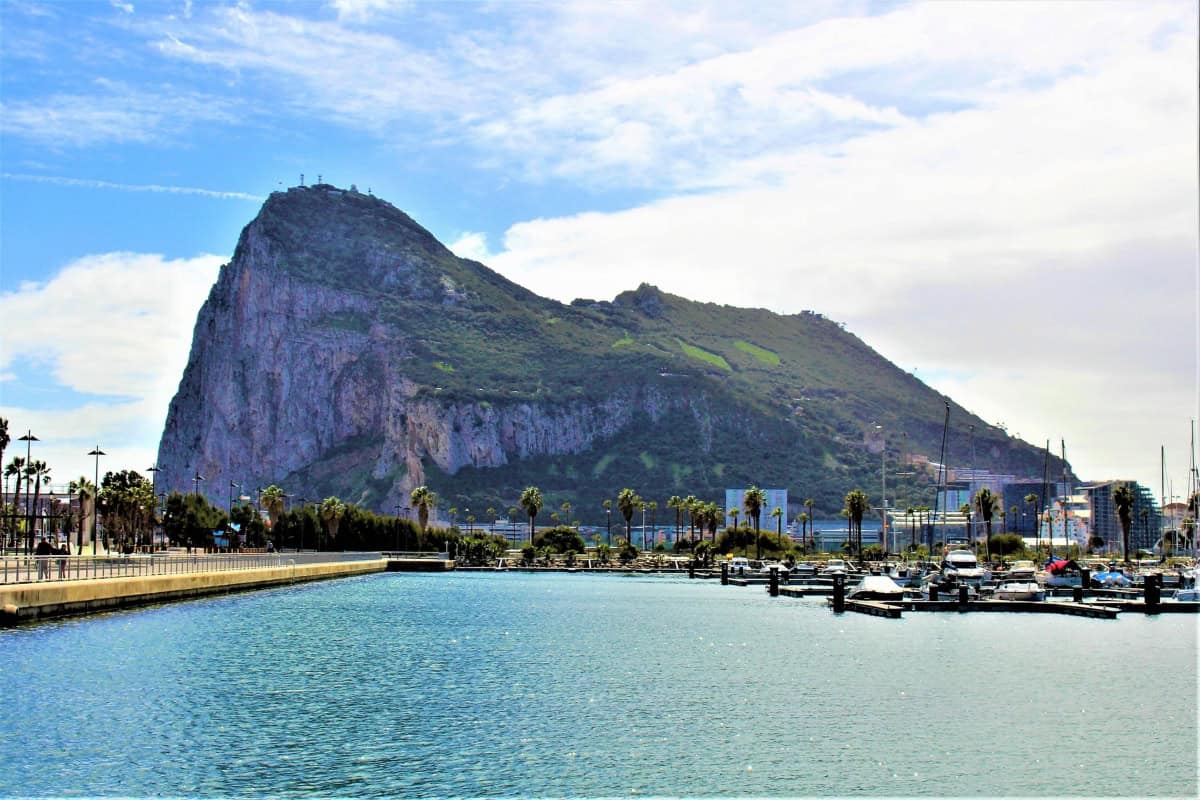
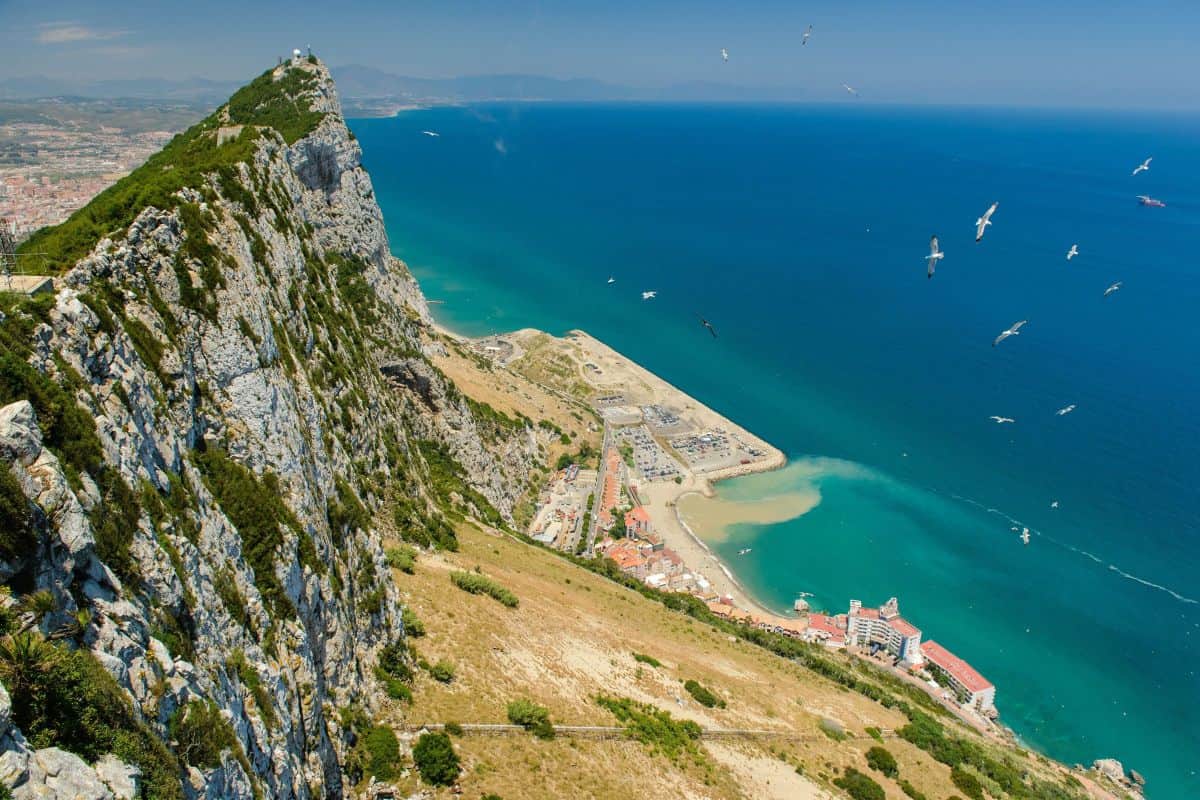
Beautiful landscape featuring a prominent mountain and a lively marina with boats, perfect for Costa Excursions tours.
Table of Contents
What Are the Gibraltar Monkeys?
The Gibraltar monkeys are Barbary macaques (Macaca sylvanus) — the only macaque species native to Africa and the only wild primate population in Europe outside of humans. They are not apes in the technical sense, despite being commonly called the “Barbary Apes” — they have tails, which apes don’t.
Barbary macaques are native to the Atlas Mountains of Morocco and Algeria. How they ended up in Gibraltar is genuinely unknown. The most likely explanation is that they were brought over by Moorish settlers during the 700-year period of Moorish control of Gibraltar (711–1462 AD). The British found them here when they took Gibraltar in 1704 and have been managing the population ever since.
The legend
The most famous thing about the Gibraltar monkeys is the legend: as long as Barbary macaques remain on the Rock, Gibraltar will remain British. The origin of this belief is unclear — it may be 18th century, it may be more recent. What’s documented is that Winston Churchill, during World War II, took it seriously enough to order the population to be supplemented when numbers fell dangerously low. New monkeys were imported from Morocco. The population recovered. The legend continues.
Today the GibGibraltar government actively manages the population — monitoring health, controlling breeding, and maintaining the numbers at around 300. Each monkey is named, microchipped, and registered. There is a dedicated Gibraltar Ornithological & Natural History Society team that monitors them year-round.
Where to Find the Monkeys in Gibraltar
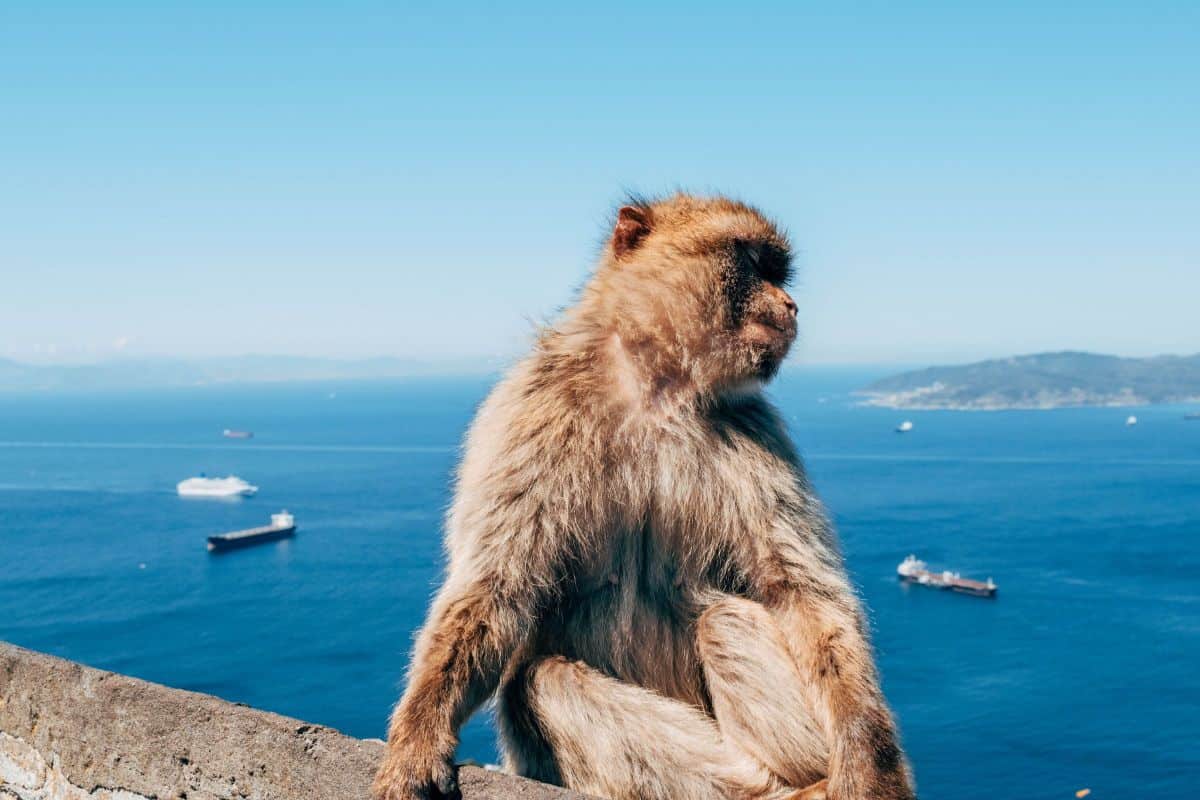
The macaques live in several troops across the Upper Rock Nature Reserve. Their territories shift seasonally but there are three reliable areas:
Apes’ Den
The main viewing area — a dedicated stop on the Upper Rock tour route specifically positioned for monkey encounters. This is where the guides bring groups and where the macaques are most accustomed to visitors. It’s also where the most confident (and opportunistic) individuals tend to hang out. Guaranteed sightings. Bring patience and hold everything securely.
St. Michael’s Cave area
The cave entrance and surrounding terrain is another reliable spot. The macaques move between the cave area and the Apes’ Den depending on the time of day. Morning visits often find larger groups here before the tour coaches arrive.
The Queen’s Gate area and cable car top station
Less predictable but worth watching. The cable car top station area can have individuals or small groups particularly in the early morning and late afternoon when visitor numbers are lower and the macaques move more freely.
Lower sections of the Rock
Occasionally individuals or small groups venture down into residential areas of Gibraltar town. This happens less often than it used to — the government has been working to keep the troops more concentrated in the Upper Rock — but it’s not unknown to see a macaque on a garden wall or rooftop in the residential streets.
How to Behave Around the Monkeys
The rules exist because people consistently ignore them and then complain when they get bitten or robbed. Read these before you go.
🚫 Don’t feed them
Feeding the Barbary macaques is illegal in Gibraltar and carries fines of up to £500. This isn’t bureaucratic overcaution — it’s the reason for most monkey-related incidents. Fed monkeys become aggressive and associate humans with food. A macaque that’s learned to associate humans with food will grab, bite, and intimidate to get it. The ones that behave calmly around visitors are the ones that haven’t been fed.
🚫 Don’t hold food near them
Even if you’re not deliberately feeding them, visible food is an invitation. Eat before you enter the monkey areas, or keep food completely out of sight inside a closed bag. A macaque that sees you eating will approach. A macaque that smells food in your bag will investigate the bag.
📱 Hold your phone
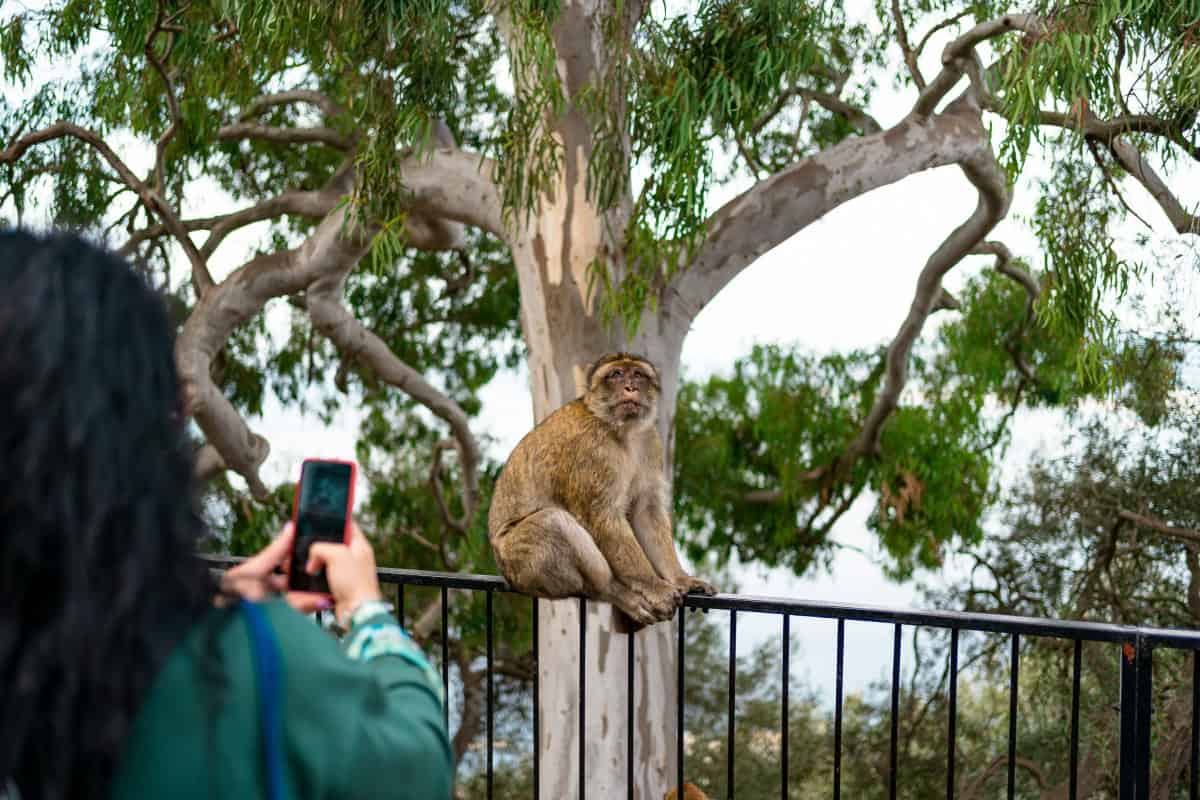
Phones are the single most commonly lost item at the monkey areas. Macaques don’t want your phone — they want the shiny, interesting object that moves in your hand. They’ll grab it, examine it briefly, and either drop it or move away with it. Both outcomes are bad. Keep your phone in your pocket or held firmly when taking photos. Use a wrist strap.
🕶️ Secure your sunglasses
Same principle. Sunglasses sitting on top of your head are a reliable target. Either hold them in your hand or keep them in a case in your bag.
👜 Close your bag
Zip everything closed before entering the monkey areas. An open bag is an open invitation. They’re small enough to get inside a day pack quickly and strong enough to pull items out faster than you can react.
✅ Let them come to you
The best encounters happen when you stand quietly and let the macaques approach on their own terms. They will. They’re not shy. Chasing them, reaching for them, or trying to grab them for a photo causes stress and occasionally bites. Stand still, keep your hands visible and empty, and let them investigate you at their own pace.
🧒 With children
Children find the monkeys extraordinary — consistently the highlight of any Gibraltar visit for families. A few specific notes: hold small children’s hands in the monkey areas (macaques can be alarming at close range if you’re 90 cm tall), don’t let children hold food, and be prepared for a macaque to jump onto a child’s shoulder without warning. Most children love this. Some don’t. Know your child.
Are the Gibraltar Monkeys Dangerous?
Not in normal circumstances. The macaques are not aggressive without provocation. In 12+ years of taking guests to Gibraltar, we’ve never had a guest seriously harmed by a monkey.
Bites and scratches do happen — almost always when someone feeds them, reaches for them, or tries to forcibly move them. A macaque that bites has usually been provoked either deliberately or accidentally (someone walking too close, a child grabbing at one, food being held near them). The solution is simple: follow the rules above.
Macaque bites require medical attention because of the risk of infection. If you are bitten, clean the wound thoroughly and see a doctor the same day. Gibraltar has a hospital (St. Bernard’s) and several medical centres. This is rare but worth knowing.
The Monkeys and the Law
The Barbary macaques in Gibraltar are protected under Gibraltar law and the Berne Convention on the Conservation of European Wildlife. Key legal points:
- Feeding is illegal — fines up to £500
- Deliberate harassment or harm is a criminal offence
- Removal from Gibraltar is illegal
- The population is registered and monitored by the Gibraltar government
In practice, the laws are enforced — particularly the feeding prohibition. Gibraltar is small enough that rangers and guides notice when visitors are feeding the monkeys and will intervene.
Best Time to See the Monkeys
The monkeys are present year-round. A few practical notes on timing:
- Early morning (before 10 AM): fewer visitors, more natural monkey behaviour, better for photography. The groups are more spread out across the Rock rather than concentrated at the Apes’ Den waiting for the tour coach wave.
- Summer: more tourists means more concentrated monkey activity near the viewing areas — you’ll definitely see them but the encounters are more chaotic.
- Winter: quieter, the monkeys roam more freely, encounters feel more genuine. The Rock in January with a handful of visitors and 30 macaques moving freely is a different experience from August with 200 tourists at the Apes’ Den.
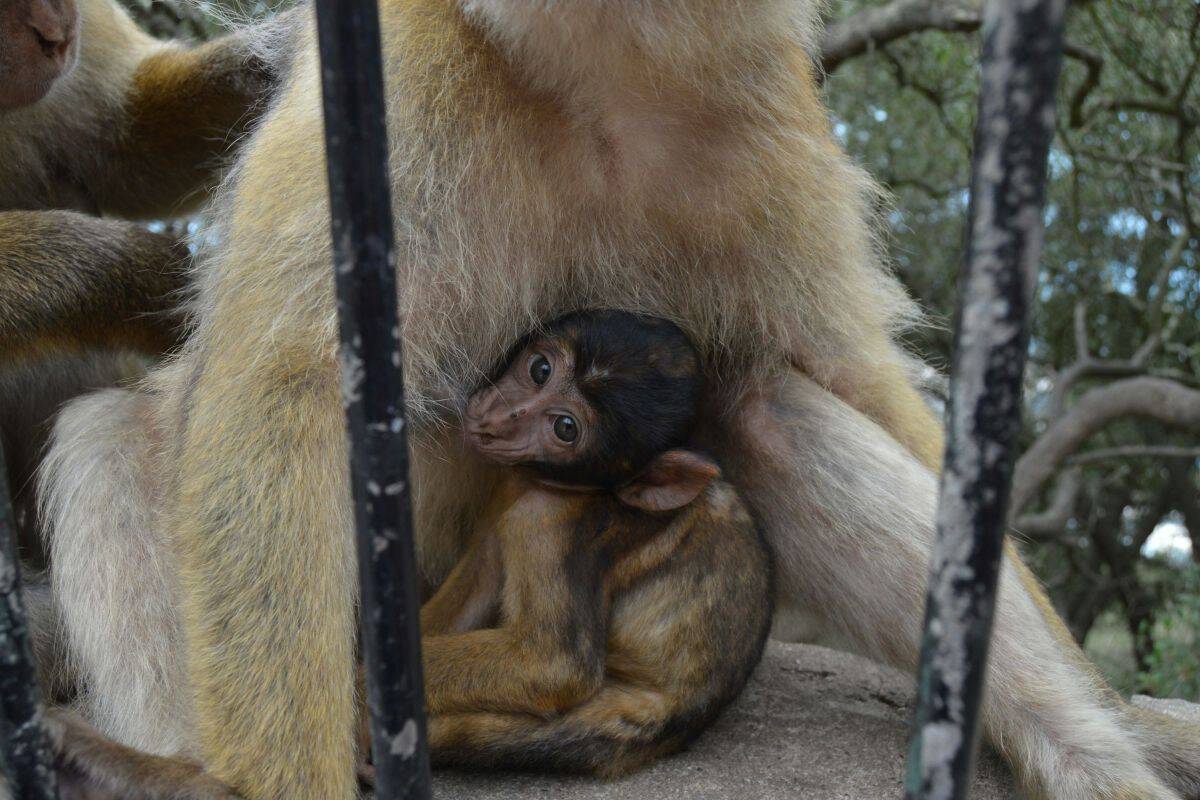
- Breeding season (spring): mothers with infants visible from February–April. The infants are small, pink-faced, and cling to their mothers continuously for the first few months. If you specifically want to see baby macaques, spring is the time.
How to Get to Gibraltar from the Costa del Sol
Gibraltar is 130 km from Málaga (1h 45 by car) and 90 km from Marbella (1h 15). The border crossing adds 15–45 minutes depending on traffic. Passports are required for everyone in the group — Gibraltar is a British Overseas Territory with formal UK border control. EU national ID cards may work for some nationalities but a passport is the only reliable document.
Practical notes for getting there independently:
- Drive to La Línea de la Concepción (the Spanish town at the border), park at Parking Winston Churchill or street parking near Avenida del Príncipe de Asturias, and cross the border on foot
- Take the cable car from town to the Upper Rock (€18 return) or a taxi to the Nature Reserve entrance
- Upper Rock Nature Reserve ticket: approximately £16 per adult, covers all the main stops including the Apes’ Den
Visiting Gibraltar from Málaga or Marbella?
We run private Gibraltar day trips from Málaga (130 km) and Marbella (90 km) with door-to-door hotel pickup, a local Gibraltar guide for the Rock tour, and all logistics handled. The monkeys, St. Michael’s Cave, the Siege Tunnels, and Europa Point in one day. From €890 per group. See tour details and availability → or WhatsApp us at +34 651 026 027.
Frequently Asked Questions
Are the Gibraltar monkeys actually apes?
No — despite being commonly called the “Barbary Apes,” they are Barbary macaques (Macaca sylvanus), which are monkeys, not apes. They have tails (apes don’t) and are the only macaque species native to Africa. The “ape” name comes from an old English usage of the word to mean any primate.
How many monkeys are in Gibraltar?
Approximately 300 Barbary macaques, divided into several troops across the Upper Rock. Each animal is named, microchipped, and monitored by the Gibraltar government’s wildlife team. The population is actively managed to maintain stable numbers.
Why are there monkeys in Gibraltar?
The most likely explanation is that they were introduced by Moorish settlers during the period of Moorish control (711–1462 AD). Barbary macaques are native to Morocco and Algeria — directly opposite Gibraltar across the Strait. The exact origin is unconfirmed but the Moorish introduction theory is the most widely accepted. They’ve been documented in Gibraltar since at least the early 18th century.
What is the legend about the Gibraltar monkeys?
The legend states that as long as Barbary macaques remain on the Rock, Gibraltar will remain British. Winston Churchill took it seriously enough during World War II to order new monkeys imported from Morocco when numbers fell critically low. The Gibraltar government continues to actively manage the population today, partially under the influence of this tradition.
Can you touch the Gibraltar monkeys?
You shouldn’t try to. The macaques will often approach and climb on visitors voluntarily — which is fine and memorable. Reaching for them, grabbing them, or trying to force contact is illegal (harassment of protected wildlife) and will likely result in a bite or scratch. Let them make the first move.
Is it illegal to feed the Gibraltar monkeys?
Yes — feeding the Barbary macaques is illegal in Gibraltar and carries fines of up to £500. Fed monkeys become aggressive and associate humans with food. Almost all monkey-related incidents (bites, bag-grabs) involve monkeys that have been fed by previous visitors. Don’t feed them.
Do the Gibraltar monkeys bite?
Bites are rare but happen — almost always when someone feeds them, reaches for them, or accidentally provokes them (a child grabbing one, walking too close to a mother with an infant). Follow the rules — don’t feed, don’t grab, hold your belongings, let them approach you — and the risk is minimal. In 12+ years of Gibraltar tours, we’ve never had a guest seriously harmed.
Where exactly on Gibraltar are the monkeys?
Primarily on the Upper Rock Nature Reserve — specifically at the Apes’ Den viewing area and around St. Michael’s Cave. Smaller groups roam throughout the Upper Rock. The cable car top station area and Queen’s Gate area also have regular sightings. Occasionally individuals venture into residential parts of Gibraltar town.
Do I need a ticket to see the monkeys?
Yes — the Apes’ Den is within the Upper Rock Nature Reserve, which has an entrance fee of approximately £16 per adult. This ticket covers all the main Upper Rock attractions including the monkeys, St. Michael’s Cave, the Great Siege Tunnels, and Europa Point. There’s no separate monkey ticket.
Final Thoughts
The monkeys are the most immediately memorable part of any Gibraltar visit — particularly for families. 300 wild macaques, no fences, no keepers, no performance schedule. Just animals that have lived on this rock for centuries, going about their business around a city of 34,000 people. Don’t feed them, hold your phone, and let them come to you. If you’re planning a day trip to Gibraltar from Málaga or Marbella, see our private Gibraltar day tour → or read our complete Gibraltar visitor guide for everything else worth seeing on the Rock.