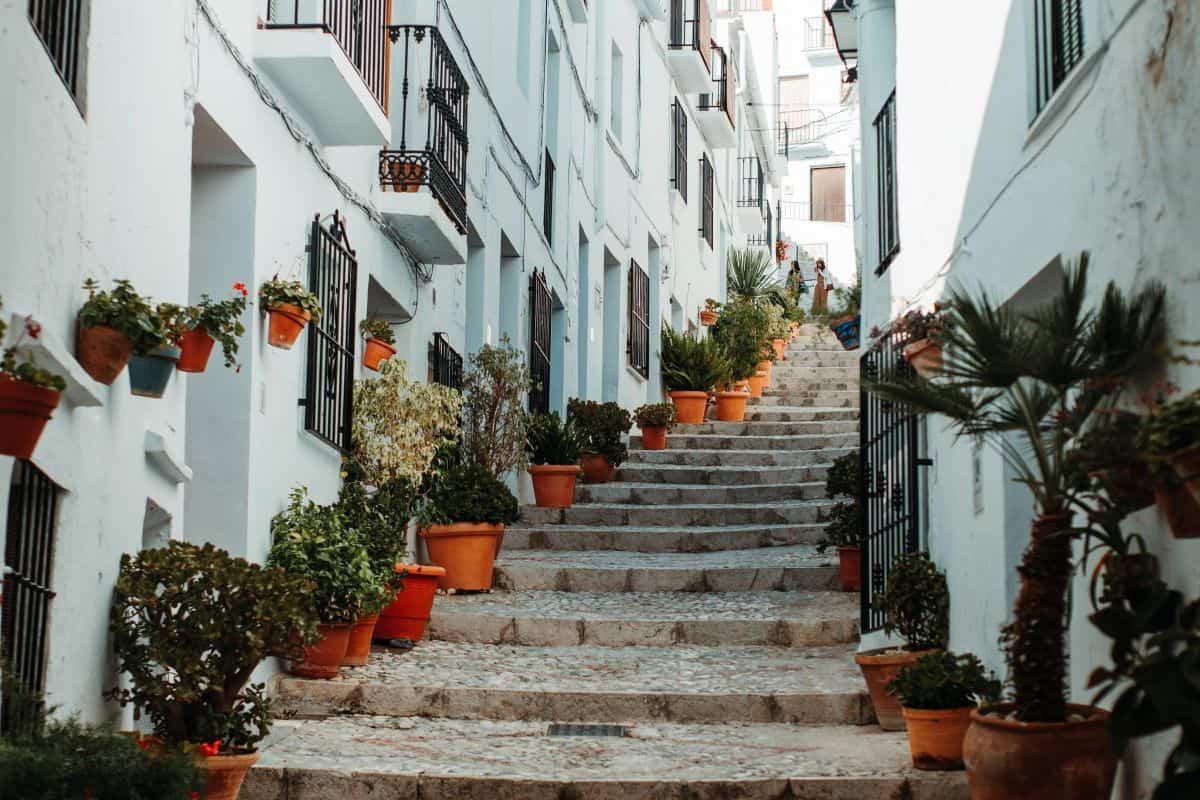
A day trip from Malaga to Nerja and Frigiliana is one of the most rewarding day trips on the Costa del Sol — two towns 6 km apart that couldn’t be more different. Nerja delivers dramatic sea cliffs, Spain’s most impressive cave system, and proper beach-village energy. Frigiliana, up in the hills above it, is consistently voted one of the prettiest white villages in Andalusia. Here’s the full guide, written by a local tour operator who takes guests there every week.
Visit Nerja and Frigiliana privately
Beaches, white village and a relaxed pace, with hotel pickup.
🎯 Key Takeaways
- Nerja is 1 hour from Malaga; Frigiliana is 15 min further up the hill.
- Main sights: Nerja Caves, Balcón de Europa, Frigiliana old town.
- Don’t miss Playa de Maro and the Maro cliffs natural park.
- Nerja Caves: €15 adult; book online for weekends & high season.
- Private tour: from €600 per group
Nerja and Frigiliana combine perfectly into one full day from Malaga — coastal cliffs, the world’s largest stalagmite, the Balcón de Europa viewpoint, and a postcard-perfect white village in the hills. Add the Maro cliffs natural park if you have time. Budget 8 hours door-to-door. Comfortable shoes required for Frigiliana. Best months: April–June, September–October.
Table of Contents
Nerja and Frigiliana Day Trip from Malaga: The Complete 2026 Guide
If you’re staying in Malaga and only have time for one east-coast day trip, Nerja and Frigiliana is the one to do. These two towns are only 6 km apart, but they deliver completely different experiences: Nerja is a dramatic coastal village with Europe’s most impressive cave system; Frigiliana is a whitewashed mountain village with 400 years of Moorish and Morisco history baked into its walls.
Done properly, it’s a relaxed route through the Axarquía region — nature, culture, coastal scenery, and some of the best food on the Costa del Sol. Here’s how to plan the perfect day.
Book a Private Nerja & Frigiliana Tour
Nerja & Frigiliana at a Glance
| Distance from Malaga | 55 km (about 1 hour by car) |
| Nerja to Frigiliana | 6 km / 10–15 minutes |
| Recommended time | Full day (8 hours door-to-door) |
| Best months | April–June & September–October |
| Nerja Caves entry | €15 adult / €12 child |
| Frigiliana entry | Free (walking around) |
| Private tour (our service) | From €600 per group (up to 7 pax) |

Where Are Nerja and Frigiliana?
Both sit in the Axarquía, the eastern end of Málaga province.
- Malaga → Nerja: ~55 km, roughly 1 hour by car on the A-7 motorway
- Nerja → Frigiliana: 6 km, 10–15 min up a winding mountain road
- Marbella → Nerja: ~90 km, about 1h 45 by car
That compact geography is what makes this day trip work: everything’s close, there’s no wasted driving, and the contrast between coast and mountain happens in minutes.
Stop 1: Nerja Caves (Cuevas de Nerja)

Start here. Discovered by accident in 1959 by five local boys chasing bats, the Nerja Caves are one of Europe’s most important archaeological sites — continuously inhabited for more than 40,000 years. The main tourist section covers five vast chambers with stalactites, stalagmites, and some of the oldest cave paintings ever found in Europe (contested by some researchers as possibly Neanderthal — older than Lascaux or Altamira).
What makes them special
- The Hall of the Cataclysm, home to the tallest central stalagmite column in the world (32 m high, 13 m diameter, weighing more than 1,000 tonnes)
- 40,000-year-old paintings of seals and other marine animals (in restricted areas not open to general public, but replicas shown)
- Cool interior temperature (~19°C year-round) — welcome relief in summer
- Since 1960 the caves host the Nerja Festival of Music and Dance in summer — imagine a ballet performance inside a natural cathedral
Practical info
- Entry: €15 adult / €12 child (6–12) / free under 6
- Hours: 9:00–16:30 (winter), 9:00–19:00 (summer)
- Closed: 1 January, 15 May
- Book ahead: cuevadenerja.es — weekends and summer slots sell out
- Time needed: 1 hour
- Getting there: 4 km east of Nerja town. Parking available but fills up. Local bus runs hourly from Nerja.
Tip: skip the cave lunch spot — much better options in Nerja town 10 minutes away.
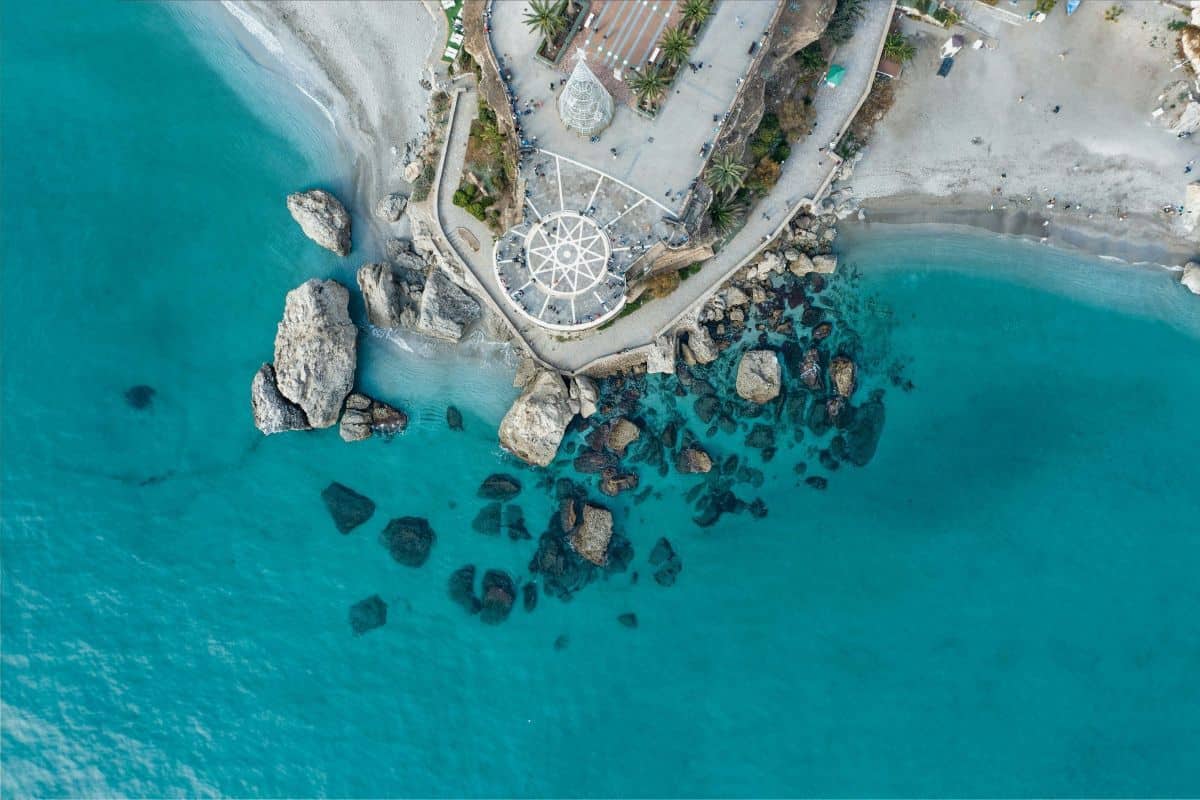
Stop 2: Nerja Town and the Balcón de Europa
Drive or bus into Nerja town. The centre is compact and completely walkable, organised around the most famous clifftop promenade on the Costa del Sol: the Balcón de Europa.
Balcón de Europa
A wide palm-lined promenade at the end of a cliff jutting into the Mediterranean, with 180° views east and west. King Alfonso XII visited Nerja in 1885 after an earthquake devastated the region and reportedly declared from this spot: “This is the balcony of Europe.” The name stuck. There’s a statue of him at the viewpoint — a favourite photo spot.
Around the Balcón
- El Salvador Church — pretty 17th-century baroque church in the plaza
- Plaza Balcón de Europa — outdoor cafés, street performers, and a lively atmosphere
- El Salón beach — tucked directly below the Balcón, accessed by stairs. Quieter than the main beaches.
- Calahonda beach — iconic photogenic small cove with old fisherman’s boats, next to the Balcón
Nerja’s best beaches
- Playa Burriana — Nerja’s main beach, 800 m of clean sand with the famous Ayo de Burriana beach restaurant where paella is cooked over open fires. Best for a long lunch.
- Calahonda — postcard-pretty, best for photos, tiny
- El Salón — under the Balcón, quick dip
- Playa de Maro — 4 km east, the prettiest beach of all (see next section)
Where to eat in Nerja
- Ayo de Burriana — iconic paella on Burriana beach, cooked in huge pans over wood fires
- La Marina — fresh seafood with sea views
- Casa Luque — tapas in a cosy old-town courtyard
- Espetos (sardines grilled on skewers over beach fires) — the signature dish of the whole Costa del Sol
Time in Nerja town: 2–3 hours including lunch.
Optional: Playa de Maro and the Maro Cliffs
If you have a car or a private driver, do this. Maro is a tiny village 4 km east of Nerja, and Playa de Maro is arguably the most beautiful beach on the Costa del Sol — a curved cove of crystal-clear water backed by subtropical cliffs and almost no development.
Behind it, the Acantilados de Maro–Cerro Gordo natural park runs 12 km along the coast with hidden coves, waterfalls dropping straight into the sea, and some of the best snorkeling and kayaking in southern Spain. Several operators run sea-kayak tours to Cascada de Maro, a small waterfall in a cove only reachable by boat. Worth it if you have an extra half-day.
For a day trip, a 20-minute stop at Playa de Maro for the view and photos is a worthwhile detour on the drive between Nerja and the caves.

Stop 3: Frigiliana — One of Andalusia’s Most Beautiful White Villages
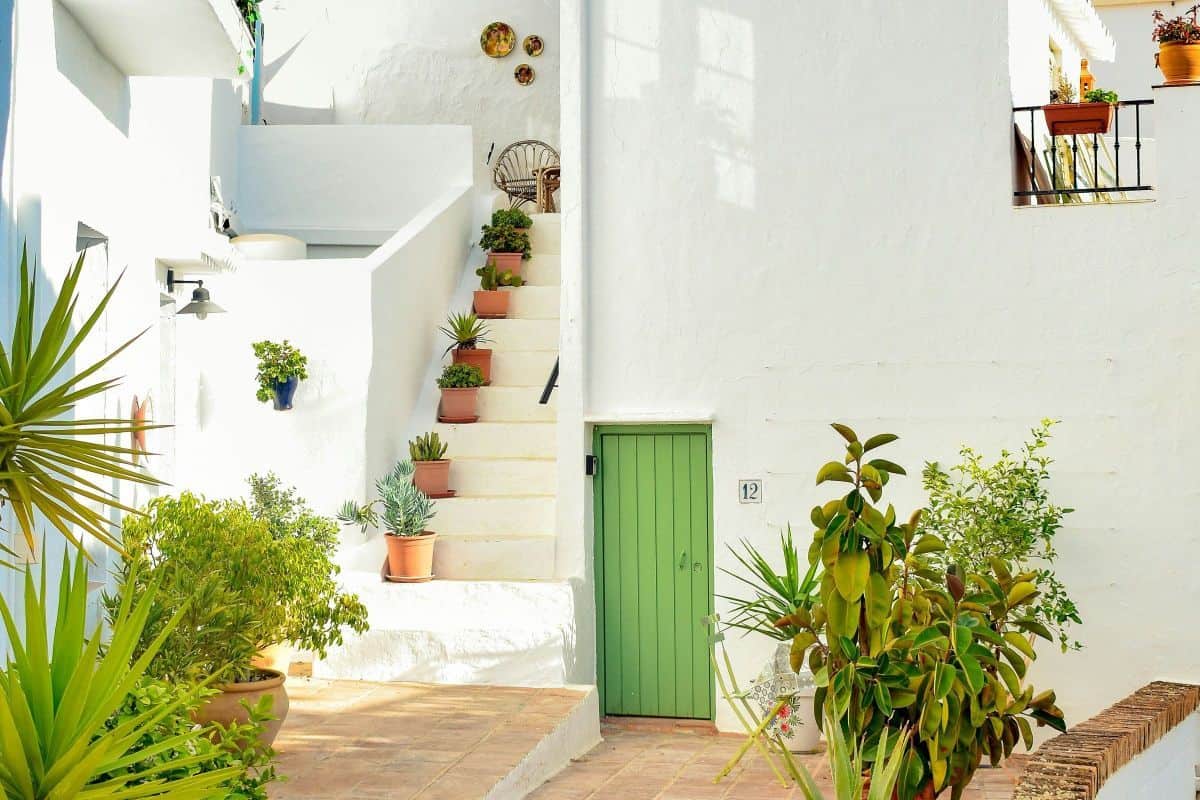
After Nerja, drive 15 minutes up into the hills and you arrive in Frigiliana — consistently voted one of the prettiest villages in Spain. The feel is completely different: cobbled streets climbing steeply between whitewashed houses, flowers cascading from every balcony, ceramic murals on every wall, and views stretching all the way back down to the sea.
A deeply layered history
Frigiliana has one of the most fascinating histories in the region. It was the site of the last major Morisco rebellion in Spain (1569). When Christian authorities tried to force the local Muslim-descendant population to abandon their language and customs, thousands of Moriscos fled to the fortified rock above the village — El Fuerte — for a last stand. They were defeated, and most were killed or sold into slavery. Today, 12 ceramic plaques throughout the village tell the story in chronological order — follow them for a self-guided historical walk.
Things to do in Frigiliana
- Barribarto (the Moorish quarter) — the oldest, most atmospheric part, where the whitewashed houses and tiled steps are at their best
- The 12 ceramic plaques — tell the Morisco rebellion story
- Mirador de Santo Cristo — the best viewpoint over the village rooftops to the sea
- Ingenio de Nuestra Señora del Carmen — a 16th-century palace, still the only functioning miel de caña factory in Europe (sugar cane honey)
- Plaza de las Tres Culturas — a symbolic square honoring Christian, Muslim and Jewish coexistence
What to buy in Frigiliana
- Miel de caña — the traditional sugar cane honey (the only place in Europe still producing it)
- Vino del terreno — sweet local wine
- Handmade ceramics and artisan crafts
- Extra virgin olive oil from nearby groves
Where to eat in Frigiliana
- Bodegas Cueto — traditional, cosy, excellent local wines
- El Mirador — outdoor terrace with full panoramic views
- La Taberna del Sacristán — creative small plates in the old town
Time in Frigiliana: 1.5–2 hours minimum. More if you want to really slow down.
⚠️ Heads up: Frigiliana is steep. Cobbles everywhere. Comfortable shoes aren’t optional. And don’t plan on driving through the old town — park at the entrance and walk.
Suggested Full-Day Itinerary
- 8:30 AM — Pickup at your Malaga hotel, apartment or cruise terminal
- 9:30 AM — Arrive at Nerja Caves (1 hour visit)
- 11:00 AM — Quick photo stop at Playa de Maro (optional)
- 11:30 AM — Arrive in Nerja town, walk the Balcón de Europa
- 1:00 PM — Lunch on Burriana beach or at the Balcón
- 2:30 PM — Drive up to Frigiliana (15 min)
- 2:45 – 5:00 PM — Explore Frigiliana at your own pace, snack or coffee, shopping
- 5:00 PM — Return drive to Malaga
- 6:00 PM — Drop-off at your hotel
This timing is comfortable, not rushed. Plenty of room to adjust: longer lunch, more beach time, or extra time in Frigiliana.
Getting There: Private Tour vs Public Transport vs Car
| Option | Pros | Cons |
|---|---|---|
| Private tour | Door-to-door, no logistics, local insight, flexible timing, fits everything in | Highest cost (€600+ per group) |
| Rental car | Full flexibility, own pace, affordable for 4 people | You drive — someone has to stay sober at lunch |
| Group coach tour | Budget-friendly (€40–60/pax) | Fixed schedule, large groups, rushed, no Frigiliana time flexibility |
| Public transport | Cheapest (€10–15/pax) | Multiple bus transfers; hard to include the Nerja Caves; Frigiliana bus limited |
Honest take: public transport works if you’re in Nerja for multiple days. For a single day from Malaga trying to see everything, a car or private tour is dramatically easier.
Best Time of Year to Visit
- April–June (BEST): warm, not hot, flowers in Frigiliana, manageable crowds. Our favourite time.
- September–October: sea is still warm, crowds thin after mid-September. Equally good.
- July–August: beaches are at their best, but Frigiliana is hot and packed at midday. Start at 7:30 AM or go in late afternoon.
- November–March: quiet, cool (14–20°C), great light. The caves stay constant year-round and Frigiliana is magical without crowds.
One to plan around: the Frigiliana 3 Culturas Festival in late August — three days celebrating Christian, Muslim and Jewish heritage with music, food and markets. Beautiful but the village is crowded.
What to Wear and Bring
- Comfortable walking shoes — non-negotiable for Frigiliana’s cobbles
- Light jacket — the Nerja Caves stay at 19°C, a bit cool after the sun
- Sun protection — hat, sunscreen, sunglasses
- Water bottle
- Swimwear if you want a beach swim
- Space in your bag — you’ll probably buy miel de caña, ceramics or wine in Frigiliana
Who This Day Trip Is Perfect For
- Couples looking for a scenic, romantic day away from the resorts
- Families — caves + beaches + village = something for everyone
- Cruise passengers with a full day in Malaga port
- First-time Costa del Sol visitors who want coast and mountain in one day
- Photographers — Frigiliana and the Balcón de Europa are both stunning
- Travellers who’ve already done Ronda and want a different kind of day
Anyone with reduced mobility should know Frigiliana is steep and cobbled. The village is still worth visiting (the first streets from the entrance are flatter) but plan carefully.
Frequently Asked Questions
How far is Nerja from Malaga?
About 55 km east of Malaga, 1 hour by car on the A-7 motorway. From Marbella it’s about 1h 45 minutes.
Can you do Nerja and Frigiliana in one day?
Yes, easily. The two towns are only 6 km apart. A full day from Malaga (8 hours door-to-door) comfortably covers the Nerja Caves, Nerja town, lunch, and Frigiliana.
How much do the Nerja Caves cost?
€15 adult, €12 child (6–12), free under 6. Book ahead on cuevadenerja.es for weekends and summer.
Is Frigiliana worth visiting?
Absolutely. Frigiliana is consistently voted one of the prettiest villages in Spain. Most of our guests say it’s the highlight of their day.
How long do you need in Frigiliana?
1.5–2 hours minimum. Longer if you want to slow down, shop, or sit with coffee at a viewpoint.
Can you swim at the Nerja beaches?
Yes — Burriana, El Salón, Calahonda and Playa de Maro are all swimmable in summer. Water temperature peaks around 23–24°C in August.
What’s the best time to visit Nerja and Frigiliana?
April–June and September–October. Warm but not hot, comfortable for walking, and the Mediterranean light is at its best.
Is Nerja or Frigiliana better to stay overnight?
Nerja — more restaurants, more bars, easier logistics. Frigiliana is magical at sunset but quieter after dark.
How much does a private tour cost?
Our private Nerja & Frigiliana day trip starts from €600 per group , including pickup, private transport, and local driver-guide.
Book a Private Nerja & Frigiliana Day Trip
We’ve been running private Nerja & Frigiliana day tours from Malaga and Marbella for over a decade. Door-to-door pickup, licensed English-speaking driver, flexible timing, and the kind of local knowledge that makes the difference between a good day and a great one.
- From €600 per group (up to 6 pax)
- Duration: ~8 hours
- Includes: private driver, flexible itinerary, hotel pickup
- Pickup: Malaga, Marbella, Costa del Sol hotels, or cruise terminal
Final Thoughts
Nerja and Frigiliana is one of the most complete day trips you can do from Malaga — dramatic caves, a clifftop promenade, a 40,000-year-old archaeology site, and one of Andalusia’s most beautiful white villages, all within an hour of the city. Add the Maro cliffs or a kayak to a hidden waterfall if you have extra time. For most visitors, it’s the highlight of their Costa del Sol trip. Book a private day trip with us and let a local driver handle the logistics.