Are you planning your first trip to Spain but feeling overwhelmed by the myriad of choices and cultural nuances? You’re not alone! With its rich history, breathtaking landscapes, and tantalizing cuisine, Spain offers an adventure like no other. However, without proper planning, you risk missing out on unforgettable experiences. Dive into our top tips for traveling in Spain to unlock the secrets of this vibrant country and ensure your journey is both smooth and spectacular. Don’t let your dream trip turn into a logistical nightmare—read on to get started!
🎯 Key Takeaways
- Research destinations to create a well-rounded itinerary for your Spain trip.
- Book popular attractions in advance to avoid missing out on must-see sites.
- Pack appropriate clothing based on the varying climates of Spain’s regions.
- Immerse yourself in local culture by participating in regional festivals.
- Recognize Spain’s diverse languages and customs beyond common stereotypes.
⚡ TL;DR
Traveling in Spain for the first time promises a rich blend of history, culture, and cuisine. Key tips include researching destinations, booking popular attractions in advance, and packing for regional weather variations. Embrace Spain’s diverse landscapes and unique regional cultures while dispelling common misconceptions about language and traditions to enhance your travel experience.
Table of Contents
Introduction
Traveling in Spain for the first time can be an exhilarating experience. The blend of rich history, diverse landscapes, and vibrant culture promises an unforgettable journey. However, proper planning and preparation are essential to make the most out of your trip.
Importance of Planning and Preparation
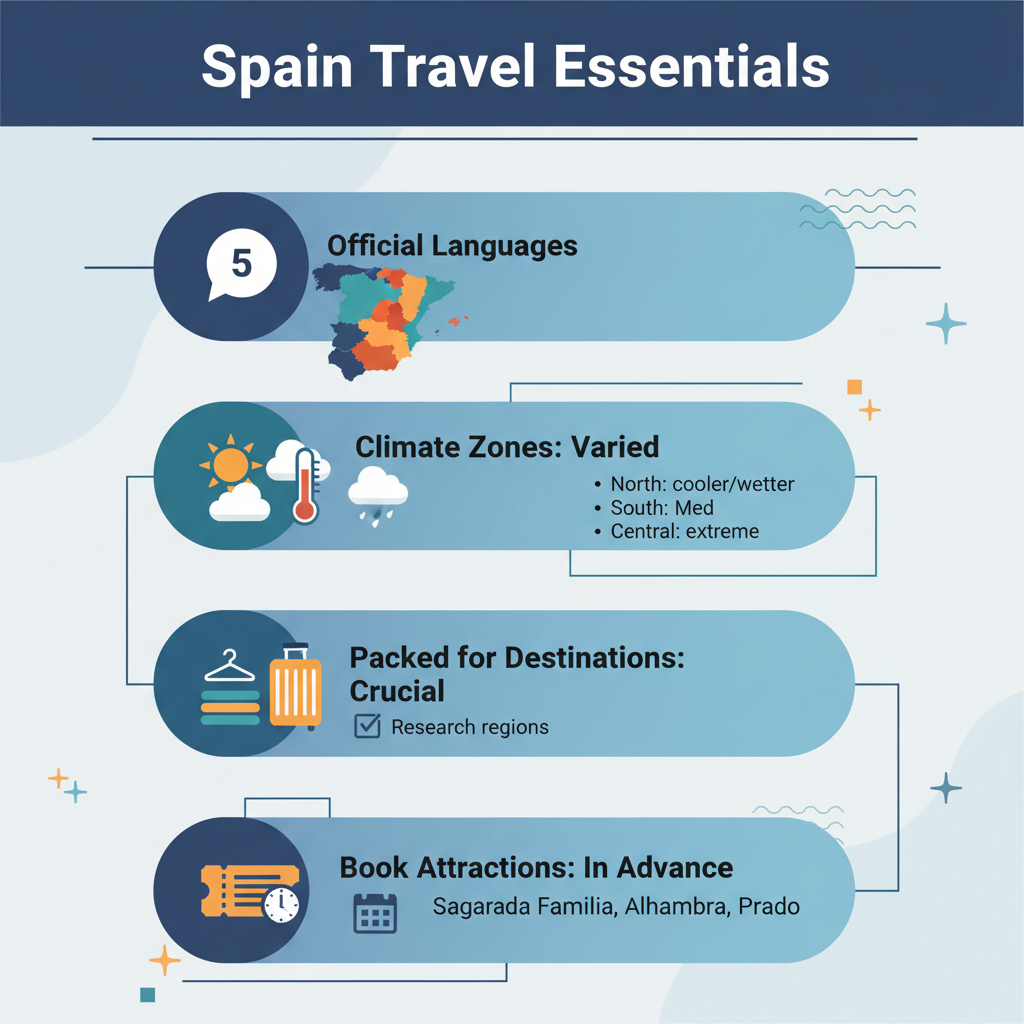
- Research Destinations: Spain offers a variety of experiences from bustling cities to tranquil beaches. Knowing where you want to go helps in creating a well-rounded itinerary.
- Book in Advance: Popular attractions like the Sagrada Familia or Alhambra often require advance reservations. Booking early ensures you don’t miss out.
- Pack Accordingly: Spain’s weather varies significantly by region. Packing appropriate clothing for your destinations is crucial.
Excitement and Anticipation
Experiencing a new culture brings its own set of thrills. You’ll have the chance to:
- Enjoy world-famous cuisine like paella and tapas.
- Participate in local festivals such as La Tomatina or Feria de Sevilla.
- Discover architectural marvels from Gaudi’s works in Barcelona to Moorish palaces in Andalusia.
What to Expect
Expect a country that’s both modern and steeped in history. Spain is known for its:
- Historical Sites: From Roman ruins to Gothic cathedrals, historical landmarks are everywhere.
- Cultural Diversity: Each region has its own unique traditions, languages, and cuisines.
- Friendly Locals: Spaniards are generally warm and welcoming, making it easier for you to immerse yourself in the local way of life.
Proper planning combined with the excitement of new experiences sets the stage for an enriching adventure in Spain.
Understanding Spain: Beyond the Stereotypes
Dispelling Common Misconceptions about Spain
Many first-time visitors arrive in Spain with preconceived notions shaped by popular media. It’s essential to recognize that Spain is not just beaches, sangria, and flamenco. While these elements are part of the Spanish charm, they do not encapsulate the country’s full essence.
Common misconceptions include:
- Language: Many assume that everyone in Spain speaks only Spanish (Castilian). In reality, Spain boasts five official languages: Castilian, Catalan, Galician, Basque, and Aranese.
- Climate: Spain’s climate is incredibly varied. The north experiences cooler, wetter weather while the south enjoys a Mediterranean climate. The central plateau can be quite extreme with hot summers and cold winters.
- Culture: The assumption that every Spanish region has a unified culture overlooks the distinct traditions and customs of regions like Catalonia, Basque Country, and Andalusia.
Exploring the Diverse Landscapes and Cultural Heritage of Spain
Spain’s landscapes range from pristine beaches to rugged mountains, each offering unique experiences.
- Northern Spain: Known for its lush greenery and coastal beauty. The Basque Country and Galicia offer stunning landscapes perfect for hiking and exploring.
- Central Plateaus: Home to historic cities like Madrid and Toledo, this region blends modernity with rich historical heritage.
- Southern Spain: Famous for its Moorish architecture and sun-soaked coastlines. Andalusia exemplifies this with landmarks like the Alhambra in Granada.
Spain’s cultural heritage includes Roman ruins, Gothic cathedrals, Moorish palaces, and contemporary art museums. Each region offers a different slice of history waiting to be discovered.
Unique Aspects of Spanish Culture Beyond Popular Stereotypes
Spanish culture extends far beyond flamenco dancers and bullfighting arenas.
- Festivals: Unique celebrations such as La Tomatina in Buñol or the elaborate Easter processions in Seville highlight regional traditions.
- Cuisine: Each region boasts its own culinary specialties. For instance:
- Valencia is renowned for authentic paella.
- Andalusia offers gazpacho and bocadillo de calamares.
- Catalonia features dishes like escalivada and suquet de peix.
- Daily Life: The siesta tradition reflects Spain’s laid-back lifestyle. Expect shops to close during afternoon hours (2-5 pm) as locals enjoy a break from their daily routines.
Understanding these facets provides a deeper appreciation of Spain’s rich tapestry beyond common stereotypes.
Choosing the Right Time to Visit
Spain’s climate varies significantly by region, making it essential to choose the best time to visit based on your interests and activities:
Overview of the Different Seasons in Spain
- Spring (March to May): Mild temperatures and blooming landscapes make spring ideal for sightseeing. Popular destinations like Seville and Granada host colorful festivals such as Feria de Abril.
- Summer (June to August): The warmest months, perfect for beach vacations along the Costa del Sol and Balearic Islands. However, cities like Madrid can be uncomfortably hot.
- Autumn (September to November): Offers mild weather and fewer tourists, making it another excellent time for cultural exploration. The grape harvest season is also a highlight.
- Winter (December to February): Ideal for budget travel with cheaper flights and accommodations. Coastal areas remain mild, while northern regions like the Pyrenees offer winter sports.
Benefits of Traveling During the Low Season
Traveling during the low season brings several advantages:
- Reduced Crowds: Major tourist attractions like La Sagrada Familia or Alhambra are less crowded, allowing a more relaxed experience.
- Lower Costs: Accommodations and flights are often significantly cheaper. Restaurants may also offer better deals.
- Authentic Experience: Engage more deeply with local culture as there are fewer tourists around.
Tips for Avoiding Crowds and Getting Better Deals
To make the most out of your trip:
- Book in Advance: Secure better rates for flights and accommodations by booking early, especially during peak seasons.
- Visit Off-the-Beaten-Path Destinations: Explore lesser-known towns and regions for a more authentic experience.
- Flexible Travel Dates: Being flexible with your travel dates can help you find the best deals on flights and accommodations.
- Use Local Resources: Websites like AllTrails can help you discover hiking routes away from tourist hotspots.
By considering these factors, you can optimize your travel experience in Spain, ensuring both enjoyment and value.
Essential Travel Tips for First-Time Visitors
Useful Phrases and Basic Spanish Language Tips for Travelers
Learning a few basic phrases can enhance your travel experience in Spain. Here are some essential Spanish phrases:
- Hola (Hello)
- Por favor (Please)
- Gracias (Thank you)
- ¿Dónde está…? (Where is…?)
- Lo siento (I’m sorry)
- Habla inglés? (Do you speak English?)
- Cuánto cuesta? (How much does it cost?)
- La cuenta, por favor (The bill, please)
These simple expressions can make interactions smoother and show respect for the local culture.
Cultural Etiquette and Customs to Be Aware of in Spain
Respecting local customs is crucial when traveling in Spain. Understanding cultural norms will help you navigate social interactions more effectively:
- Greetings: Greet locals with two kisses on the cheeks if you’re a woman greeting another woman or a man. Men typically hug or shake hands.
- Siesta: Many shops and businesses close from 2 PM to 5 PM for siesta. Plan your activities accordingly.
- Dining: Lunch is usually served between 2 PM and 3 PM, while dinner starts around 9 PM. Adjust your eating schedule to match local customs.
- Tipping: Tipping is not common in Spain. However, leaving a small amount for exceptional service is appreciated but not obligatory.
Practical Travel Tips for Navigating Transportation, Currency, and Safety Measures
Navigating through Spain becomes easier with these practical tips:
- Transportation: Utilize modern and safe public transport systems such as buses and trains. For off-the-beaten-path destinations, consider renting a car.
- Currency: Spain uses the Euro (€). Carry some cash as smaller shops and public transport may not accept cards.
- Safety Measures: Be cautious of pickpocketing, especially in crowded areas like Madrid and Barcelona. Use anti-theft bags or security belts to keep your belongings safe.
Following these essential travel tips will ensure a smoother experience during your first trip to Spain.
Top Destinations to Explore in Spain
1. Barcelona: The Vibrant Catalan Capital
Barcelona, the capital of Catalonia, is a city that effortlessly blends history with modernity, offering a rich tapestry of experiences for travelers.
Must-Visit Attractions in Barcelona
- Sagrada Familia: Antoni Gaudí’s masterpiece, the Sagrada Familia, is an iconic symbol of Barcelona. This basilica, still under construction, showcases Gaudí’s unique architectural style and is a UNESCO World Heritage Site.
- Park Güell: Another Gaudí creation, Park Güell is a whimsical park featuring colorful mosaics, serpentine benches, and panoramic views of the city. Perfect for a leisurely stroll and photo opportunities.
- La Rambla: A bustling street lined with shops, cafes, and street performers. Stroll down La Rambla to soak in the lively atmosphere and perhaps stop by La Boqueria market for some local delicacies.
- Gothic Quarter (Barri Gòtic): Wander through narrow medieval streets filled with history. Discover hidden squares, ancient churches like the Barcelona Cathedral, and quaint little shops.
Exploring the Unique Catalan Culture in Barcelona
Barcelona’s culture is distinctively Catalan. The residents speak both Spanish and Catalan, and you will notice bilingual signs throughout the city. Experiencing local festivals such as La Mercè can provide an authentic glimpse into Catalan traditions and community spirit.
Recommendations for Local Cuisine and Nightlife Spots
Cuisine in Barcelona is a delight for food enthusiasts. Some recommendations include:
- Tapas Bars: Try Cervecería Catalana or El Xampanyet for an array of delicious tapas.
- Paella: Although originally from Valencia, you can find excellent seafood paella at places like Can Solé in Barceloneta.
- Churros con Chocolate: A popular snack available at Granja M. Viader, one of the city’s oldest establishments.
For nightlife:
- El Born District: Offers a variety of bars and clubs with a more laid-back vibe.
- Poble Sec: Known for its vibrant tapas scene followed by drinks at local bars.
- Eixample: Home to many trendy clubs like Opium and Razzmatazz, providing electrifying nightlife experiences.
Barcelona provides an engaging mix of history, culture, gastronomy, and entertainment that leaves every visitor with lasting memories.
2. Madrid: The Heart of Spain
Madrid is Spain’s vibrant capital, a city that seamlessly blends historic charm with modern flair. Known for its grand boulevards, lush parks, and rich cultural heritage, Madrid offers an array of experiences that captivate every traveler.
Highlights of Madrid:
- Royal Palace: A visit to the Royal Palace is essential. This opulent residence boasts over 3,000 rooms adorned with lavish decor and historical artifacts. Guided tours offer insights into Spain’s royal history.
- Prado Museum: Art enthusiasts will be in awe at the Prado Museum, home to masterpieces by Velázquez, Goya, and El Greco. Its vast collection spans European art from the 12th to the early 20th century.
Immersing in the lively atmosphere:
Madrid’s tapas bars and clubs are legendary. To experience the true essence of Spanish nightlife:
- Tapas Crawl: Embark on a tapas crawl through neighborhoods like La Latina or Malasaña. Sample patatas bravas, jamón ibérico, and croquetas while sipping on local wines or vermouth.
- Nightclubs: For those who enjoy dancing until dawn, clubs such as Kapital and Joy Eslava offer diverse music genres and vibrant atmospheres.
Insider tips for experiencing local traditions:
- San Isidro Festival: Held in May, this festival celebrates Madrid’s patron saint with parades, music, traditional dances, and food stalls. Join locals in enjoying churros with chocolate at one of the city’s many open-air festivals.
- Flamenco Shows: While Seville is famous for flamenco, Madrid also boasts some exceptional venues. Corral de la Morería is renowned for its passionate performances that provide an unforgettable cultural experience.
Madrid’s blend of rich history, culinary delights, and vibrant nightlife ensures an exciting adventure for any traveler.
3. Costa del Sol: Sun-soaked Beach Paradise
Costa del Sol, located in the southern region of Spain, truly lives up to its name as the “Coast of the Sun.” This Mediterranean coastline stretches over 150 kilometers and is famous for its golden sandy beaches, vibrant nightlife, and picturesque towns.
Stunning Beaches Along Costa del Sol
The beaches are the star attraction here. From the bustling shores of Malaga to the quieter sands of Nerja, there’s a spot for every type of beachgoer. Some must-visit beaches include:
- Playa de la Malagueta: Located in Malaga, it’s perfect for those who enjoy a lively atmosphere.
- Burriana Beach: Situated in Nerja, known for its crystal-clear waters and family-friendly vibe.
- Playa de la Rada: A long stretch of sand in Estepona, ideal for sunbathing and swimming.
Water Activities and Beach Towns
Costa del Sol is more than just lounging on the beach. It offers a myriad of water activities:
- Jet skiing and parasailing in Torremolinos.
- Scuba diving and snorkeling around Marbella’s reefs.
- Sailing tours from Benalmadena Marina.
Exploring beach towns like Marbella, with its upscale resorts and chic boutiques, or Fuengirola, known for its zoo and vibrant promenade, adds a unique flavor to your beach getaway.
Vibrant Nightlife Recommendations
The nightlife along Costa del Sol is equally compelling. Some top spots include:
- Puerto Banus: Famous for its luxury yachts, designer shops, and high-end clubs.
- Marbella’s Old Town: Offers a blend of traditional Spanish bars (tapas bars) and modern clubs.
- Benalmadena’s 24-hour Square: A hotspot for bars and discos that stay open until dawn.
Whether you’re soaking up the sun on pristine beaches or exploring charming coastal towns, Costa del Sol promises an unforgettable experience filled with relaxation and excitement.
4. Valencia: The City of Arts and Sciences
Valencia, a city on Spain’s southeastern coast, is famous for its mix of old-world charm and modern innovation. With its futuristic buildings and lively cultural scene, Valencia stands out from other Spanish cities like Barcelona, Madrid, and Costa del Sol.
Discovering the Futuristic Architecture
The City of Arts and Sciences is Valencia’s most impressive attraction. Designed by Santiago Calatrava, this architectural wonder is home to several must-visit places:
- L’Hemisfèric: A planetarium, IMAX cinema, and laserium.
- Museu de les Ciències Príncipe Felipe: An interactive science museum perfect for families.
- L’Oceanogràfic: Europe’s largest aquarium, featuring marine habitats from around the world.
Indulging in Authentic Valencian Paella
Valencia is where paella originated. You can’t visit without trying this iconic dish in its place of origin. Authentic Valencian paella typically includes rabbit, chicken, and local beans. For an authentic culinary experience, check out these renowned establishments:
- La Pepica: A beachfront restaurant that has been serving delicious paella since 1898.
- Casa Roberto: Known for its traditional approach to making paella.
While you’re in Valencia, don’t miss the chance to taste other local specialties such as horchata (a refreshing drink made from tiger nuts) and fartons (sweet pastries).
Exploring the Vibrant Festivals and Traditions
Valencia’s festivals are a vibrant reflection of its cultural heritage:
- Las Fallas: Taking place every March, this festival showcases intricate sculptures that are eventually set on fire in a breathtaking spectacle.
- La Tomatina: Although it happens in the nearby town of Buñol, this world-famous tomato fight attracts many visitors staying in Valencia.
Participating in these festivals allows you to immerse yourself in Valencian traditions and create unforgettable memories.
From state-of-the-art architecture to delectable cuisine and lively festivals, Valencia has something for everyone.
5. Seville: Flamenco and Rich History
Seville, the capital of Andalusia, is a city that beats to the rhythm of flamenco and boasts a rich tapestry of history. This vibrant city offers an array of experiences that immerse you in Spanish culture.
Immersing in the Passionate World of Flamenco in Seville
Flamenco is deeply rooted in Seville’s culture. For an authentic experience, visit Tablao El Arenal, where talented dancers perform passionate routines accompanied by soulful guitar music. Another notable venue is La Casa del Flamenco in the Santa Cruz neighborhood, known for its intimate setting and captivating performances.
Exploring Historical Sites Such as Alcázar and Cathedral
Seville’s historical architecture is a testament to its storied past. The Alcázar of Seville, a royal palace originally developed by Moorish Muslim kings, features stunning Mudejar architecture and lush gardens. Nearby, the Seville Cathedral, one of the largest Gothic cathedrals in the world, houses Christopher Columbus’s tomb and offers spectacular views from the Giralda tower.
Experiencing the Lively Atmosphere of Feria de Sevilla
The Feria de Sevilla, or Seville Fair, is an annual event held two weeks after Easter. The fairground comes alive with colorful casetas (tents), traditional costumes, horse parades, and plenty of dancing. This event provides a fantastic opportunity to experience local customs, try regional dishes like pescaíto frito (fried fish), and join in on spontaneous flamenco dances.
Recommendations for Local Cuisine
For a taste of traditional Sevillian cuisine, head to El Rinconcillo, one of the oldest tapas bars in Seville. Savor dishes like espinacas con garbanzos (spinach with chickpeas) and solomillo al whisky (pork loin in whiskey sauce). For dessert, don’t miss torrijas, a Spanish-style French toast typically enjoyed during Holy Week.
Embracing Spanish Cuisine
Spanish cuisine is a rich tapestry woven from diverse regional influences. Iconic dishes such as gazpacho, bocadillo de calamares, and ensaimadas offer a delicious introduction to the country’s culinary heritage.
Iconic Spanish Dishes:
- Gazpacho: A cold, refreshing soup made from blended tomatoes, cucumbers, bell peppers, onions, and garlic. Originating from Andalusia, this dish is perfect for hot summer days.
- Bocadillo de Calamares: A simple yet satisfying sandwich filled with fried calamari rings. This Madrid staple is best enjoyed with a squeeze of lemon juice.
- Ensaimadas: A sweet pastry from Mallorca, characterized by its spiral shape and dusting of powdered sugar. Often filled with cream or chocolate.
Authentic Food Experiences:
To truly savor authentic Spanish cuisine, explore local eateries and avoid tourist traps. Each region has its specialties:
- Valencia: Renowned for its paella, a saffron-infused rice dish traditionally made with rabbit, chicken, and vegetables.
- Galicia: Famous for pulpo a la gallega (Galician-style octopus), served with olive oil and paprika.
- Basque Country: Offers pintxos, small snacks typically enjoyed in bars. These range from simple skewers to elaborate mini-dishes.
Tips for Finding Local Markets and Food Festivals:
Markets and food festivals are excellent places to sample local flavors:
- La Boqueria in Barcelona: One of the most famous markets in Spain, offering an array of fresh produce, seafood, and tapas.
- Mercado de San Miguel in Madrid: A historic market where you can taste gourmet tapas and Spanish wines.
- Food Festivals: Events like La Tomatina in Buñol or the San Sebastián Gastronomika provide unique opportunities to experience Spanish culinary traditions firsthand.
Exploring these culinary delights not only satisfies your taste buds but also offers insights into Spain’s rich cultural heritage.
Immersing in Spanish Culture and Traditions
Local culture in Spain offers a rich tapestry of traditions and events that invite you to delve deeper into its heritage. Participating in traditional events is a fantastic way to experience the heart and soul of Spanish society. Here are some key events and customs to consider:
Traditional Events to Experience
- Easter Processions (Semana Santa): Held during Holy Week, these processions are a profound display of religious devotion. Cities like Seville and Málaga host some of the most elaborate parades, featuring intricately adorned floats, hooded penitents, and soulful music.
- La Tomatina Festival: This tomato-throwing festival takes place in Buñol, near Valencia, on the last Wednesday of August. It’s a fun-filled event where participants throw tomatoes at each other, turning the town into a sea of red.
Participating in these events provides an authentic glimpse into the local culture in Spain.
The Importance of Siesta
Understanding the siesta—a traditional afternoon nap—is crucial for adapting to Spanish life. Typically observed between 2 PM and 5 PM, this period sees many shops and businesses close as locals enjoy a leisurely lunch followed by rest. Respecting this custom can enhance your travel experience:
- Plan activities around siesta times
- Use this downtime to relax or enjoy a long meal
Recommendations for Experiencing Local Customs
To fully immerse yourself in Spanish culture:
- Attend Local Fairs: Events like Feria de Abril in Seville offer an immersive experience with flamenco dancing, traditional costumes, and local cuisine.
- Embrace Afternoon Closures: Utilize this time to engage in slower-paced activities such as visiting parks or enjoying extended meals.
- Learn Basic Spanish Phrases: Simple greetings and polite expressions can go a long way in building rapport with locals.
Exploring these traditions provides a deeper understanding of Spain’s cultural fabric. The next section will guide you through experiencing Spain’s vibrant nightlife.
Experiencing the Vibrant Nightlife of Spain
Nightlife in Spain is famous for its energy and excitement, with each city having its own unique way of entertaining people after dark. Whether you’re into dancing all night at a club or watching a passionate flamenco performance, you’ll find plenty of options to suit your preferences.
Finding Popular Clubs and Bars
To have the best time possible, it’s important to know the hotspots:
Madrid
- Teatro Kapital: A multi-level club with various music genres ranging from techno to hip-hop.
- Joy Eslava: Known for its diverse events and historical ambiance.
Barcelona
- Opium Barcelona: Located by the beach, it combines stylish decorations with electronic music.
- Razzmatazz: A massive venue offering different rooms dedicated to different music styles.
Ibiza
- Pacha Ibiza: Iconic for its electrifying atmosphere and world-class DJs.
- Amnesia: Famous for its foam parties and eclectic soundtracks.
For those who prefer live music or a more relaxed atmosphere, there are also many tapas bars and smaller venues scattered throughout Spanish cities. Places like El Junco in Madrid or Harlem Jazz Club in Barcelona provide a cozy setting where you can enjoy great performances up close.
Safety Precautions
While having fun in Spain’s nightlife scene, it’s important to prioritize safety:
- Stay Aware of Your Surroundings: Pickpocketing can be a problem in crowded clubs and bars, especially in popular tourist areas like Madrid and Barcelona.
- Use Reliable Transportation Options: Choose licensed taxis or ride-sharing services when going back to your accommodation late at night.
- Watch Your Drinks: Always keep an eye on your drink to avoid any unwanted incidents.
Remember that nightlife in Spain starts late; many clubs don’t get busy until after midnight. In fact, it’s common for popular venues to open around 11:30 PM and continue the party until morning.
Exploring Spain’s Hidden Treasures
Exploring Spain beyond its well-trodden tourist paths offers a chance to discover hidden gems and experience the country’s authentic charm. Venturing into lesser-known destinations allows you to connect with local culture and enjoy unique experiences away from the crowds.
Hidden Gems and Lesser-Known Destinations
- Ronda: Perched on a dramatic gorge, this Andalusian town boasts stunning views and historic sites such as the Puente Nuevo bridge.
- Cuenca: Famous for its “hanging houses” (casas colgadas), this UNESCO World Heritage site in Castilla-La Mancha offers medieval architecture and picturesque landscapes.
- Cudillero: A quaint fishing village in Asturias, known for its colorful houses and fresh seafood, provides a tranquil escape from bustling cities.
Outdoor Activities in the Spanish Countryside
Spain’s diverse landscapes make it an ideal destination for outdoor enthusiasts. The country offers numerous opportunities for hiking, wildlife spotting, and nature exploration.
- Hiking in Picos de Europa: This mountain range in northern Spain features rugged trails, alpine meadows, and diverse wildlife including wolves and bears.
- Wildlife Spotting in Doñana National Park: Located in Andalusia, this park is a haven for birdwatchers with species like the Iberian lynx and flamingos.
- Exploring Montserrat: Near Barcelona, Montserrat offers scenic hiking trails amidst striking rock formations and the famous Benedictine monastery.
Unique Cultural Experiences Off the Beaten Path
Finding unique cultural experiences off the beaten path often leads to more meaningful encounters with local traditions and lifestyles.
- Traditional Villages of Galicia: Discover ancient Celtic settlements and sample regional dishes like pulpo a la gallega (Galician-style octopus) in small villages.
- Fiestas de San Juan: Participate in this midsummer festival celebrated across various towns, featuring bonfires, music, and traditional dances.
- Wine Tasting in La Rioja: Explore family-owned wineries in this renowned wine region, enjoying tastings and vineyard tours without the usual tourist influx.
Conclusion
Embracing the adventure of your first time visiting Spain opens up a world of vibrant culture, rich history, and diverse landscapes. Every corner of Spain offers a unique experience waiting to be discovered.
Spain is not just a destination; it’s an adventure that promises unforgettable memories.
FAQs (Frequently Asked Questions)
What are some essential travel tips for first-time visitors to Spain?
Some essential travel tips for first-time visitors to Spain include learning basic Spanish phrases, understanding cultural etiquette and customs, and being aware of practical travel tips for transportation, currency, and safety measures.
What are some off-the-beaten-path destinations to explore in Spain?
Some off-the-beaten-path destinations to explore in Spain include hidden gems and lesser-known spots beyond the popular tourist attractions. Additionally, outdoor activities such as hiking and wildlife spotting in the Spanish countryside offer unique experiences.
When is the best time to visit Spain?
The best time to visit Spain depends on personal preferences, but traveling during the low season offers benefits such as avoiding crowds and getting better deals on accommodations and attractions. It’s important to consider the different seasons in Spain and their pros and cons before planning a trip.
What are some top destinations to explore in Spain?
Some top destinations to explore in Spain include Barcelona, Madrid, Costa del Sol, Valencia, and Seville. Each city offers its own unique experiences, attractions, local cuisine, and cultural events.
How can visitors embrace Spanish cuisine while traveling in Spain?
Visitors can embrace Spanish cuisine by trying iconic dishes like gazpacho, bocadillo de calamares, and ensaimadas. Additionally, seeking out authentic food experiences in different regions of Spain and exploring local markets and food festivals can provide a deeper understanding of Spanish culinary traditions.
What should travelers expect when traveling in Spain for the first time?
First-time travelers to Spain can expect a diverse country with unique landscapes and cultural heritage beyond popular stereotypes. It’s important to plan and prepare for the trip by understanding the importance of cultural immersion, language basics, traditional events, vibrant nightlife, and off-the-beaten-path experiences.
Conclusion
In conclusion, traveling in Spain for the first time is a remarkable adventure filled with diverse experiences, rich history, and vibrant culture. By carefully planning your itinerary, booking in advance, and embracing local customs, you can unlock the true essence of this beautiful country. Don’t let misconceptions hold you back; immerse yourself fully and savor everything Spain has to offer. Start preparing for your journey today, and let the anticipation of exploring Spain propel you toward unforgettable memories and new discoveries. Your Spanish adventure awaits!