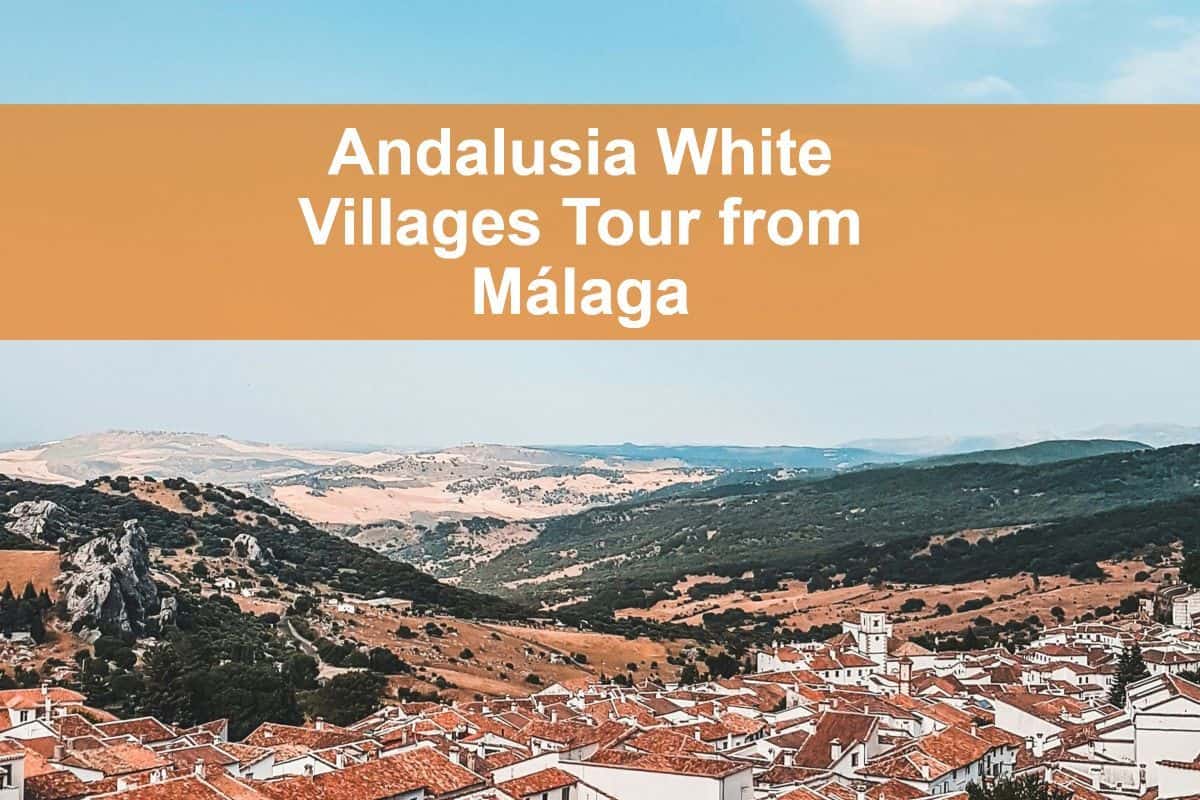
Have you ever wondered what lies beyond the sun-soaked beaches of Southern Spain? Just a short drive inland, the enchanting white villages of Andalusia beckon with their timeless charm and rich history. In this guide, you’ll discover why towns like Ronda, Mijas, and Frigiliana are not just picturesque stops, but gateways to an unforgettable journey through Spain’s Moorish past. Don’t miss out on the insider tips and hidden gems that will elevate your Andalusia white villages tour to new heights!
🎯 Key Takeaways
- Plan a road trip to explore multiple white villages in Andalusia.
- Visit historical sites like Ronda’s Puente Nuevo bridge and Arab baths.
- Choose private tours for personalized experiences and local insights.
- Capture stunning views while driving through scenic mountain roads.
- Enjoy local eateries for an authentic taste of Andalusian cuisine.
⚡ TL;DR
Explore Andalusia’s enchanting “pueblos blancos”—charming white villages like Ronda, Mijas, and Frigiliana—nestled in Málaga and Cádiz. These towns boast rich Moorish history, stunning architecture, and picturesque landscapes, making them ideal for a scenic road trip. This guide offers insights into their unique character, historical sites, and local dining, along with tips for planning a memorable tour.
Table of Contents
Introduction
Southern Spain is famous for its beaches, tapas and flamenco, yet just a short drive inland lies a chain of dazzling hill towns that seem frozen in time. These “pueblos blancos” – literally white villages – cling to rocky slopes and deep gorges, their dazzling lime‑washed houses designed to reflect the scorching summer sun. Walking through the steep streets feels like stepping into a Moorish past: terracotta roofs, medieval churches and ancient fortifications stand shoulder to shoulder with flower‑filled balconies and pretty squares. The White Villages are not a single destination but rather a loose network of small towns scattered across the provinces of Málaga and Cádiz. Each has its own personality and history, and together they make for one of the most rewarding road trips in Spain.
This guide will show you why these villages are special, and it will help you plan your own Andalusia white villages tour. I’ve spent the past few years living on the Costa del Sol and exploring the villages with friends, family and guests. Here you’ll find detailed descriptions of the most photogenic towns, local stories that bring them to life, and practical itinerary suggestions. Along the way I’ll highlight historical sites like Ronda’s Puente Nuevo bridge and the Arab baths, share hidden viewpoints, and point you towards the best local eateries. You’ll also find links to recommended private day trips on Costa Excursions, a trusted local operator based in Málaga.
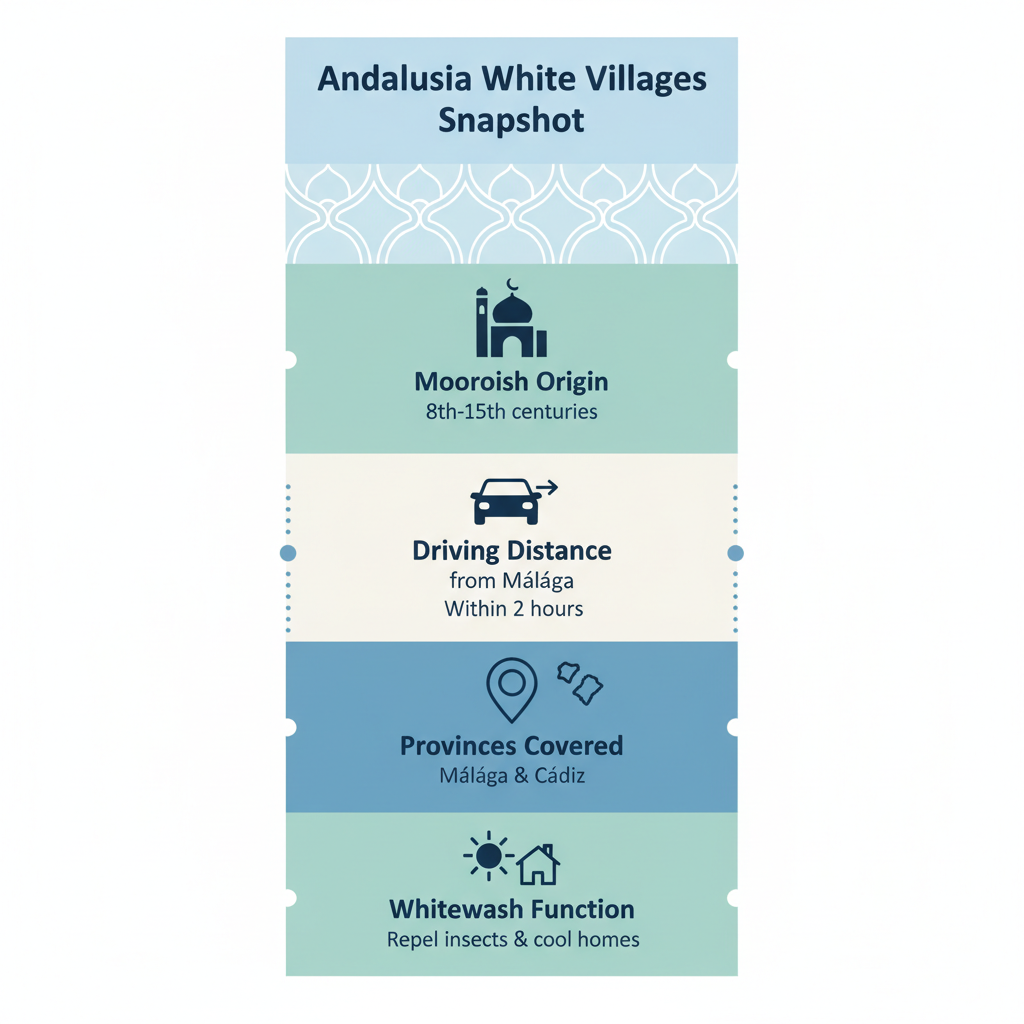
Before diving into each village, take a look at the simple map below. It plots the main white villages discussed in this article. All of them are within two hours’ drive of Málaga, making it easy to string several together in one trip.
Why the White Villages Are Special
While the architecture is a major draw, what truly sets the White Villages apart is the way their history, culture and landscape intertwine. Many of these towns originated in the Moorish period (8th–15th centuries) and were strategically built on rocky outcrops to defend fertile valleys. Their winding alleyways and whitewashed façades are a legacy of this period, as is the layout of neighbourhoods around a central mosque (later turned church). The white limewash wasn’t just decorative – it helped repel insects and keep houses cool in summer. After the Reconquista the towns were gradually re‑Christianised, and new churches and palaces rose alongside the old Arab bathhouses.
Visiting these villages is as much about the journey as the destination. Scenic mountain roads reveal sweeping views of olive groves, cork forests and limestone peaks. In spring the hills are dotted with wildflowers; in autumn the terraces glow with ripe grapes. The best way to experience them is on a leisurely road trip or as part of a private Andalusia white villages tour. A private excursion allows you to set the pace, stop for photos, and enjoy stories from a local guide – a fact Costa Excursions emphasises on their tours.
Below you’ll find a village‑by‑village Ronda guide and Frigiliana travel tips (and beyond), along with itinerary suggestions and links to trustworthy tours.
Ronda: The Dramatic Gateway to the Pueblos Blancos
A Town on the Edge
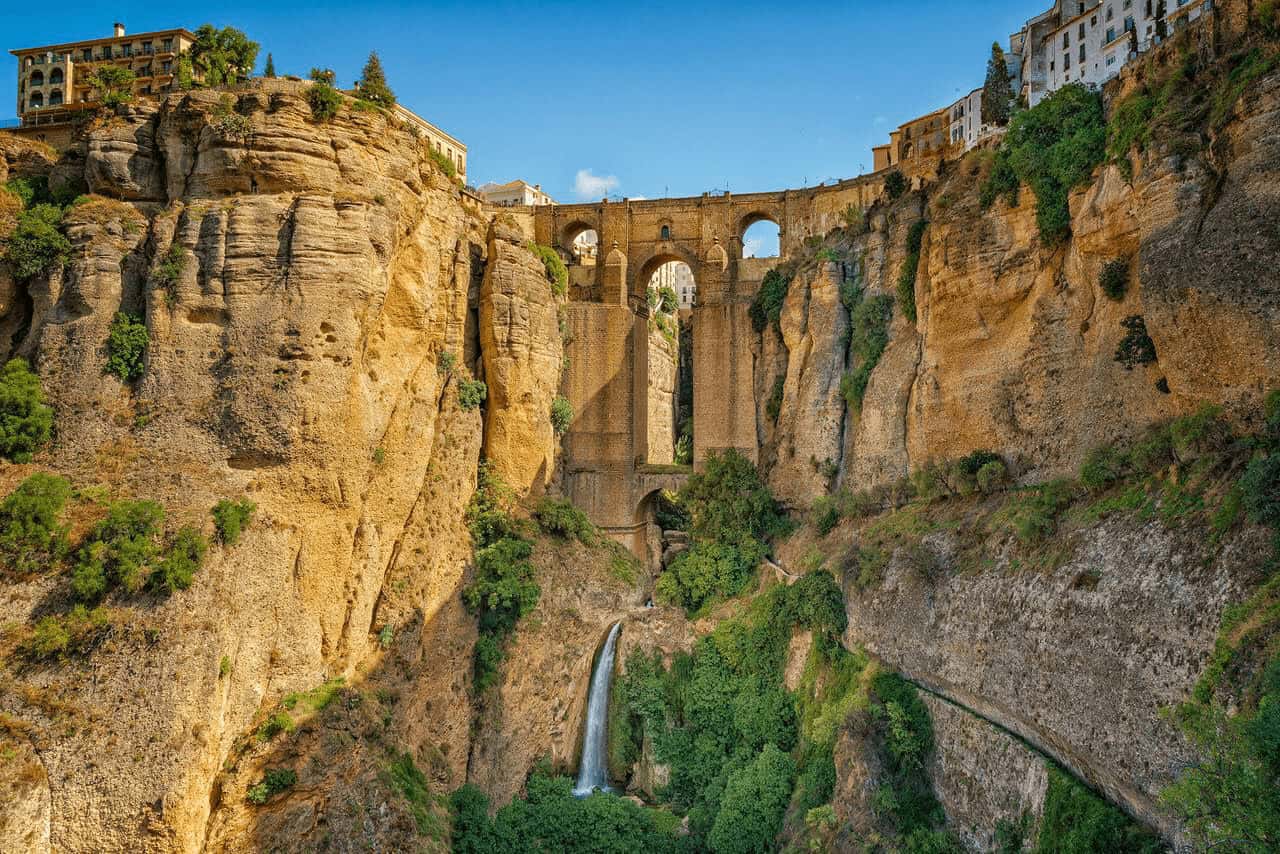
If you only visit one white village, make it Ronda. Perched on a towering plateau above the plunging El Tajo gorge, Ronda combines jaw‑dropping scenery with rich history. The town is bisected by the Puente Nuevo, an 18th‑century bridge whose 120‑metre‑high arch spans the canyon and unites the old Moorish quarter with the more modern part of town. Standing on the bridge at sunset, watching swallows swoop through the gorge and the last rays illuminate the Sierra de Grazalema, is a memory that stays with travellers for years.
Across the bridge lies the Plaza de Toros, one of Spain’s oldest bullrings. Built in 1785, it was the birthplace of modern bullfighting, and today you can tour the ring, see the museum and learn about the sport’s evolution. Nearby are the Baños Árabes de Ronda (Arab Baths), among the best preserved in Spain. Dating to the 13th century, these baths feature horseshoe arches and an ingenious underfloor heating system. Down a steep path you’ll find La Casa del Rey Moro, a 14th‑century palace built on the site of a Moorish fortress. Its terraced gardens cascade down the cliff, and its famous Water Mine – a zigzag staircase carved into the rock – once provided Ronda with a secret water supply. For quieter moments, wander through the Jardines de Cuenca, a series of terraced gardens clinging to the cliffside.
Hidden Viewpoints and Wandering the Old Town
To truly appreciate Ronda’s setting, take the short walk down to the base of the gorge along the Camino de los Molinos. From here you’ll have an unobstructed view of the bridge soaring above. Early morning is the best time, when the light is gentle and the path is quiet. For a different perspective, head to the edge of the new town near the Alameda del Tajo park; its tree‑lined promenade ends at a balcony overlooking the rolling countryside. Another favourite viewpoint is the Ermita de la Virgen de la Cabeza, a small hermitage west of town. From here you’ll have panoramic views of Ronda’s walls, the Puente Nuevo and the distant mountains.
Ronda’s old Moorish quarter, the La Ciudad district, invites exploration. Lose yourself in narrow streets like Calle Armiñán, admire the ornate Church of Santa María la Mayor, and peek into atmospheric courtyards. Don’t miss the Cuenca Gardens and the romantic Casa Don Bosco with its Nasrid details and hillside terraces. For a taste of local life, stop by the lively Mercado de Abastos to sample cured meats, cheeses and olives.
Itinerary Suggestion
A full day in Ronda is enough to visit the major sights and soak up the atmosphere, but if time permits consider staying overnight to see the town when the day‑trippers have left. Costa Excursions offers a Private Day Trip to Ronda departing from Málaga or Marbella. Their eight‑hour tour includes hotel pick‑up, a walking tour of the old town with an expert local guide, visits to the Puente Nuevo and Arab Baths, and free time to explore. Travellers rave about the flexibility and depth of knowledge provided by guides Peter and Thomas. If you’d rather drive yourself, allow at least 1¾ hours from Málaga and park at the underground Plaza de España or Plaza de la Merced car parks.

Mijas: A Clifftop Charmer
First Impressions and Key Sights
On a hillside above the Costa del Sol, Mijas offers sweeping Mediterranean views and an easygoing vibe. The old town is a labyrinth of cobbled lanes lined with whitewashed houses and shops selling ceramics and leather goods. At the heart of the village stands the Virgen de la Peña church, carved into the rock itself. Next door, the Parque La Muralla gardens cascade down the cliff and open onto a panoramic mirador overlooking the coast. Further along you’ll find the Plaza de Toros, a small oval bullring built in 1900, and the charming Hermitage of San Sebastián.
One of my favourite viewpoints in Mijas is the Mirador del Compás, a terrace just below the Plaza de la Constitución. From here you can see Fuengirola’s skyscrapers far below and, on a clear day, the mountains of Morocco shimmering across the sea. Another hidden gem is the narrow alleyway of Calle San Sebastián, lined with pots of geraniums and bougainvillea. In high season Mijas can be crowded; go early in the morning or later in the afternoon for a more relaxed experience.
Food and Culture
Mijas has a thriving artisans’ scene, with workshops producing leather handbags, pottery and hand‑painted tiles. Stop by the Centro de Arte Contemporáneo to see works by Dalí and Picasso (admission is free), then pop into a café for churros con chocolate. For lunch, sample local dishes like porra antequerana (a cold tomato soup) or berzas mijeñas (a hearty stew). In the evening, catch a flamenco show in the Plaza de la Virgen or join locals for tapas at Casa Campo.
Itinerary Suggestion
Mijas is an easy half‑day trip from Málaga; allow about 30 minutes’ drive. Costa Excursions’ Private Day Trip to Mijas includes hotel pick‑up, a walking tour through the old town, visits to the rock‑hewn church, bullring and viewpoints, a stop for local tapas, and time to browse artisans’ shops. The tour is customisable, and you can combine Mijas with another village such as Casares or Ronda for a full‑day experience. If driving, park in the multi‑storey car park at the entrance to town and explore on foot.

Frigiliana: Moorish Charm and Mediterranean Views
Wandering the Moorish Quarter
Often cited as Andalusia’s prettiest village, Frigiliana sits on the slopes of the Sierra de Tejeda overlooking the Mediterranean. Its old town, the Barribarto, is a labyrinth of steep lanes and flower‑decked staircases that still feel distinctly Moorish. In fact, Frigiliana won Spain’s National Award for Beautification in 1982 for preserving its traditional architecture. The alleyways are so narrow that they are impassable by car; explore on foot, stopping to admire the hand‑painted ceramic plaques that tell the history of the village.
At the heart of town stands the Palacio de los Condes de Frigiliana, also known as El Ingenio. This 16th‑century Renaissance mansion now houses the only working molasses factory in Europe. Nearby, the Casa del Apero hosts a small archaeological museum, tourist information and art exhibitions. For panoramic views, climb up to the ruins of the Castillo de Lizar, a Moorish fortress, or follow signs to the Mirador del Sacristán above the village. Nature lovers can take the Ruta del Rio Higuerón, a hiking path that descends into a lush valley and leads to hidden waterfalls.
Festivals and Flavours
Frigiliana comes alive during its festivals. In August the Festival de las Tres Culturas celebrates the town’s Muslim, Jewish and Christian heritage with live music, street food and a procession. In February the Romería de San Antonio sees locals dressed in traditional costume escorting a statue through the streets. For foodies, the village offers dishes like miel de caña (sugar‑cane syrup), migas (fried breadcrumbs with chorizo and peppers), and choto al ajillo (garlic‑flavoured kid goat).
Itinerary Suggestion
A visit to Frigiliana pairs perfectly with nearby Nerja, a seaside town famous for its caves and the Balcón de Europa. Costa Excursions’ Nerja & Frigiliana Private Day Trip starts at the Nerja Caves, whose galleries feature stalactites and prehistoric paintings. After exploring the caves and strolling along the Balcón, the tour winds up to Frigiliana for a guided walk through the Moorish quarter, time for shopping and a taste of local cuisine. The six‑hour itinerary can be customised to include a hike or a visit to a winery. If you’re self‑driving, allow roughly one hour from Málaga; park in the underground lot at the entrance and climb the sloping streets on foot.

Setenil de las Bodegas: Living Under the Rock
Setenil de las Bodegas is perhaps the most unusual white village. Rather than perching on a hilltop, the village grows along the narrow gorge of the Rio Trejo. Some of the houses are literally carved into the overhanging cliffs – you’ll see homes where the rock itself forms the roof. The origin of the name may come from septem nihil, Latin for “seven times nothing,” recalling the seven unsuccessful attempts by Christian forces to capture the town during the Reconquista. Setenil’s cave dwellings were created by enlarging natural caves and adding external walls, and many are still inhabited today.
Start your visit on Calle Cuevas del Sol, where restaurants serve tapas under massive rock ledges. Have a coffee and imagine life in a cave house. Then climb up to the Nazari Castle (Castillo de Setenil), a 12th‑century tower that was part of the town’s defensive wall, for sweeping views of the village and the surrounding olive groves. Another viewpoint, Mirador del Lizón, is accessed via a steep climb to the top of the gorge; from here you can see the winding Rio Trejo far below. Setenil also has some excellent bakeries – try the almond‑rich sopaipillas or the local olive‑oil biscuits.
Itinerary Suggestion
Setenil lies about 30 minutes north of Ronda. If you’re following a Ronda guide, you can easily include Setenil on the same day. Many drivers continue from here towards Olvera or Zahara de la Sierra along the scenic Ruta de los Pueblos Blancos. Costa Excursions can incorporate Setenil into a custom private tour; simply ask when booking your Ronda excursion.
Casares: Cliffside Views and Vultures
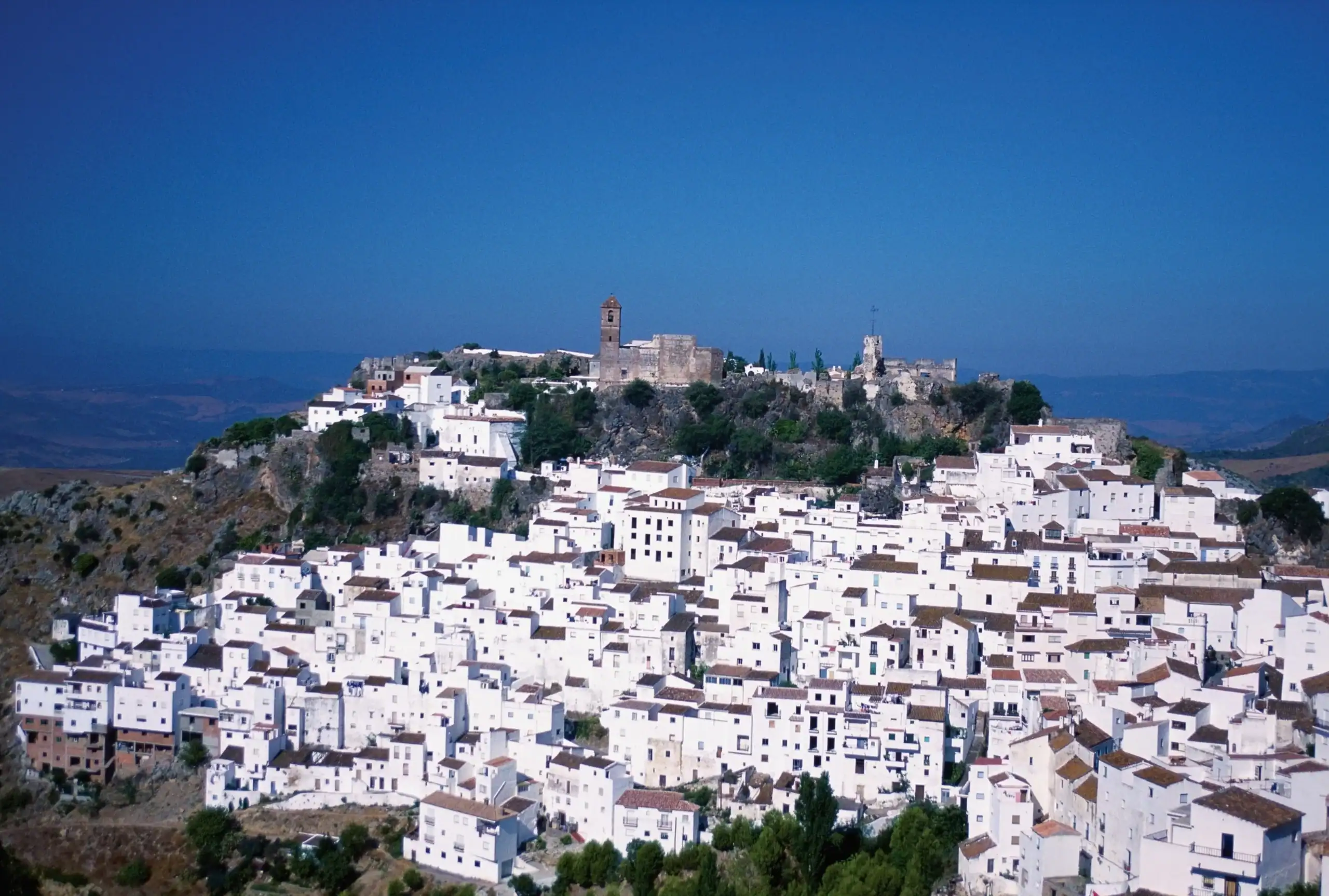
Just west of Mijas, the village of Casares tumbles down a steep hillside like a cascade of sugar cubes. Declared a Historic‑Artistic Site, its narrow streets are too steep for tour buses, preserving a tranquil atmosphere. Begin your visit at the Plaza de España, the town’s main square, where locals gather under orange trees. From here climb up through the ruins of the 13th‑century castle, perched on a rocky outcrop. The castle ramparts offer sweeping views toward Gibraltar and the Mediterranean, and you might spot griffon vultures soaring on the thermals.
Casares also has a small but fascinating cemetery with unique above‑ground tombs. It’s tucked behind the castle and offers another superb viewpoint. For a taste of village life, stop for tapas at one of the bars around Plaza de España, then wander along Calle Villa to browse shops selling local cheese and olive oil. Hikers can follow the Sendero de Los Molinos trail down to the river and its ruined mills.
Itinerary Suggestion
Casares pairs nicely with Mijas for a full day out. If you book Costa Excursions’ private Mijas tour, ask to include Casares; the route between the two villages winds through cork forests and offers glimpses of the coast. Otherwise, drive about an hour west of Málaga, park in the designated lot below the village, and ride the elevator up to the main square.
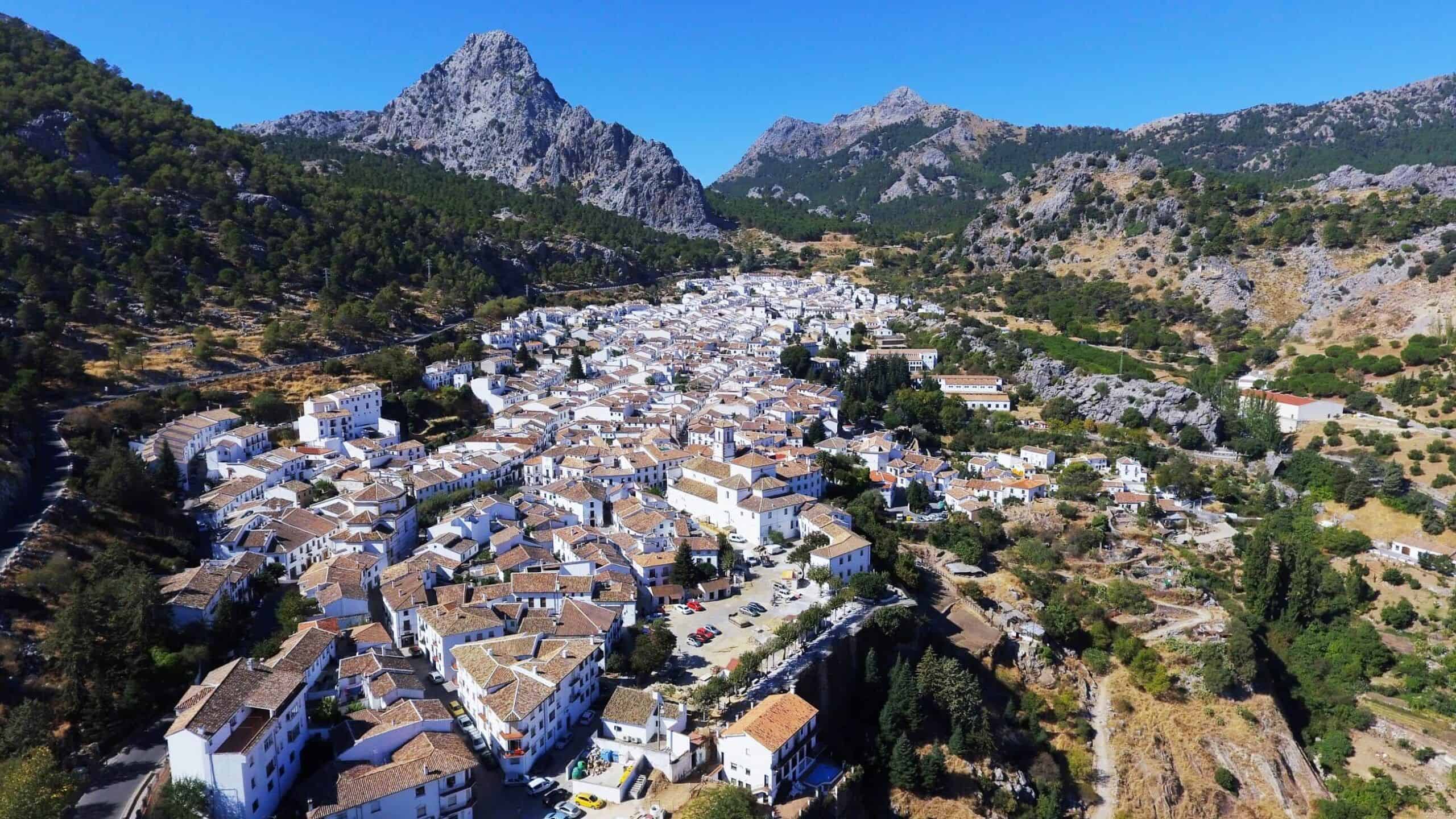
Grazalema: Alpine Atmosphere in the Sierra
The village of Grazalema sits on a rocky ledge deep in the Sierra de Grazalema Natural Park. White houses with terracotta tiles huddle beneath craggy limestone peaks, creating one of the most photographic settings among the pueblos blancos. Grazalema is also famous for its rainfall – this is one of Spain’s wettest areas due to moist Atlantic winds hitting the mountains. As a result, the surrounding landscape is lush and green, dotted with Spanish firs and cork oaks.
Start in the main square, Plaza de España, ringed by cafés and the 18th‑century Iglesia de La Aurora. After a coffee, follow the cobbled streets up to the Mirador de Los Asomaderos for a panoramic view of the village and the valley below. Grazalema is also a base for excellent hikes. One of the most popular is the El Torreón trail, which climbs to the highest point in the park at 1,648 metres and rewards walkers with vistas across the Sierra de Grazalema. For something easier, try the two‑hour Llano del Endrinal circuit, which loops through pine forests and meadows.
Itinerary Suggestion
Grazalema is about 40 minutes’ drive northwest of Ronda. It’s often included on day trips from Seville or Cádiz that also visit Zahara de la Sierra. Costa Excursions can arrange a bespoke tour to Grazalema from the Costa del Sol; the road from Ronda climbs into the mountains and offers spectacular views along the way. If you’re self‑driving, note that parking is limited – use the Mirador El Tajo lot just outside the village.
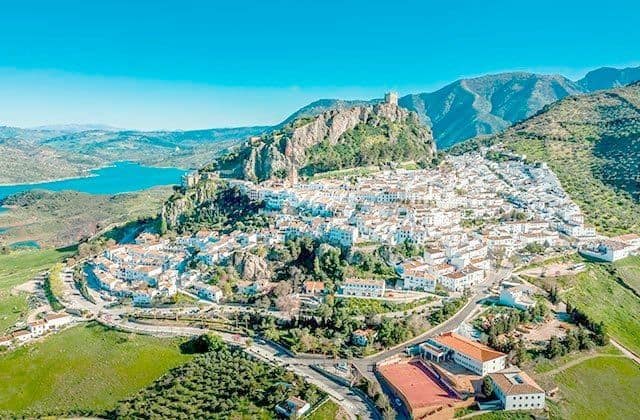
Zahara de la Sierra: Castle and Reservoir Views
Perched on the side of a hill above a turquoise reservoir, Zahara de la Sierra is the stuff of postcards. The village is dominated by a 13th‑century Moorish castle perched on a rocky promontory. Climb the steps up to the castle’s tower for panoramic views of the reservoir, olive groves and the whitewashed houses below. Back in the village, wander through the steep streets to the Iglesia de Santa María de la Mesa and the Capilla de San Juan de Letrán, a small chapel with an ornate façade. Zahara also has several excellent dining spots where you can sample venison stews, goat cheese and local wines.
Itinerary Suggestion
Zahara is a logical stop on the circular Ruta de los Pueblos Blancos that connects Ronda, Grazalema and Setenil. If you’re coming from Ronda, take the scenic A‑2300 road over the Puerto de Las Palomas pass – there are several pull‑outs with breathtaking views. Many tours from Seville include a stop in Zahara along with Ronda and Grazalema. When driving, arrive early to secure a parking spot and enjoy the quiet morning atmosphere.

Nerja: Caves and Coastal Charm
Though not strictly a white village, Nerja is often visited alongside Frigiliana. This seaside town is renowned for the Nerja Caves, a vast network of chambers with stalactites and stalagmites. The Hall of the Cataclysm features a column over 60 metres high, and archaeologists have discovered paintings dating back 42,000 years. After touring the caves, head to the Balcón de Europa – a palm‑lined promenade on the site of an old fortress. The platform was rebuilt in the early 16th century to defend against Berber pirates and later destroyed by French troops in 1812. Today it is a lively place for evening strolls and features a bronze statue of King Alfonso XII. From the Balcón you’ll enjoy views across the Mediterranean and the cliffs of Maro.
Itinerary Suggestion
Nerja pairs perfectly with Frigiliana as described above. If you’re exploring independently, plan to visit the caves in the morning (tickets are limited) and then spend the afternoon swimming at Burriana Beach or exploring the old town’s tapas bars. For an organised excursion, book the Nerja & Frigiliana Private Day Trip mentioned earlier.
Planning Your Andalusia White Villages Tour
One‑Day Highlights Tour
If you only have one day and want a taste of the white villages, consider a loop from Málaga: drive to Ronda in the morning, stop for coffee and views in Setenil de las Bodegas, then make a late afternoon stop in Mijas for sunset over the coast. Alternatively, join a private Andalusia white villages tour with Costa Excursions, which can be customised to include Ronda, Setenil and Mijas in a comfortable vehicle with a local guide. You’ll avoid the stress of narrow mountain roads and gain insider knowledge about history and culture.
Two‑Day Itinerary
To delve deeper, spend a night in Ronda. On day one, visit Casares on the way from Málaga to Ronda; explore its castle and enjoy lunch in the Plaza de España. In the afternoon reach Ronda, tour the town and dine overlooking the gorge. Spend the night in a charming guesthouse. On day two, drive north to Setenil de las Bodegas for a late breakfast, continue to Zahara de la Sierra and Grazalema, then return via scenic mountain roads. This itinerary requires a car, but Costa Excursions can organise a similar overnight package with accommodation and a guide.
Three‑Day or Longer Road Trip
If you have more time, you can expand your route to include the less visited villages of Olvera, Arcos de la Frontera and Vejer de la Frontera in Cádiz province. You could also detour eastwards to the Alpujarras, a cluster of Berber‑style villages on the southern slopes of the Sierra Nevada. When planning, remember that distances look short on the map but roads are winding; allow extra time for photo stops and lazy lunches.
Tips for Visiting the White Villages
- Timing is everything: Many villages get crowded between 11 am and 4 pm, especially Ronda and Mijas. Arrive early or stay overnight to enjoy quiet streets and cooler temperatures.
- Stay hydrated: The summer sun can be intense. Bring water, sun‑cream and a hat, and take advantage of shaded plazas and interior courtyards.
- Wear comfortable shoes: Cobblestone streets can be slippery. Good walking shoes or sandals with grips will make your explorations more enjoyable.
- Respect local life: Remember that these towns are home to residents. Keep noise down at night, follow signs about photography in private areas, and try to support small businesses by buying crafts or dining locally.
- Consider a guide: Although it’s possible to visit independently, having a local guide adds depth. Costa Excursions’ guides share stories about the villages’ Moorish past, regional customs and family anecdotes. Their tours also include convenient pick‑ups and comfortable transport.
Conclusion
Spain’s White Villages are more than just pretty facades – they are living communities whose histories span Roman settlers, Moorish rulers, Christian reconquista and modern tourism. Whether you’re admiring the vertiginous Puente Nuevo in Ronda, exploring the rock‑hewn streets of Setenil de las Bodegas, or watching vultures circle over Casares, you’ll feel the pulse of a land where past and present intertwine. A well‑planned Andalusia white villages tour allows you to experience the diversity of these towns without rushing. Use this guide as your starting point: follow the itinerary suggestions, savour the local flavours, and let the winding roads lead you to your own favourite pueblo blanco.
For an effortless experience, consider booking a private tour through Costa Excursions. Their tailor‑made trips cover all the villages mentioned here and can be adapted to your interests and schedule. Whatever route you choose, I hope this guide inspires you to venture beyond the beaches and discover the whitewashed heart of Andalusia.
Conclusion
In conclusion, the Andalusia White Villages offer a captivating blend of history, culture, and stunning landscapes that make for an unforgettable experience. From Ronda’s dramatic cliffs to Mijas’ charming streets and Frigiliana’s vibrant traditions, each village tells a unique story that enriches your journey. Embarking on a private tour not only allows you to explore these gems at your own pace but also connects you with the rich heritage of the region. So, pack your bags and set out on this enchanting road trip—adventure awaits in the heart of southern Spain!
Frequently Asked Questions
What is the best time of year to visit the white villages in Andalusia?
The best time to visit the white villages is during spring (April to June) and fall (September to October). During these months, the weather is mild, making it perfect for walking tours and enjoying the stunning landscapes. Additionally, you’ll witness wildflowers in bloom in spring and the grape harvest in fall.
Are there guided tours available for exploring the white villages?
Yes, several companies offer guided tours of the white villages, which can enhance your experience. These tours often include transportation, a knowledgeable guide, and visits to key historical sites and local eateries. Costa Excursions is a reputable option that provides personalized tours tailored to your interests.
How can I reach the white villages from Málaga?
The white villages are easily accessible by car from Málaga, with most being within a two-hour drive. You can rent a car or join a guided tour that includes transportation. If you prefer public transport, buses connect Málaga to some of the villages, but check schedules in advance.
What are some must-try local dishes in the white villages?
While in the white villages, be sure to try local specialties such as ‘churros’ with chocolate, ‘espinacas con garbanzos’ (spinach with chickpeas), and ‘pescaito frito’ (fried fish). Each village may have its own unique dishes, so exploring local eateries can lead to delightful culinary surprises.
Can I hike between the white villages?
Yes, hiking is a fantastic way to explore the stunning landscapes between the white villages. There are several trails that connect different towns, offering breathtaking views of olive groves and mountains. Be sure to wear comfortable shoes and carry sufficient water, as some routes can be steep.
What cultural events can I experience in the white villages?
Many white villages host traditional festivals throughout the year, showcasing local culture, music, and food. Events such as Semana Santa (Holy Week) and Feria (village fairs) offer unique insights into the community’s heritage. Check local event calendars before your visit to experience these vibrant celebrations.