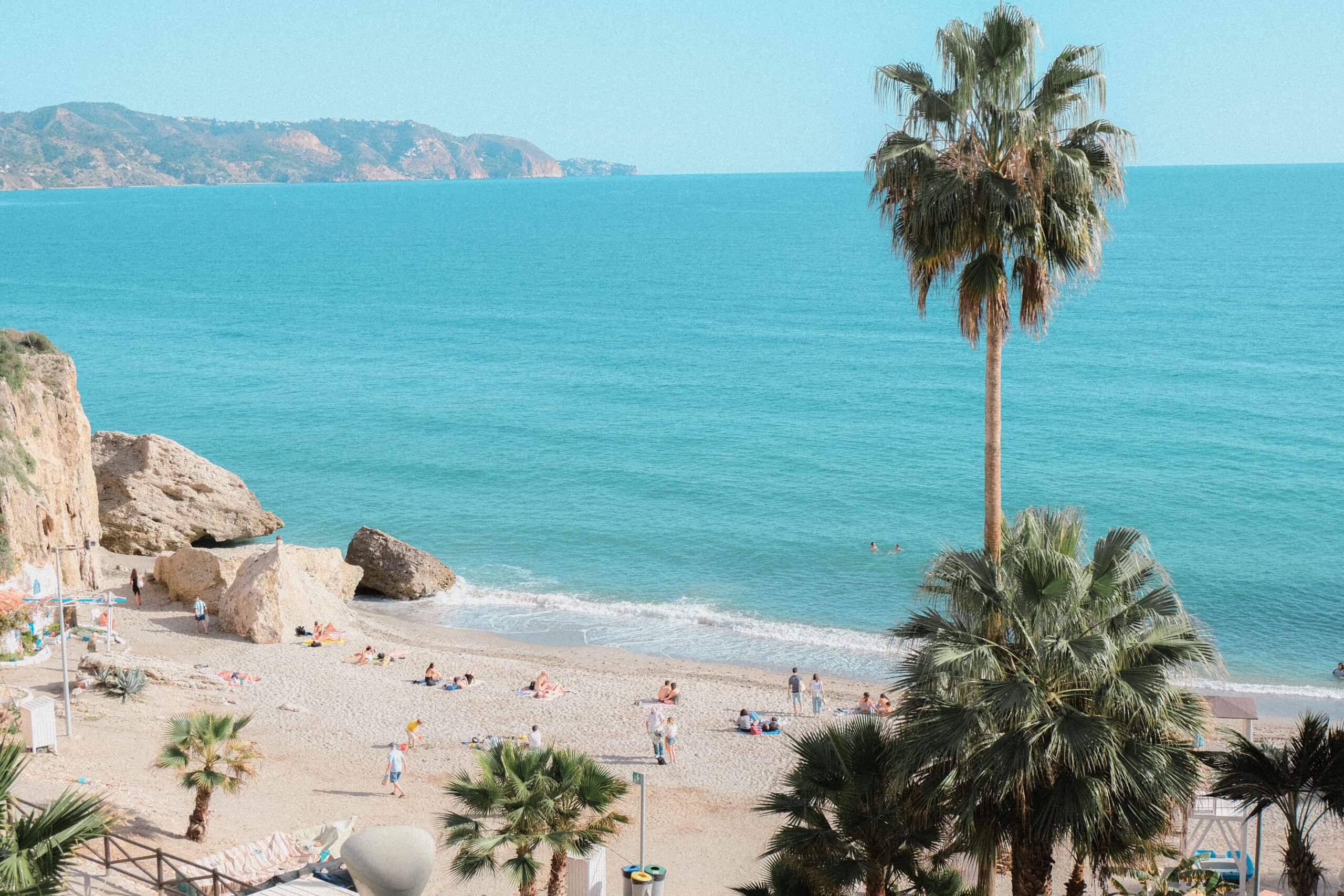
90 km of coastline, dozens of Blue Flag beaches, and everything from wide urban stretches with full amenities to protected dune systems where the crowds simply don’t reach. Here’s an honest guide to which beach fits what you’re actually looking for.
Direct Answer
The best beaches on the Costa del Sol depend on what you want: Cabopino (Marbella) for protected natural dunes and a quieter atmosphere; La Fontanilla (Marbella) for a central, fully-equipped urban beach; Burriana (Nerja) for the best all-round facilities on the eastern coast; Maro (Nerja) for the most naturally beautiful, least developed cove; La Malagueta (Málaga) for the easiest city-centre beach; and Playa del Cristo (Estepona) for a small, sheltered, family-friendly bay. Most are dark volcanic sand, Blue Flag certified, and free to access.
Table of Contents
What Is the Best Beach on the Costa del Sol for a Family With Young Children?
Playa del Cristo, Estepona — a small, curved cove sheltered enough that the water stays calm with minimal current, dark soft sand, and shallow enough for young children to wade safely. Playa el Pinillo, Marbella is a strong second choice — well-equipped, shallow water, wide sandy space, and specifically popular with families for its watersports rentals and room to spread out without feeling crowded.
What Is the Best Beach for Escaping the Crowds and Feeling Like You’ve Found Something Wild?
Playa de Maro, a few kilometres east of Nerja, is the clearest answer. Tucked beneath towering cliffs with agricultural terraces above and genuinely transparent water, it sits within a protected natural area and has never been developed the way the town beaches further along the coast have. Cabopino (Playa de Artola) in Marbella is the closest equivalent without leaving Marbella municipality — a protected dune system (Dunas de Artola), a 16th-century watchtower, and a noticeably more natural atmosphere than anywhere else on that stretch of coast.
Beautiful Malaga beaches with private tours, scenic views, and relaxing atmosphere along the Mediterranean coast.
What Is the Best Beach in Marbella Specifically?
Depends what you want from it:
- Playa de la Fontanilla — the most central option, directly along the promenade from Marbella old town, dark sand, full amenities (sunbeds, showers, chiringuitos), walkable if you’re staying centrally.
- Cabopino / Playa de Artola — 15 minutes from the centre, protected dunes, a small marina with relaxed chiringuitos, and one of the few officially recognised nudist sections on the Costa del Sol at its eastern end.
- Puerto Banús beach — Blue Flag certified, the beach most associated with Marbella’s glamorous reputation, busiest and most see-and-be-seen of the three.
What Is the Best Beach in Nerja?
Burriana is Nerja’s largest and best-equipped beach — long, wide, dark sand, a strong selection of chiringuitos, and water sports rentals including kayaking and paddleboarding. For something quieter and more scenic, Calahonda sits directly beneath the Balcón de Europa viewpoint, small and cove-like with a fishing-village character and steep stairway access. For the wildest, most natural option, Playa de Maro (technically just outside Nerja town) is the standout.
What Is the Best Beach to Visit From Málaga City Without a Car?
La Malagueta is the obvious choice — walking distance from the historic centre, urban in feel with cafés and shops nearby, and the easiest option if you don’t want to arrange transport. Slightly further east, Pedregalejo has a more local, fishing-village atmosphere with a promenade lined by chiringuitos serving espetos (grilled sardines) — reachable by bus or a pleasant coastal walk from the centre.
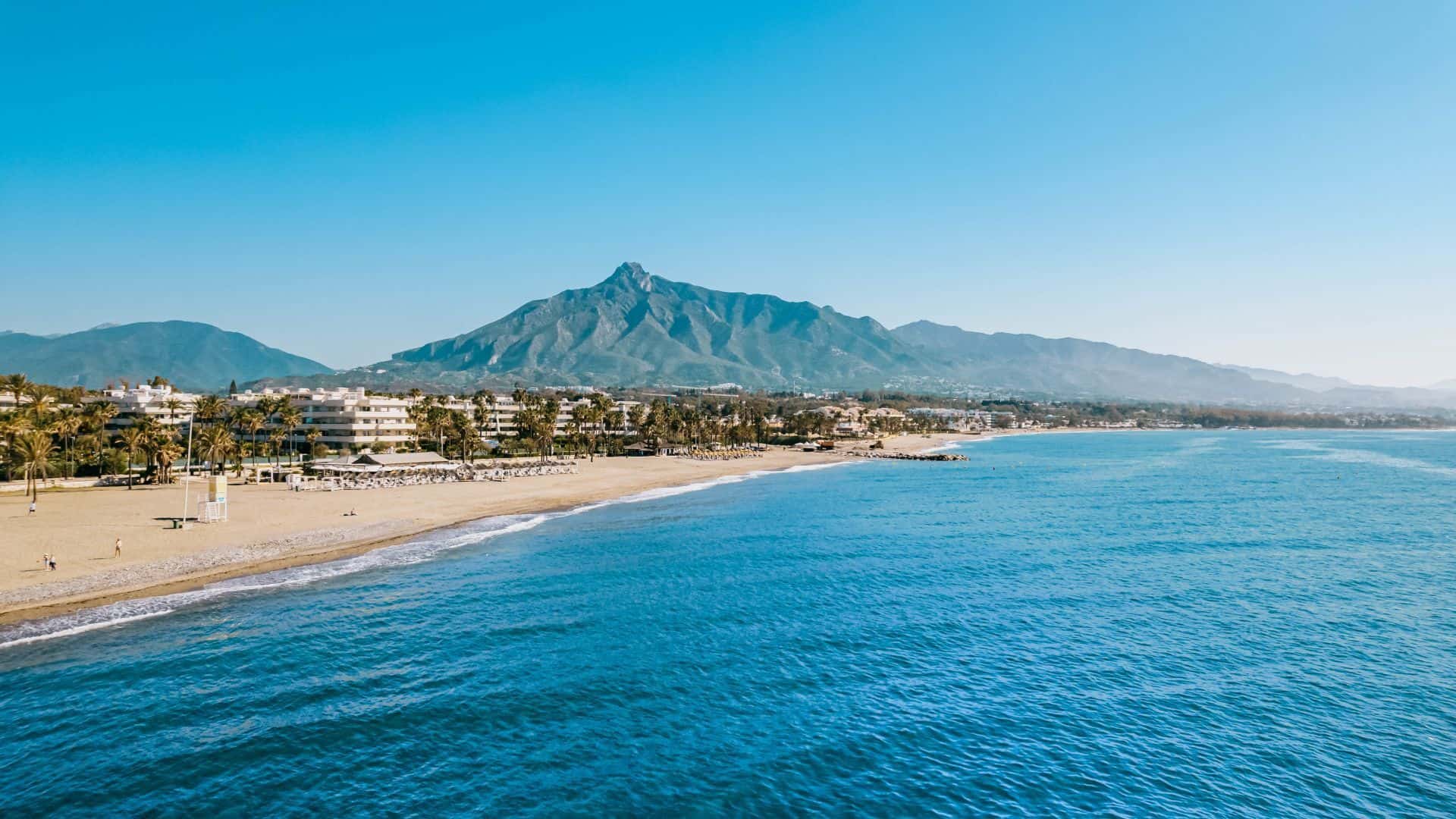
Relaxing beach scene with clear blue waters and mountain scenery, ideal for memorable private excursions from Malaga.
Which Beaches Can I Reach Without Renting a Car?
The Cercanías C1 train connects Málaga to Fuengirola, stopping at most resort towns along the way including Torremolinos and Benalmádena — a genuinely useful option if you’re not driving. Beyond Fuengirola (toward Marbella and Estepona), local buses fill the gap reasonably well, though services are less frequent than the train. Cabopino specifically requires either a car or the M-320 local bus from Marbella bus station followed by a short walk.
Are Costa del Sol Beaches Sand or Pebble?
The great majority are fine, dark volcanic sand — a genuine visual difference from the pale sand of the Caribbean or much of the Atlantic coast, but comfortable underfoot and a defining visual feature of this coastline. Water is generally calm with moderate waves, well suited to swimming rather than surfing.
What Does the Flag System at Costa del Sol Beaches Mean?
Spanish beaches use a standard three-colour flag system: green means safe to swim, yellow means caution advised, and red means no swimming. Flags are raised by lifeguard services and can change through the day based on conditions — worth a glance before going in, particularly on windier days.

Scenic view of Nerja’s beach and rocky coastline, perfect for a day trip along the Costa del Sol.
Quick Reference — Best Beaches by What You Want
| You want… | Go to |
|---|---|
| Full amenities, central location | La Fontanilla (Marbella) or Burriana (Nerja) |
| Natural dunes, quieter atmosphere | Cabopino / Playa de Artola (Marbella) |
| The wildest, least developed option | Playa de Maro (Nerja) |
| Easy access without a car | La Malagueta (Málaga) or anywhere on the C1 train line |
| Calm, shallow water for young children | Playa del Cristo (Estepona) or Playa el Pinillo (Marbella) |
| A scenic cove beneath a viewpoint | Calahonda (Nerja) |
| Local, fishing-village atmosphere | Pedregalejo (Málaga) |
Beach one day, mountains the next
Most guests split their trip between the coast and a day trip inland — Ronda, Gibraltar, or Granada are all within reach and make a good contrast to a beach-only week. See our private day trips → or WhatsApp us at +34 651 026 027
Frequently Asked Questions
What is the best beach on the Costa del Sol overall?
It depends on priorities. Cabopino in Marbella is the best choice for a natural, less crowded atmosphere with protected dunes. Burriana in Nerja offers the best all-round facilities on the eastern coast. La Fontanilla in Marbella is the most convenient central urban option. There isn’t a single “best” — the right answer depends on whether you want amenities, seclusion, or easy access.
What is the best beach for families with children on the Costa del Sol?
Playa del Cristo in Estepona — a small, sheltered cove with calm, shallow water ideal for young children. Playa el Pinillo in Marbella is another strong option, with shallow water and plenty of space for families.
Are the beaches on the Costa del Sol sandy or rocky?
The majority are fine, dark volcanic sand rather than pebble or rock — comfortable for walking and lying on, with generally calm water suited to swimming.
Can I get to Costa del Sol beaches without a car?
Yes, for many of them. The Cercanías C1 train runs from Málaga to Fuengirola, stopping at most resort towns along the way. Beyond Fuengirola, local buses cover the remaining towns, though less frequently than the train.
What is the quietest, most natural beach on the Costa del Sol?
Playa de Maro, just east of Nerja, is widely considered the most naturally beautiful and least developed — set within a protected natural area beneath towering cliffs with clear water. Cabopino in Marbella is the closest equivalent within Marbella municipality.