Marbella’s restaurant scene has a real quality gap. On one side: overpriced seafront terraces trading almost entirely on the view, serving mediocre food to people who’ve already paid for their sunbed and won’t walk further to compare. On the other: a smaller, harder-to-find set of genuinely excellent kitchens — Michelin-starred tasting menus, 60-year-old family-run tabernas, and beach chiringuitos that have been grilling the same fish the same way since the 1970s. This guide covers both ends properly, plus everything in between.
🎯 Key Takeaways
- Skina (2 Michelin stars, Old Town, ~4 tables) is Marbella’s top address — book months ahead for summer.
- El Lago, on a private lake since 2000, is the standout for a romantic, unhurried fine-dining evening away from the marina crowds.
- Puente Romano resort concentrates international star power — Nobu, Cipriani, Coya, and a restaurant from Antonio Banderas himself.
- Casa Eladio (Old Town, family-run since 1965, now third generation) is the most authentic long-running kitchen in the historic centre.
- Chiringuitos — beachfront restaurants, some operating since the late 1970s — are where to go for espetos and a genuinely local Marbella afternoon.
Ask ten different people in Marbella where to eat and you’ll get ten different answers depending on what circle they move in — the Puerto Banús crowd, the Golden Mile resort guests, the Old Town regulars, and the beach-chiringuito locals rarely overlap. This guide covers all four worlds honestly: where the Michelin stars actually are, where the resort hotels concentrate international talent, where the Old Town’s genuine history survives, and where to find the beachfront grilled-fish lunch that’s been a Marbella institution since before most of the marina existed.

Enjoy exquisite culinary creations at the best hotels and restaurants in Malaga.
Table of Contents
Michelin-Starred Dining in Marbella
Marbella holds one of the strongest concentrations of Michelin recognition on the Costa del Sol — as of the 2026 Michelin Guide Spain, several starred restaurants operate within a few kilometres of each other.
🏆 Skina — Two Michelin Stars
Tucked into a narrow street in the Old Town, near Plaza de los Naranjos, Skina is widely considered the finest restaurant on the entire Costa del Sol. The space is genuinely tiny — around four tables — which makes it one of the hardest reservations in southern Spain; in peak summer, dates can sell out within hours of release. The tasting menu draws specifically on Andalusian ingredients: local red prawns from Garrucha, wild turbot from Cádiz, Ibérico pork from Jabugo, each treated with modern technique that never overwhelms the ingredient itself. Expect 10–12 courses across 2.5–3 hours, with an extensive wine list running into the hundreds of labels. Book months ahead for summer dates — genuinely months, not weeks.
🥈 Messina — One Michelin Star
Chef Mauricio Giovanini’s Messina blends Mediterranean and Latin American influences with technical precision. A strong choice for guests who want serious tasting-menu cooking without Skina’s near-impossible scarcity — still difficult to book in high season, but not on the same order of magnitude.
🥈 Nintai — One Michelin Star
On the Golden Mile, Nintai is Marbella’s reference for a Japanese-led tasting experience — an intimate counter setting built around fire, smoke, and aged proteins, from one of Spain’s most decorated culinary teams. A natural choice for guests who want a serious contemporary tasting menu without leaving the Golden Mile corridor
🌊 El Lago — The Lakeside Institution
Not currently Michelin-starred but treated as legendary status in its own right: El Lago has operated on the shore of a private lake in the Elviria Hills since 2000, one of the Costa del Sol’s most enduring fine-dining addresses. The setting is the point as much as the food — a genuine escape from summer’s marina frenzy, with a large terrace overlooking the water. The kitchen runs a single à la carte menu built around contemporary, seasonal Andalusian cooking with zero-mile, locally sourced ingredients. For a special occasion dinner that isn’t about being seen, this is arguably a stronger choice than anything in Puerto Banús.
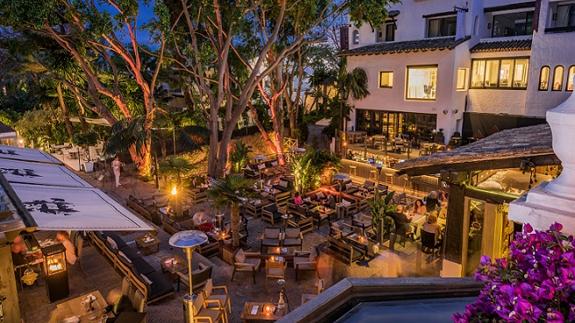
Enjoy a stunning sunset view from this luxurious Marbella hotel terrace, perfect for relaxing and dining on Costa del Sol.
The Puente Romano Resort Cluster — International Star Power
The Puente Romano resort on the Golden Mile has become a dining destination in its own right, concentrating a cluster of internationally recognised restaurant brands within one property:
- Nobu — the Japanese-Peruvian concept from chef Nobu Matsuhisa, one of the most recognised restaurant names in the world
- Cipriani — the historic Italian institution, known globally for its Bellini and classic Venetian cooking
- Coya — contemporary Peruvian cuisine, part of an internationally expanding group
- El Pimpi Marbella — a contemporary take on traditional Andalusian cuisine, notably backed by Marbella-connected actor Antonio Banderas
- El Chiringuito — the resort’s own beachfront restaurant, serving Mediterranean classics and fresh seafood directly on the sand
If you’re staying at Puente Romano, a 30-minute stroll along the beachfront promenade in one direction brings you to Marbella’s old town and Playa de la Fontanilla; in the other direction, the same boardwalk leads to Puerto Banús and its marina.
Marbella Old Town — Where the History Actually Lives
Away from resort dining, the Old Town concentrates traditional Andalusian cooking and small kitchens where menus shift with the season, many close enough to walk between for a drink at one and dinner at another.
Casa Eladio — Three Generations Since 1965
The most significant long-running kitchen in the historic centre. Founded in 1965 by Eladio Cabello Serrano, now led by his grandson, Chef Carlos Cabello Jiménez, Casa Eladio has stayed in the same family for over 50 years — a genuine rarity on a coastline that’s changed as dramatically as this one has. The cooking honours traditional Andalusian recipes with a light, modern touch, using the finest local ingredients rather than reinventing the format.
La Tienda
On a narrow cobbled street in the Old Town, La Tienda offers a modern take on Spanish and Mediterranean cuisine — creative tapas and small plates ranging from tuna tartare to slow-cooked pork cheek, built around fresh, seasonal ingredients.
El Estrecho and Casa Curro
The two names that come up most consistently among Marbella residents rather than guidebooks, for honest, well-executed tapas without any resort-level markup.
Beyond the Old Town — Reliable Local Favourites
- Santiago — traditional seafood done properly, a long-standing local reference point
- La Milla — a long, unhurried beachfront lunch rather than a quick photo-op meal
- Casanis Bistrot — French-leaning with Andalusian touches, a quieter and more romantic dinner than the marina scene typically offers
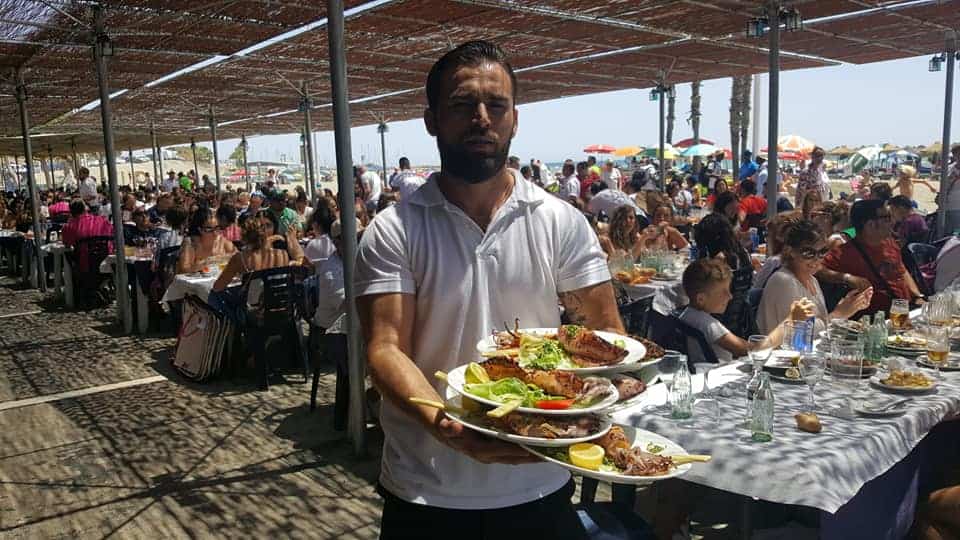
Enjoy authentic local seafood at Malaga’s top restaurants, perfect for a memorable dining experience in the city.
Chiringuitos — Marbella’s Beachfront Institution
The word chiringuito originated in the Caribbean, referring to a small drinks kiosk, and was popularised in Spain in the early 20th century — it’s since become a defining part of Spanish beach culture, and Marbella’s stretch of coastline has some of the most established examples anywhere on the Costa del Sol.
A Golden Mile Institution Since 1978
One of the Golden Mile’s most established beachfront chiringuitos has been operating continuously since 1978 — family-run for over 45 years, loved for its prime seaside setting, lively atmosphere, and a restaurant section specialising in grilled seafood. It’s the kind of place where the setup has barely changed in decades because it never needed to.
Kala Kalua — San Pedro
San Pedro remains less internationally known than central Marbella or Puerto Banús, which works in this chiringuito’s favour — traditional Andalusian cooking with an emphasis on daily-fresh seafood, a tranquil and unhurried atmosphere, and more retained Spanish character than the busier stretches of coast. Lunch service here, when the light is best and the pace slowest, is the ideal timing.
Paradise Beach — Puerto Banús
A relaxed beachfront option directly by the sand near the marina, combining sunbeds, food, and drinks with a classic Marbella beach rhythm — without the intensity of the larger luxury beach clubs nearby. Convenient specifically for visitors staying around Puerto Banús who want a simpler seaside lunch within easy reach of the marina itself.
What to Order at a Chiringuito
- Espetos — sardines skewered on cane and grilled over an open wood fire directly on the beach; the single dish most associated with this style of Costa del Sol dining
- Pescaíto frito — mixed fried fish, a coastal Andalusian staple
- Local red prawns (gambas rojas) — the same regional specialty that appears at Skina also shows up, more casually, at a good chiringuito

Explore Marbella & Puerto Banus, famous for luxury yachts, vibrant nightlife, and stunning seaside scenery.
Puerto Banús Dining — Marina Views, Variable Value
Puerto Banús delivers spectacle more reliably than value — the marina-front seating and yacht views come at prices to match, and quality varies significantly between venues. A few names locals and repeat visitors point to consistently:
- Los Bandidos — a genuine Puerto Banús classic, operating front-line on the marina for over 35 years, full of old-school Marbella character rather than manufactured glamour
- Lobito de Mar — chef Dani García’s take on the chiringuito concept without the beach itself; a pavilion-style space with both an affordable tapas menu and a full menu, built around espeto-grilled fish, paellas, and a genuinely extensive wine cellar
- Carpaccio Ristorante Italiano — front-line marina position with an authentic Italian menu and direct yacht views
For a more contemporary, design-led option, several newer arrivals — BREATHE Marbella and its Ground café underneath — have added a more current café-restaurant register to the Playa del Duque area of Puerto Banús alongside the marina’s more established names.
Old Town or Golden Mile — Which Should You Choose?
| Old Town | Golden Mile / Resort | Puerto Banús | |
|---|---|---|---|
| Character | Traditional, walkable, historic | Polished, resort-affiliated | Marina spectacle, yacht views |
| Price level | Moderate | High | High, variable value |
| Best for | Authentic Andalusian cooking, tapas crawls | International star-chef dining | Nightlife-adjacent dinner, people-watching |
| Booking needed? | Usually not, except weekends | Yes, well ahead for the named venues | Yes for the better-known names |
How Far Ahead Should I Book?
For fine dining and the most in-demand beachfront restaurants, book at least a month ahead in high season (June–September). For Skina specifically, several weeks is often not enough in summer — book as early as your travel dates are confirmed, ideally months ahead. Puente Romano’s headline restaurants (Nobu, Cipriani, Coya) also fill quickly on summer weekends. Casual tapas bars, chiringuitos, and local Old Town favourites generally don’t require advance booking outside peak weekend evenings.
Exploring Marbella before or after a day trip?
Our private tours pick up directly from Marbella’s Old Town, Golden Mile, and Puerto Banús — Ronda, Gibraltar, Granada, and more. See our Marbella pickup guide → or WhatsApp us at +34 651 026 027
Frequently Asked Questions
What is the best restaurant in Marbella?
Skina, in the Old Town, holds two Michelin stars and is widely considered the finest restaurant on the Costa del Sol. It’s extremely small (around four tables) and needs booking months ahead, particularly in summer. For a different register — a romantic, unhurried evening away from the marina — El Lago, on a private lake since 2000, is a strong alternative.
How many Michelin-starred restaurants does Marbella have?
Several, as of the 2026 Michelin Guide Spain, including Skina (two stars), Messina (one star), and Nintai (one star) — making Marbella one of the strongest concentrations of Michelin recognition on the Costa del Sol.
What restaurants are at the Puente Romano resort?
Puente Romano concentrates a cluster of internationally recognised names — Nobu (Japanese-Peruvian, chef Nobu Matsuhisa), Cipriani (Italian institution), Coya (contemporary Peruvian), El Pimpi Marbella (Andalusian, connected to Antonio Banderas), and the resort’s own beachfront restaurant, El Chiringuito.
Where do locals eat in Marbella, away from tourist restaurants?
El Estrecho and Casa Curro for tapas, Santiago for traditional seafood, La Milla for a relaxed beachfront lunch, and Casanis Bistrot for a quieter dinner. Casa Eladio, family-run since 1965 and now in its third generation, is the most significant long-running kitchen in the Old Town.
What is a chiringuito, and where are the best ones in Marbella?
A chiringuito is a beachfront restaurant, typically informal, specialising in grilled fish and seafood — the word originated in the Caribbean and was popularised in Spain in the early 20th century. Marbella has several long-established examples, including a Golden Mile chiringuito operating continuously since 1978, Kala Kalua in San Pedro for a quieter, more local atmosphere, and Paradise Beach near Puerto Banús for an easy beachfront lunch near the marina.
Should I eat in Marbella Old Town or Puerto Banús?
The Old Town offers traditional Andalusian cooking and tapas in a walkable historic setting at moderate prices. Puerto Banús delivers marina spectacle and yacht views but at generally higher prices with more variable value. Neither is objectively better — it depends on whether atmosphere and authenticity or glamour and people-watching matter more to your evening.