
The Costa del Sol gets 320 sunny days a year. That doesn’t mean every month is the same. The difference between a week in August and a week in October — same coastline, same hotels, same tours available — is significant: crowds, prices, temperatures, and what’s actually enjoyable are all different. This is a month-by-month breakdown of what to expect, written by a tour operator who’s been based in Mijas for 12+ years.
🎯 Key Takeaways
- Best overall: May, June, September, October — warm enough for everything, manageable crowds.
- Best for beach: July and August — sea at its warmest (26°C), but accommodation prices peak and day trips get crowded.
- Best for day trips: April–June and September–October — comfortable temperatures inland (Ronda, Granada, Caminito) and fewer coach groups.
- Best for budget: November–February — lowest prices, genuinely mild weather (16–18°C), almost no crowds.
- Avoid if you hate heat: Mid-July to mid-August inland — Ronda and Granada can reach 38°C.
⚡ TL;DR
May, June, September, and October are the sweet spot — warm sea, comfortable temperatures for walking and day trips, and crowds that don’t make the whole experience feel like a queue. July and August are the warmest and most expensive months. November through February are quiet, cheap, and milder than most of northern Europe. March and April can be mixed but are improving.
Table of Contents
Best Time to Visit the Costa del Sol: Month-by-Month Guide (2026)
The Costa del Sol runs 150 km along the southern coast of Spain between Málaga and Gibraltar. It’s protected from cold northerly winds by the Sierra Nevada and the Serranía de Ronda, which is why it gets more sun than almost anywhere else in Europe. But the 320-days-of-sun headline covers a wide range of actual experiences — from a cool, quiet January with 16°C temperatures and empty beaches to an August day when the coast is packed and the temperature inland hits 38°C.
Here’s the honest breakdown of what each month actually delivers — for the beach, for day trips, for families, and for people who want to avoid spending their holiday standing in queues.
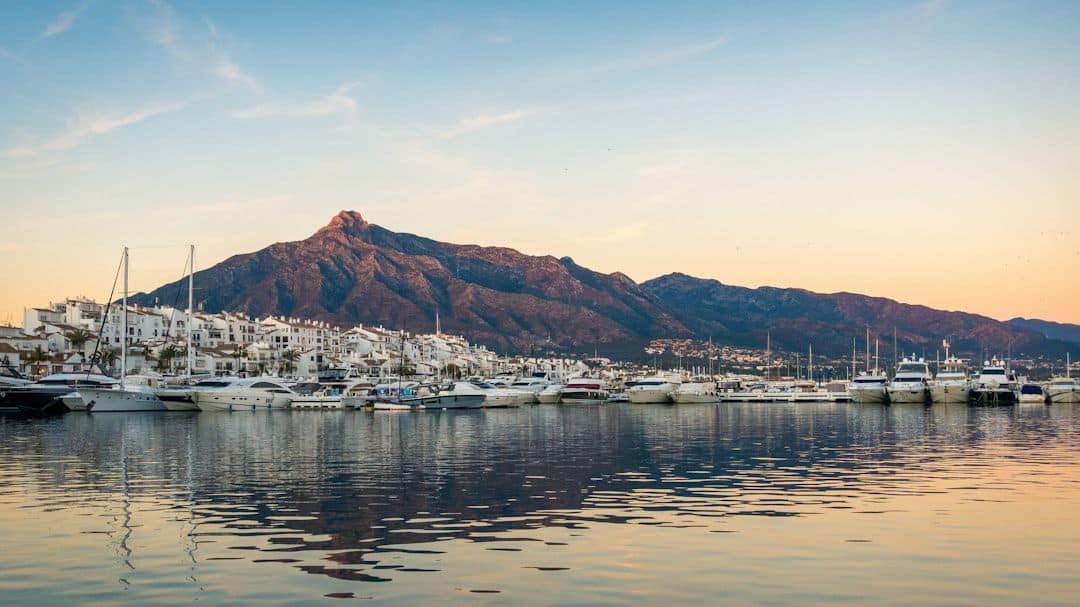
Scenic view of Marbella’s marina with luxury yachts and the Sierra Blanca mountains at sunset.
Costa del Sol Weather at a Glance
| Month | Avg high (°C) | Sea temp (°C) | Rain days | Crowds | Prices |
|---|---|---|---|---|---|
| January | 16 | 16 | 6 | Very low | Low |
| February | 17 | 15 | 5 | Very low | Low |
| March | 19 | 16 | 5 | Low | Low–medium |
| April | 21 | 17 | 5 | Low–medium | Medium |
| May | 24 | 19 | 3 | Medium | Medium |
| June | 28 | 22 | 1 | Medium–high | Medium–high |
| July | 32 | 24 | 0 | Very high | Peak |
| August | 32 | 26 | 0 | Very high | Peak |
| September | 29 | 24 | 2 | Medium | Medium–high |
| October | 24 | 22 | 5 | Low–medium | Medium |
| November | 19 | 19 | 6 | Very low | Low |
| December | 16 | 17 | 6 | Very low | Low |
Month by Month
January and February — Quiet, Cheap, and Underrated
January and February on the Costa del Sol are not what most northern Europeans imagine when they think of winter. Daytime temperatures run 15–18°C — cold enough to need a jacket in the evening, warm enough to sit outside for lunch most days. The sea is too cold for swimming (15–16°C) but the coast itself is almost empty. Hotel prices drop to their lowest. Restaurants are easier to book. The roads are quiet.
For day trips, January and February are excellent months. Ronda in winter — with cold clear air, occasional frost on the surrounding sierras, and almost no tourists — is a completely different experience from Ronda in summer. Granada gets occasional snow on the Sierra Nevada behind the Alhambra. The light is sharper and the distances feel more real.
One caveat: some beach restaurants (chiringuitos) close from November through March. And Caminito del Rey is mostly closed in January for maintenance.
Best for: Budget travellers, couples who want peace and quiet, expats who live here year-round, anyone combining the coast with hiking or cycling.
Avoid if: You specifically came for the beach and the sea.
March and April — Spring Arrives, Crowds Haven’t
March is variable. It can be a warm, clear month with 20°C temperatures and full sunshine. It can also bring Atlantic weather systems that bring several grey, rainy days in a row. The average gives you 5 rain days, which sounds manageable — but they can cluster.
April is reliably better. By mid-April the coast is warming up, the sea is still cool (17°C) but the air is comfortable, the countryside is the greenest it’ll be all year, and the tourist season hasn’t properly started. Hotel prices are still reasonable. Day trips to Ronda and the white villages are particularly good in April — the wildflowers are out across the Serranía de Ronda and the landscapes look like a different place from the brown August version.
Semana Santa (Holy Week, usually late March or early April) brings significant domestic Spanish tourism — Málaga’s Holy Week processions are among the best in Andalusia and worth seeing if you’re here, but expect accommodation prices to spike and the coast to be busy for those specific days.
Best for: Day trips, hiking, photography, early-season beach breaks, Semana Santa processions.
Avoid if: You need guaranteed sunshine every day — April can still surprise you.
May — The Best Month on the Costa del Sol
May is consistently the best month to visit the Costa del Sol. The sea has warmed to 19–20°C — swimmable for most people. Daytime temperatures reach 22–25°C on the coast and slightly warmer inland. There are almost no rain days. The accommodation and flight prices haven’t hit summer peaks. And the tourist crowds are at a manageable level — busy in the right way rather than overwhelming.
For day trips, May is ideal. Ronda at 23°C is comfortable for walking the gorge and the old town. The Caminito del Rey at 20°C is the best version of that walk. Granada with the Alhambra is properly enjoyable rather than a sweat-soaked endurance test. The landscape everywhere is still green.
The Feria de Córdoba happens in May — if you’re thinking of a Córdoba day trip, this is the week to go.
Best for: Everything. Beach, day trips, families, couples. The sweet spot.
June — Still Excellent, Getting Busier
June extends most of what makes May good. Temperatures rise to 26–28°C on the coast and the sea hits 22°C — properly warm for swimming. The long days (sunset around 9:30 PM) mean you can do a full day trip and still have the evening on the coast. The first two weeks of June are particularly good — after the 15th, the school holidays begin across Europe and the crowds build noticeably.
Book accommodation and any timed attractions (Alhambra, Caminito del Rey) in advance for June. They sell out. Don’t assume you can manage it last-minute.
Best for: Families (early June before school holidays end elsewhere), beach plus day trip combinations, long evening dinners on terraces.
Tip: First two weeks of June beat the last two weeks significantly on crowds and prices.
July and August — Peak Season: Pros and Cons
July and August are the hottest, most expensive, most crowded months — and also the most popular. The sea reaches 24–26°C, which is warm enough to stay in for a long time. The evenings are long and warm. Every restaurant, beach bar, and terrace is full of life. If the beach and the evening social scene are your priorities, this is the time.
The problems are real though:
- Heat inland: Ronda, Granada, and Seville can hit 35–40°C in July and August. Day trips to inland destinations are genuinely uncomfortable at midday. Go early (depart by 8 AM) and be back before 3 PM, or wait for September.
- Crowds: The Puente Nuevo viewpoint in Ronda can be 30 people deep for a photo. The Alhambra sells out months ahead. Caminito del Rey sells out 8–12 weeks ahead.
- Prices: July and August hotel rates can be 3–4x the January price for the same room.
If you’re visiting in July or August, the practical approach is: beach in the morning, rest during the 1–4 PM heat, late lunch, day trips departing very early. We adjust our tour departure times in summer accordingly.
Best for: Beach, sea temperature, evening atmosphere, families whose school holidays dictate the timing.
Not ideal for: Day trips to inland destinations, avoiding crowds, keeping costs down.
September — The Best Month for Day Trips
September is the hidden strength of the Costa del Sol calendar. The sea is at its warmest (24°C — warmer than June). The air temperature drops slightly from August’s peak to a more comfortable 26–28°C. The European summer crowds have gone home. Prices drop 20–30% from August levels. And the landscape inland is in harvest season — the Ronda wine zone is doing its vendimia (grape harvest) in September and October, which is the best possible time to visit a winery.
Day trips in September are significantly more enjoyable than in July and August. Ronda at 26°C with thin crowds is a different experience from Ronda at 36°C with coach groups. Granada and the Alhambra are still busy (book tickets months ahead) but the city itself is calmer than in peak summer.
Best for: Everything — the sea is warm, the inland is cooler, and the crowds have thinned. Arguably better than May for people who want a warm sea as well as comfortable day trips.
October — Underrated and Excellent
October is seriously underrated. Temperatures on the coast stay at 20–24°C through most of the month. The sea is still 22°C — swimmable without hesitation. The autumn light is cleaner and sharper than summer. The accommodation prices have dropped back to spring levels. And tourist numbers are at their lowest since March.
The one caveat is the weather: October can bring Atlantic rain systems, particularly in the second half of the month. Rain in October on the Costa del Sol tends to come in short, heavy bursts rather than grey all-day drizzle — but check the forecast before booking day trips to outdoor sites like Caminito del Rey.
The Málaga Film Festival happens in October — if you’re staying in Málaga city, the whole atmosphere of the city changes for the better during festival week.
Best for: Value, quieter beaches, comfortable day trips, photography (the light in October is exceptional), wine tourism (harvest season).
November and December — Off-Season with Caveats
November is the transition month — the last of the warm spell or the first of the cooler season depending on the year. Temperatures average 18–20°C, the sea drops to 18–19°C (still swimmable on warm days, cold for most people), and the rain frequency increases. By late November, some beach restaurants have closed for the season.
December brings Christmas markets to Málaga and Marbella, reasonable temperatures (15–17°C), and almost no foreign tourists. The coast is largely given over to Spanish domestic tourism and the large expat population who live here year-round. Hotel prices are low except for the Christmas week itself (24–31 December) when domestic demand spikes.
Best for: Quiet breaks, budget visits, expats and long-stay visitors, Christmas atmosphere in the cities.
Not ideal for: Swimming, beach focus, summer vibes.
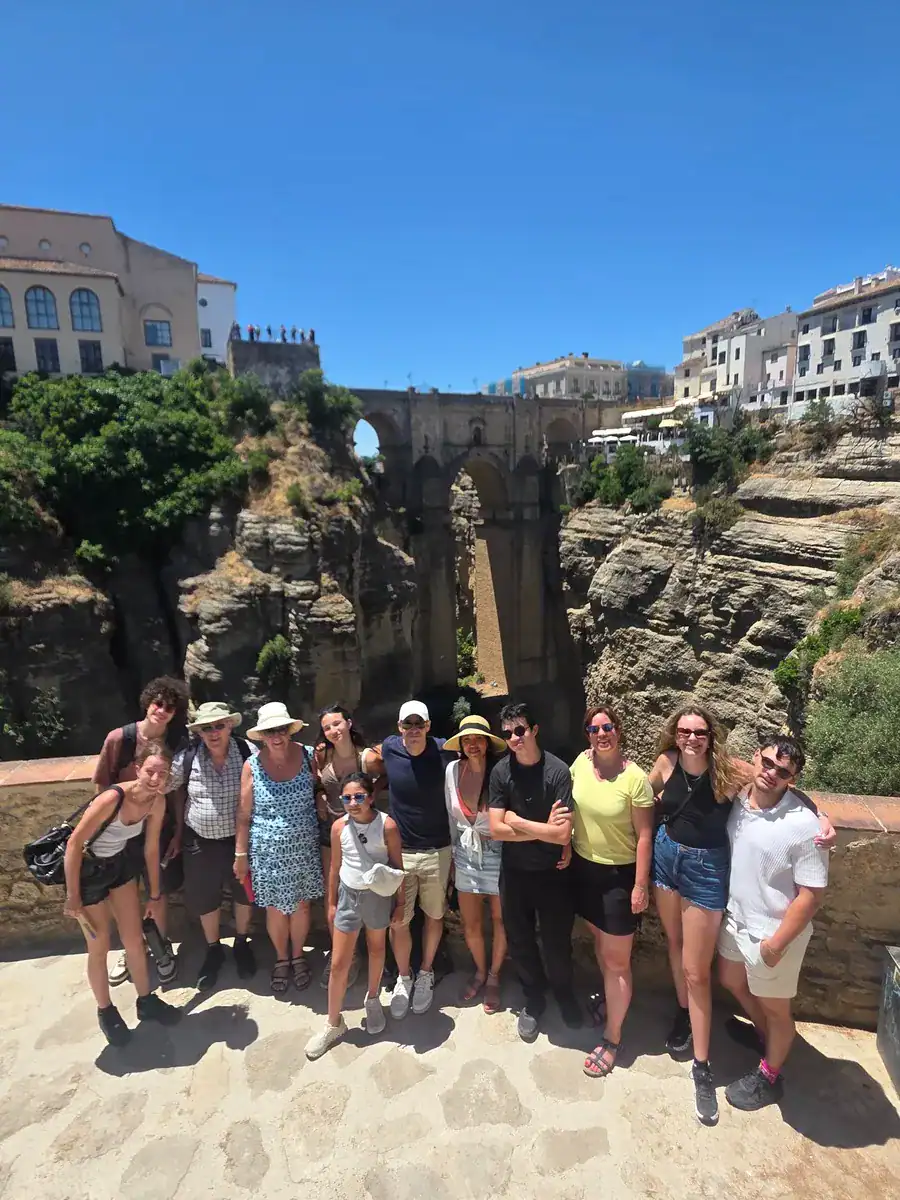
A group of tourists exploring Ronda Gorge, enjoying the stunning landscape and historic architecture in Spain.
Best Time for Each Activity
| Activity | Best months | Avoid |
|---|---|---|
| Swimming | June–October | November–April (too cold for most) |
| Day trip to Ronda | April–June, September–October | July–August midday (heat) |
| Alhambra, Granada | April–June, September–October | July–August (40°C, sold out months ahead) |
| Caminito del Rey | March–June, September–November | January (closed), peak summer heat |
| Nerja and the caves | Year-round (caves are 18°C always) | August weekends (crowded) |
| Gibraltar | Year-round | Bank holiday Fridays (long border queues) |
| Wine tourism (Ronda) | September–October (harvest) | January–February (some wineries close) |
| Hiking | October–May | July–August (extreme heat) |
| Budget travel | November–March | July–August |
| Photography | October–May (soft light) | August midday (harsh light) |
Best Time for Day Trips from the Costa del Sol
If day trips are part of your plan — Ronda, Granada, Gibraltar, Nerja, Caminito del Rey — the timing matters more than people realise. Here’s the honest picture:
Ronda from Málaga or Marbella
April, May, June, September, and October are the best months. The drive through the Sierra de las Nieves is beautiful with the landscape in bloom (spring) or harvest colours (autumn). The temperature in Ronda is manageable for walking the gorge and the old town. Summer works but requires an early departure (8:30 AM) to avoid the worst heat and the peak coach group arrivals. See our complete Ronda day trip guide.
Granada and the Alhambra
Book Alhambra tickets 2–3 months ahead regardless of season. The most comfortable months are April–June and September–October — Granada city in July hits 38°C and the Alhambra complex with those temperatures and summer crowds is a test of endurance. See our Granada day trip guide.
Caminito del Rey
Avoid January (mostly closed for maintenance) and mid-July to mid-August (very hot in the exposed sections). Spring and autumn are the best — comfortable walking temperatures, the gorge landscape at its most photogenic. Book tickets 6–8 weeks ahead in spring and autumn. See our Caminito del Rey guide.
Gibraltar
Year-round. The only seasonal consideration is border queues — bank holiday Fridays and summer weekends see the longest crossing times. We factor this into our tour scheduling. See our Gibraltar guide.
Frequently Asked Questions
What is the best month to visit the Costa del Sol?
May and September are the best months overall. May has comfortable temperatures (22–24°C), a warm enough sea for swimming (19–20°C), almost no rain, and manageable crowds. September has warmer sea temperature (24°C), fewer crowds than summer, lower prices than peak season, and comfortable temperatures for day trips inland.
Is the Costa del Sol good in October?
Yes — October is one of the most underrated months. Sea temperature stays at 22°C, daytime temperatures reach 20–24°C, accommodation prices drop back to spring levels, and the crowds are thin. Some October rain is possible, particularly in the second half of the month, but the weather is generally excellent.
Is it warm enough to swim in May on the Costa del Sol?
Yes for most people. Sea temperature in May is 19–20°C — cold for the first few seconds, comfortable once you’re in. By late May it’s consistently swimmable. If you need warmer water (22°C+), wait until June or September.
Is the Costa del Sol good in winter?
Yes if you’re not specifically coming for the beach. Winter temperatures average 15–18°C — mild by northern European standards, cold enough for a jacket in the evening. The coast is quiet, prices are low, and the day trips to Ronda, Málaga city, and Gibraltar are all very enjoyable in winter. The sea is too cold for swimming from November through April.
When is it too hot on the Costa del Sol?
The coast itself rarely gets uncomfortably hot — sea breezes keep Marbella and Málaga at 30–32°C even in peak summer. The problem is inland destinations. Ronda, Granada, and Seville regularly hit 36–40°C in July and August. If you’re planning day trips, plan them for April–June or September–October, or depart very early (before 9 AM) in summer.
When should I book Alhambra tickets for a Granada day trip?
2–3 months ahead in high season (April–October). July and August weekends sell out even earlier. Book at tickets.alhambra-patronato.es — the official site. If tickets are sold out on the open market, booking a private tour with us gives access to our operator allocation.
What is the Costa del Sol weather like in April?
April averages 18–21°C on the coast with about 5 rain days. It can be variable — some April weeks are warm and sunny, others bring grey Atlantic weather. The first half of April (before Holy Week) tends to be more settled. By late April the weather is reliably good. The countryside inland is green and the wildflowers are out in the Serranía de Ronda.
When are the fewest tourists on the Costa del Sol?
November through February. These months see almost no foreign tourists — the coast is largely locals, expats, and long-stay visitors. Perfect if you want to experience Málaga, Marbella, or the white villages without the summer crowds.
Final Thoughts
If you have complete flexibility, May and September are the answer. If school holidays or work dictate your timing, the Costa del Sol is genuinely good year-round — it just requires knowing what to prioritise in each season. Whatever month you’re coming, we run private day tours to Ronda, Granada, Gibraltar, Nerja, Caminito del Rey, Mijas, and more — from your hotel in Málaga or Marbella. See the full tour list here or WhatsApp us at +34 651 026 027 to plan your days.