Long before Ronda appeared in any guidebook, it was already drawing English visitors across the Serranía on horseback, notebook in hand, sketching the gorge and writing home about bandits and mountain light. This isn’t a modern tourism narrative — it’s nearly two centuries of continuous history. Here’s who came, why, and why English-speaking visitors are still doing something recognisably similar today.
🎯 Key Takeaways
- Richard Ford arrived in Ronda in spring 1832 and later wrote the single most influential English guidebook to Spain, giving Ronda international literary standing decades before mass tourism existed.
- Washington Irving, Benjamin Disraeli, and Prosper Mérimée all passed through the same period, drawn by the same landscape and the same sense of a place still outside ordinary time.
- Women travelled too — Lady Louisa Tennyson in 1850, Penelope Holland in 1867 — often the first from their circles to see this part of Spain at all.
- Ronda still marks this history today with an annual festival, Ronda Romántica, and a dedicated viewpoint — the Mirador de los Viajeros Románticos.
- The connection is honoured on our wine tour — a wine called La Encina del Inglés (“the Englishman’s oak”) is named directly for this history.
Ronda has been receiving English-speaking visitors for nearly 200 years — not as a modern tourism phenomenon, but as a specific, well-documented chapter of the Romantic movement, when a generation of British and American travellers went looking for exactly what industrialisation was erasing back home: landscape, authenticity, and a sense of history still visibly alive. Ronda, perched on its gorge with a bandit-era reputation and Moorish-Christian architecture layered on top of each other, was close to the ideal.
Table of Contents
Richard Ford — The Man Who Put Ronda on the Map
Richard Ford, an English writer and art collector from an upper-class London family, arrived in Ronda in the spring of 1832, travelling on horseback through Gaucín on his way to Grazalema — one stop among many during three intense years he spent travelling almost every corner of Spain. He kept detailed notebooks everywhere he went, sketching landscapes and recording customs, and Ronda became one of the places he returned to in his writing with particular affection.
Those notes eventually became A Handbook for Travellers in Spain, published in 1845 — widely regarded as one of the defining works of English travel literature, and the book that effectively introduced generations of British readers to Spain as a Romantic destination rather than an obscure, dangerous backwater. Ford gave Ronda specific, lasting prominence in that book, drawn to precisely the things that still define a first visit today: the drama of the gorge splitting the town in two, the sense of arriving somewhere genuinely apart from the rest of Europe, and a rugged, bandit-inflected history that Ford found more compelling than picturesque.
By 1855, when Ford published a later edition specifically aimed at travellers seeking a healthier climate, Ronda appeared directly in the title — a sign of how firmly the town had lodged itself in the English imagination of Spain.
The Other Names Who Came Through
Ford wasn’t travelling in isolation. Around the same period, Ronda hosted a specific cluster of visitors whose names remain recognisable today:
- Washington Irving — the American author of Tales of the Alhambra, who wrote about the landscape and its bandit lore, two of the themes that most captivated Romantic-era travellers.
- Benjamin Disraeli — the future British Prime Minister, who travelled through the region partly to recover his health, describing journeys from Gibraltar into the Serranía in letters home.
- Prosper Mérimée — the French writer whose novel Carmen, later immortalised by Bizet’s opera, drew directly on stories he heard about passion and jealousy during his time in this part of Andalusia.
Later in the century, Lady Louisa Tennyson travelled through the Serranía de Ronda in 1850, recording her surprise that landowners whose land so impressed her rarely lived on it or cared for it directly. In 1867, Penelope Holland — by her own account a serious, buttoned-up Victorian woman by nature — made an adventurous journey through the same mountains and later published her account as Recollections of Spanish Travel. Women’s travel writing from this period is a genuinely underappreciated part of Ronda’s Romantic history — for many of these women, journeying through Andalusia was their first real departure from the domestic comforts and constraints of Victorian life.
None of this was entirely comfortable travel. Roads into Ronda were genuinely used by bandits well into the 19th century, and some visitors — including at least one Frenchwoman who documented needing armed escorts — travelled with real awareness of the risk. The romance wasn’t purely scenic; it was partly the thrill of a place still dangerous enough to feel authentic.

Discover stunning mountain landscapes and charming villages in Malaga, Spain, perfect for sightseeing and outdoor adventures.
Why This History Still Matters
Ronda hasn’t let this history fade quietly into academic footnotes. The town holds an annual festival, Ronda Romántica, typically in late May or early June, recreating the era of muleteers, bandits, and Romantic-era travellers with period costume, parades, and traditional food and drink from the Serranía. There’s also a dedicated viewpoint — the Mirador de los Viajeros Románticos (Viewpoint of the Romantic Travellers) — commemorating the specific figures, including Irving and Lady Tennyson, who helped define how the rest of Europe first came to see this landscape.
The throughline from Richard Ford’s notebook in 1832 to an American or British visitor arriving today isn’t really a stretch. The specific things that drew those first Romantic travellers — the physical drama of the gorge, the sense of stepping into a place with visible layers of Moorish and Christian history, a landscape that still feels remote and dramatic rather than manicured — are still exactly what draws people here now.
The Wine That Carries This History Forward
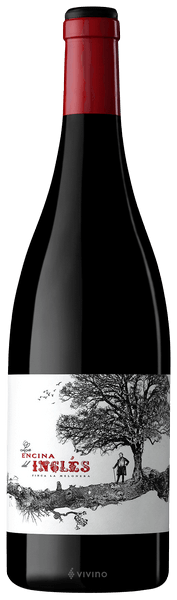
This history isn’t just something we tell guests about — it’s literally bottled a few minutes from Ronda. La Encina del Inglés (“the Englishman’s oak”), one of the wines from our partner estate near Ronda, takes its name directly from this period — a white wine made from recovered native grape varieties, named specifically in tribute to the English Romantic travellers whose accounts first put this landscape on the European map.
It’s included as part of our private Ronda Winery & Tapas tour — a morning tasting at the estate followed by a free afternoon in Ronda itself, walking the same gorge that so struck Richard Ford nearly two centuries ago.
Follow the same route the Romantic travellers took
Our private Ronda day trips include the Puente Nuevo, the old town, and — on our Winery & Tapas tour — a wine named for the English travellers who first made Ronda famous. Private Ronda Day Trip → or Ronda Winery & Tapas Tour → · WhatsApp us at +34 651 026 027
Frequently Asked Questions
Why did English travellers start visiting Ronda in the 1830s?
The Romantic movement across Europe drew travellers toward landscapes and cultures perceived as authentic and untouched by industrialisation — exactly what Ronda offered, with its dramatic gorge, layered Moorish and Christian history, and reputation as bandit country. English writer Richard Ford arrived in 1832 and later published an influential guidebook to Spain that gave Ronda lasting prominence in the English-speaking imagination.
Who was Richard Ford?
An English writer and art collector who travelled extensively through Spain between 1830 and the early 1830s, keeping detailed notebooks and sketches. His 1845 book, A Handbook for Travellers in Spain, is considered one of the defining works of English travel literature and was highly influential in shaping how British readers saw Spain, including Ronda specifically.
Which other famous travellers visited Ronda in the 19th century?
Washington Irving, Benjamin Disraeli, and Prosper Mérimée all passed through the region around the same period as Richard Ford. Later in the century, women travellers including Lady Louisa Tennyson (1850) and Penelope Holland (1867) documented their own journeys through the Serranía de Ronda.
Is there still a connection to this history in Ronda today?
Yes — Ronda holds an annual festival, Ronda Romántica, typically in late May or early June, recreating the 19th-century era with period costume and traditional food. There is also a dedicated viewpoint, the Mirador de los Viajeros Románticos, commemorating the Romantic-era travellers who helped make Ronda internationally known.
What is La Encina del Inglés?
A white wine from a partner estate near Ronda, made from recovered native Andalusian grape varieties and named in tribute to the English Romantic travellers of the 19th century. It’s included in our private Ronda Winery & Tapas tour.