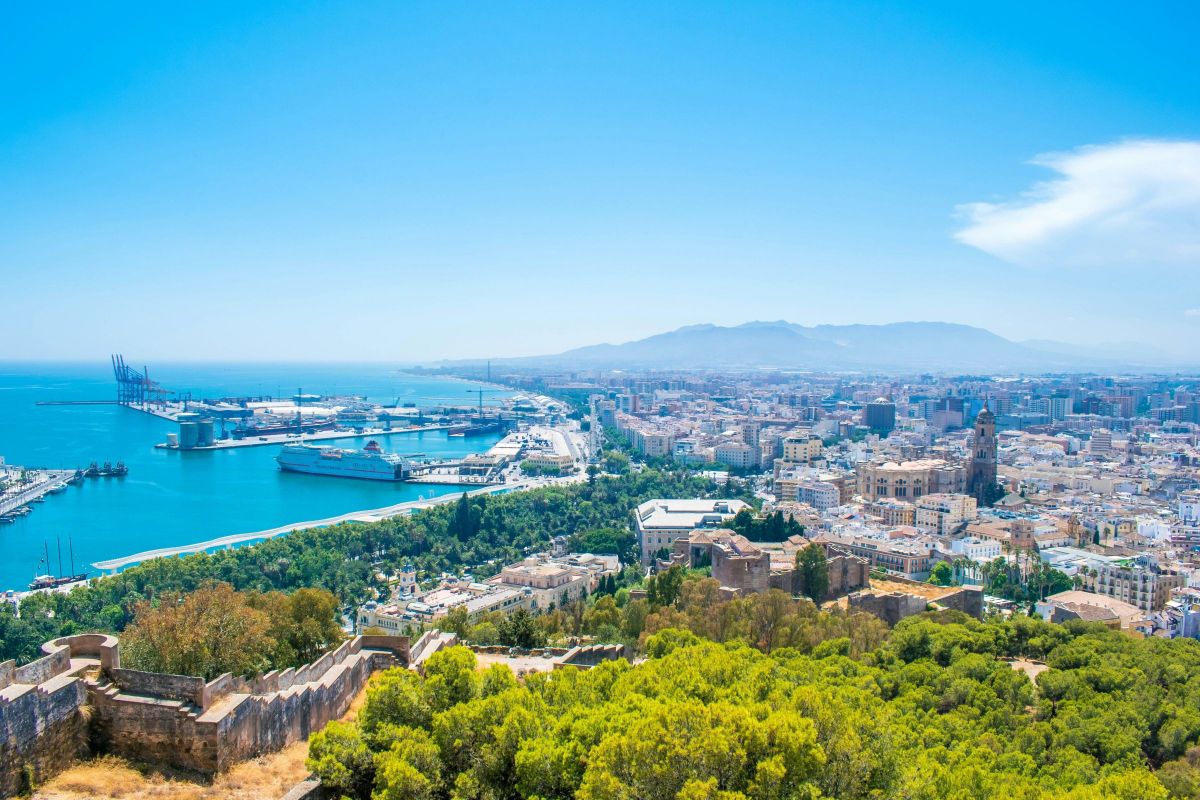
Málaga’s old town is about 1.5 km across at its widest point. The main sights — the Alcazaba, the Roman Theatre, the Cathedral, the Atarazanas Market, El Pimpi, and Calle Larios — are all within 15 minutes on foot of each other. You can cover the whole area in 3–4 hours at a relaxed pace, or 5–6 hours if you’re going inside everything and stopping for lunch. This guide gives you the walking route, the opening times, the prices, and the order that makes sense.
🎯 Key Takeaways
- Start at the Roman Theatre — it’s free, it’s impressive, and it sets up the layers of history you’ll see throughout the day.
- The Alcazaba opens at 9 AM — go early before the cruise ship groups arrive. €3.50 entry.
- Atarazanas Market closes at 3 PM — don’t miss it for morning coffee or lunch.
- Picasso Museum: €12, book online to avoid queues. Free on Sundays after 6 PM.
- El Pimpi — have a glass of Málaga sweet wine here. It’s been open since 1971 and the walls are covered in signed photos of everyone who’s eaten there.
⚡ TL;DR
Start at the Roman Theatre (free), walk up to the Alcazaba (€3.50, 1 hour), back down to the Cathedral (€6, 30 min), across to Atarazanas Market for lunch, Picasso Museum in the afternoon (€12), finish with a glass of sweet wine at El Pimpi. That’s the core route. The whole thing is walkable in half a day. Add the Gibralfaro Castle if you want the best view in the city.
Málaga’s old town is the part of the city that existed before it became a beach destination. The Phoenicians founded the port around 770 BC. The Romans built a theatre here in the 1st century BC that was then buried under 1,400 years of subsequent construction and only rediscovered in 1951. The Moors built the Alcazaba in the 11th century on top of Roman foundations. The Christians built their cathedral in 1528 and ran out of money before finishing the second tower — it’s still unfinished, 500 years later. And Pablo Picasso was born here in 1881, in a house on Plaza de la Merced that’s now a museum.
That’s a lot of history in a small area. Here’s the walking route that covers it properly.
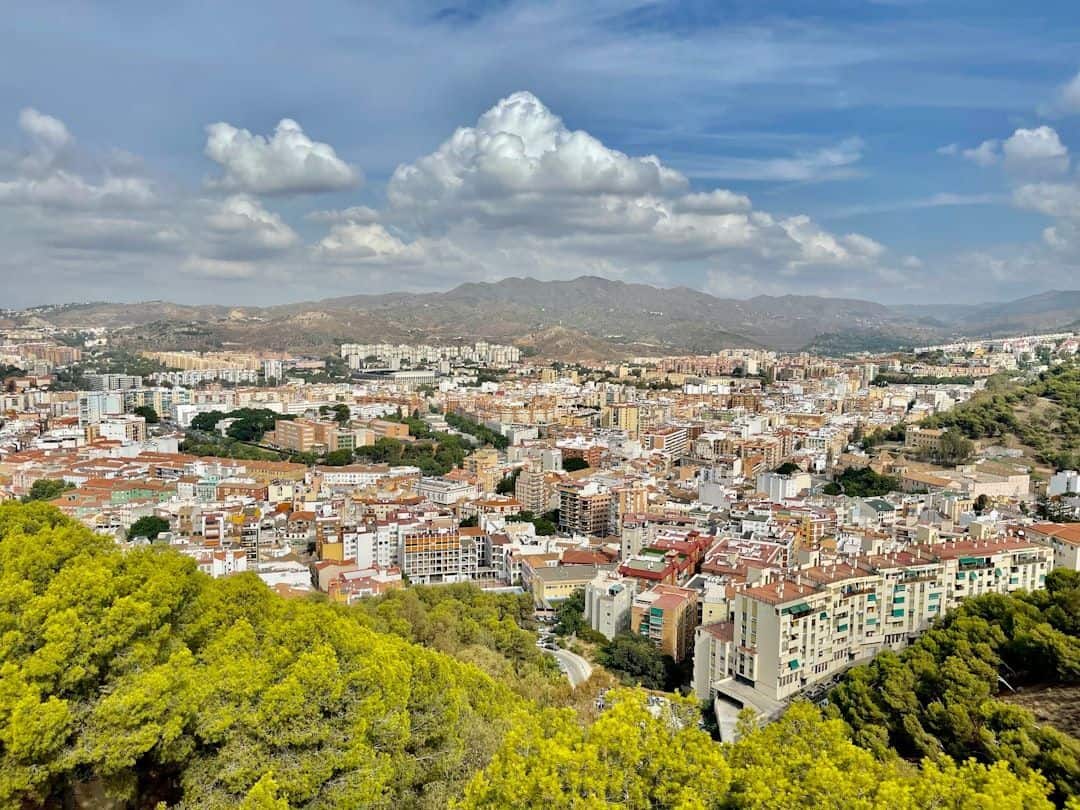
Stunning panoramic view of Malaga city from the surrounding hills, showcasing urban landscape and natural beauty.
Table of Contents
The Route — Overview
Total walking distance: approximately 3 km. Total time including visits: 4–6 hours depending on pace and how much time you spend inside each site.
| Stop | Entry | Time needed |
|---|---|---|
| Roman Theatre | Free | 20–30 min |
| Alcazaba | €3.50 | 45–60 min |
| Gibralfaro Castle (optional) | €3.50 / combo €5.50 | 45–60 min |
| Cathedral | €6 | 30–45 min |
| Atarazanas Market | Free | 20–30 min |
| Picasso Museum | €12 | 60–90 min |
| Plaza de la Merced & Picasso birthplace | Free / €3 | 20–30 min |
| El Pimpi | — | As long as you want |
Stop 1 — Roman Theatre (Teatro Romano)
Free entry. Opens 10 AM. No booking required.
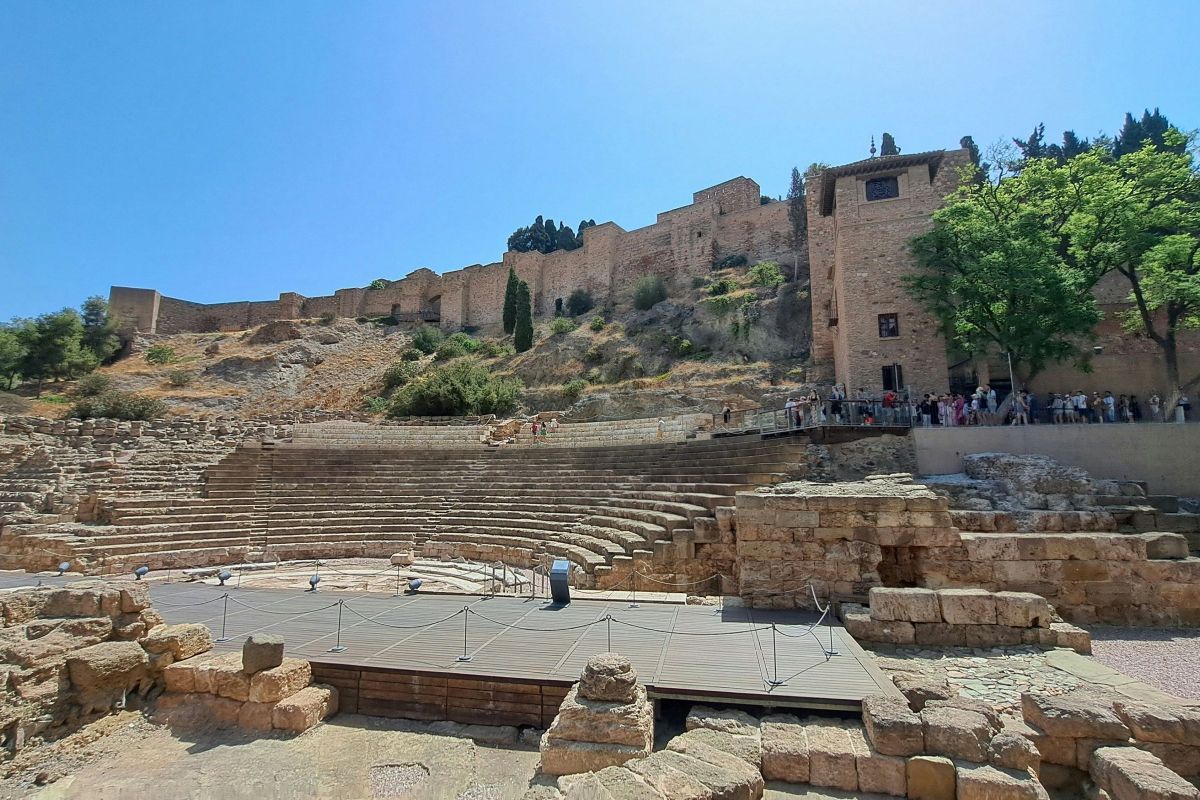
Start here. The Roman Theatre was built in the 1st century BC during the reign of Augustus and was in use for around 300 years. When the Roman Empire declined, it was quarried for materials — the seats, the stone, the marble — and what remained was built over. The Alcazaba was constructed directly on top of it in the 11th century. The theatre was only rediscovered in 1951 during construction work, and excavation began properly in the 1990s.
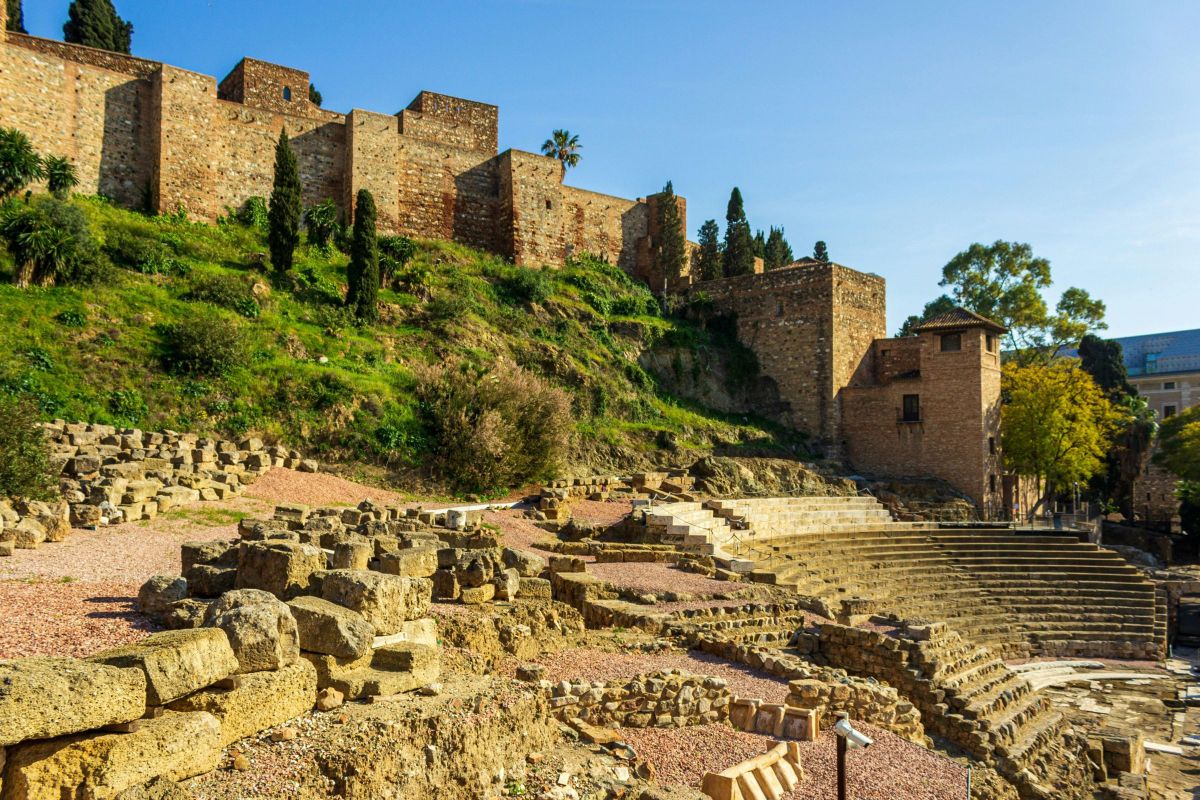
What you see today is the excavated cavea (the semicircular seating area) and the stage base, with the 11th-century Alcazaba wall visible rising directly above it. The juxtaposition — 1st-century Roman below, 11th-century Moorish above — is the best single image of Málaga’s layered history. The small interpretation centre beside the theatre is free and worth 15 minutes.
The theatre sits at the base of the Alcazaba hill on Calle Alcazabilla. From here, turn right to walk up to the Alcazaba entrance.
Stop 2 — The Alcazaba
€3.50 adult, free under 16. Opens 9 AM. Combo ticket with Gibralfaro: €5.50.
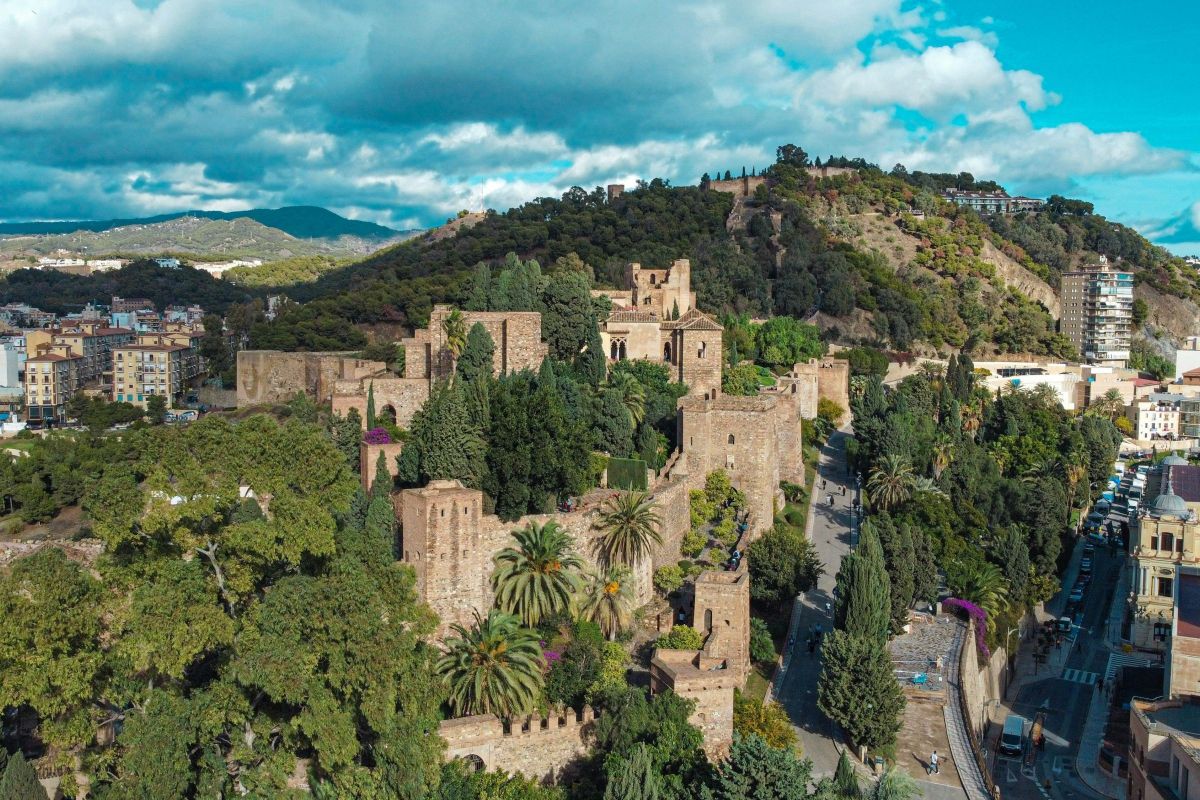
The Alcazaba is an 11th-century Moorish palace-fortress built by the Hammudid dynasty on Roman foundations using Roman materials — you can see Roman columns and carved stone repurposed throughout the structure. It was the residence of the Moorish rulers of Málaga until the Christian Reconquista took the city in 1487.
The visit follows a path upward through a series of fortified gates and courtyards, each more elaborate than the last, until you reach the upper palace with its gardens, fountains, and views over the port and the Mediterranean. The architecture is Nasrid in style — the same school as the Alhambra in Granada, though smaller and less intact. The gardens are at their best in spring when the roses and orange blossoms are flowering.
Allow 45–60 minutes. Go early — cruise ship groups tend to arrive from 10:30 AM onwards. At 9 AM you’ll often have the upper gardens almost to yourself.
Optional: Gibralfaro Castle
€3.50 adult, free under 16. Combo with Alcazaba: €5.50.
From the Alcazaba, a path leads uphill to the Gibralfaro Castle — a 14th-century Moorish fortress at the top of the hill, 130 metres above sea level. The castle itself has limited interior interest — the walls, a small museum, and a walk around the ramparts — but the views are exceptional: the old town below, the port, the bullring, the coast stretching east and west, and on clear days the mountains of North Africa across the Strait.
The climb from the Alcazaba takes about 20 minutes on foot. There’s also a bus (line 35) from Paseo del Parque if you’d rather not walk up. Worth it for the panorama, especially in the morning light. Skip it if you’re short on time — the Alcazaba views are good enough.
Stop 3 — Málaga Cathedral (La Manquita)
€6 adult. Opens 10 AM Monday–Saturday, 2 PM Sunday.
Walk back down from the Alcazaba and turn left along Calle Molina Lario to reach the Cathedral. Málaga Cathedral was begun in 1528 on the site of the main mosque after the Christian Reconquista. Construction continued for 250 years. The second bell tower was never completed — the money ran out, allegedly redirected to support the American Revolution in 1782. The missing tower earned it the nickname La Manquita — “the one-armed lady.”
The interior is large and ornate — choir stalls with 42 carved figures, a Baroque pipe organ, chapels decorated by various religious orders over three centuries. The roof terrace is open to visitors (included in entry) and gives a close-up view of the unfinished tower that you can’t get from street level. Wrap-around views of the old town rooftops. Worth the €6.
Stop 4 — Atarazanas Market
Free entry. Open Monday–Saturday 8 AM – 3 PM. Closed Sunday.
From the Cathedral, walk west along Calle Molina Lario and then north on Calle Nueva to reach the Atarazanas Market — a 5-minute walk. The building is a 14th-century Moorish shipyard (atarazanas) with a single surviving Moorish arch, now incorporated into the market’s main facade. Inside: fresh fish, vegetables, jamón, cheese, olives, and a dozen or so tapas bars along the sides.
This is where Málaga eats lunch. The tapas bars open around 11 AM and start serving food properly from noon. Order a glass of Málaga wine (sweet, local, served cold) and whatever fish looks fresh — boquerones fritos (fried anchovies), gambas (prawns), chopitos (small squid). Prices are honest — €2–4 per tapa, €1.50–2.50 for a glass of wine.
Casa Aranda — the legendary churros bar that’s been operating next to the market since 1932 — is around the corner on Callejón de los Mártires. If you’re there in the morning, this is the best churros stop in Málaga.
Stop 5 — Picasso Museum
€12 general entry. Book online to avoid queues. Free Sundays after 6 PM (last entry 7 PM, closes 8 PM). Opens 10 AM daily.
From the market, walk east along Calle Compañía and then north on Calle Granada to the Picasso Museum — about 10 minutes on foot. The museum is housed in the Buenavista Palace, a 16th-century Andalusian mansion. The permanent collection of 233 works covers all periods of Picasso’s career, donated partly by his daughter-in-law Christine Ruiz-Picasso and grandson Bernard. Not all are masterworks — the collection reflects what the family retained — but it includes significant pieces from several periods.
The building itself is worth the visit: the Moorish foundations visible in the basement, the Renaissance courtyard, the combination of palace architecture and modern museum design. Allow 60–90 minutes.
Stop 6 — Plaza de la Merced and Picasso’s Birthplace
Plaza free. Birthplace museum: €3 adult.
From the Picasso Museum, walk two minutes north to Plaza de la Merced — a large square that functions as the social centre of the old town. The obelisk at its centre is the tomb of General Torrijos, a liberal general executed outside Málaga in 1831 along with 48 companions. Pablo Picasso was born at number 15 on the plaza on 25 October 1881 — now the Fundación Picasso Museum with his birth room preserved. Worth €3 for Picasso enthusiasts; skippable if you’ve had enough museums by this point.
The square has good café terraces on the south side. A coffee here in the afternoon, watching the pigeons and the old town traffic, is one of the more pleasant things you can do in central Málaga.

Vibrant mural at El Pimpi in Málaga features a playful character with a wine glass, capturing the lively spirit of the city.
Stop 7 — El Pimpi
No entry fee. Opens noon daily.
Walk south from Plaza de la Merced down Calle Granada past the Alcazaba to El Pimpi — about 8 minutes. El Pimpi has been open since 1971, is built into a series of old wine cellars adjacent to the Roman Theatre and Alcazaba, and is covered wall-to-wall in signed photographs, paintings, and dedications from every politician, artist, filmmaker, and celebrity who’s eaten there over 50 years. Antonio Banderas is from Málaga and is a frequent visitor — his photo is prominently placed.
Order the vino dulce — Málaga’s sweet wine, made from Moscatel and Pedro Ximénez grapes grown in the hills above the city. It’s served cold, it’s unlike anything you’ll drink in the rest of Spain, and it costs €2–3 a glass. The food is good but not exceptional. The atmosphere is the point.
Practical Information
Best time to walk the route
Start at 9–9:30 AM. The Alcazaba is at its quietest before 10:30 AM when cruise ship groups typically arrive. The market is best from 11 AM for tapas. The Picasso Museum is least crowded on weekday mornings. In July and August, do the outdoor sections (Alcazaba, Gibralfaro) in the morning before noon — midday heat in the open is significant.
What to wear
Comfortable flat shoes — Málaga’s old town has a mix of paved streets and some slightly uneven surfaces, but nothing that requires hiking boots. The Alcazaba and Gibralfaro involve uphill walking. A hat and sunscreen in summer. In winter, a layer — the Alcazaba at 9 AM in January is cold.
Getting to the old town
From Málaga airport: Cercanías C-1 train to Málaga Centro station, €1.80, 12 minutes. The Roman Theatre is a 10-minute walk from the station. From the port: 10–15 minute walk along the seafront. By taxi from anywhere in the city centre: under €10.
Want a private guide for the Málaga old town?
We run private Málaga city tours with a local guide — Alcazaba, Roman Theatre, Cathedral, Atarazanas Market, Picasso Museum, and the historic streets. Door-to-door pickup from your hotel. See the Málaga private city tour → or WhatsApp us at +34 651 026 027.
Frequently Asked Questions
How long does it take to walk Málaga old town?
The walking route itself — Roman Theatre to El Pimpi — covers about 3 km and takes under an hour without stops. With visits inside the Alcazaba, Cathedral, and Picasso Museum, plus a market lunch, allow 4–6 hours for the full route. The Alcazaba alone is worth 45–60 minutes.
Is the Málaga old town walkable?
Yes — completely. All the main sights are within 1.5 km of each other and the streets are mostly flat with some uphill sections for the Alcazaba and Gibralfaro. The old town is compact enough that you can’t get seriously lost and there’s no need for public transport between any of the stops.
What is the best thing to see in Málaga old town?
The Alcazaba — an 11th-century Moorish palace-fortress built on Roman foundations, with gardens, fountains, and sea views. Entry is €3.50. The Roman Theatre directly below it (free) is the second essential stop — 1st-century Roman construction with an 11th-century Moorish wall rising directly above it, visible in the same frame. Between the two you have 2,000 years of history in a 15-minute visit.
Is the Picasso Museum worth visiting in Málaga?
Yes — particularly for the building (a 16th-century Andalusian palace) as much as the collection. The permanent collection of 233 works includes significant pieces across Picasso’s career but is not uniformly strong. Allow 60–90 minutes. Book online to avoid queues. Free entry on Sundays after 6 PM (last entry 7 PM).
What is La Manquita in Málaga?
La Manquita (“the one-armed lady”) is the nickname for Málaga Cathedral, referring to its single completed tower. Construction began in 1528 and continued for 250 years. The second tower was never completed — the money was allegedly redirected in 1782 to support the American Revolution. The unfinished tower has become one of Málaga’s identifying landmarks.
What is El Pimpi in Málaga?
El Pimpi is a bodega and restaurant that has been open since 1971, built into wine cellars adjacent to the Roman Theatre. It’s covered in signed photographs and dedications from decades of famous visitors — politicians, artists, filmmakers. Known specifically for Málaga sweet wine (vino dulce), made from Moscatel and Pedro Ximénez grapes grown in the hills above the city. A glass costs €2–3.
When does Atarazanas Market close?
Monday to Saturday, 8 AM to 3 PM. Closed Sunday. The tapas bars inside the market open around 11 AM and are busiest from noon to 2:30 PM. Arrive before 1:30 PM for the best selection and available seating.
Final Thoughts
The Málaga old town is a half-day well spent. The Roman Theatre and Alcazaba back-to-back are the core of it — everything else is a bonus. Go early for the Alcazaba, eat at the market around noon, Picasso Museum in the afternoon, El Pimpi before dinner. If you’d rather do it with a private local guide, we run private Málaga city tours with door-to-door hotel pickup. Or see our complete guide to things to do in Málaga for everything beyond the old town.