
The pinsapo is older than the Alps. It’s a relict fir that somehow survived the last ice age in three small pockets of the mountains around Ronda — and almost nowhere else on Earth. If you’ve driven between Marbella and Ronda and noticed dark, conical trees clinging to the high slopes, you’ve probably already seen them without knowing it. This guide covers what the pinsapo actually is, where the forests are today, and the best ways to walk among them — whether you want a serious hike or just a short stop on a day trip from the coast.
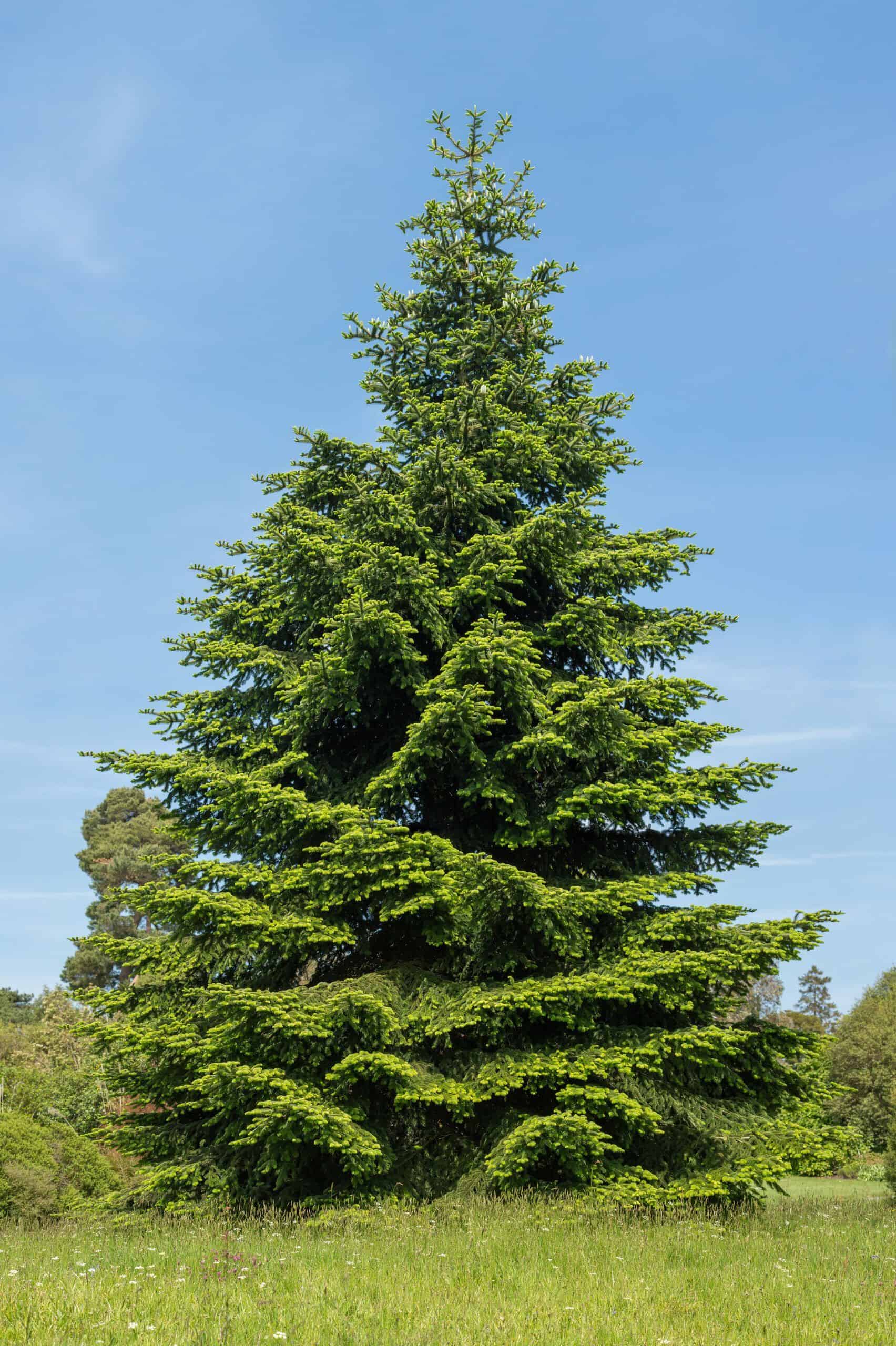
Table of Contents
What is the Pinsapo?
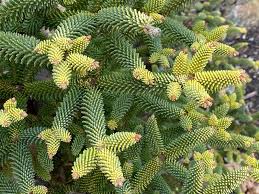
The pinsapo (Abies pinsapo) is a species of fir endemic to a small area of the Sierras Béticas in southern Spain — specifically three mountain ranges in the province of Málaga and Cádiz. It grows 15–25 metres tall, lives over 300 years, and is instantly recognisable by its short, stiff needles that spiral all the way around the branch instead of lying flat. That radial needle arrangement is the easy way to tell a pinsapo from any other fir or pine in the area.
The cones sit upright on the branches like candles and measure roughly 4–6cm long. They’re greenish at first and turn brown as they ripen. Unlike pine cones, they disintegrate on the tree rather than falling whole — which is why you rarely find a complete pinsapo cone on the forest floor.
Why the Pinsapo Matters: A Survivor from the Ice Ages
Most of Europe’s firs were pushed south by the glaciations and then retreated north as the climate warmed. The pinsapo didn’t retreat. It stayed put in a few cool, humid mountain pockets of Andalucía — isolated from its relatives for millions of years — and slowly evolved into its own species. Botanists call this a “relict species”. In plain terms: it’s a living fossil.
The tree was first described for Western science in 1837 by Swiss botanist Edmond Boissier, who was exploring the Sierra de las Nieves. Locals had obviously known about it for centuries — the name “pinsapo” is of Moorish-Andalusian origin — but Boissier put it on the botanical map. By the early 20th century, the forests had been badly damaged by logging, grazing, and fires, and the species came close to disappearing. Protection started in earnest after the Sierra de Grazalema was declared a Biosphere Reserve in 1977, followed by Sierra de las Nieves in 1995, and finally the creation of Sierra de las Nieves National Park in 2021 — Spain’s 16th national park, created largely to protect the pinsapar (pinsapo forest).
Where to See Pinsapo Trees in the Serranía de Ronda
There are essentially three places on the planet where wild pinsapo forests still grow, and all three are within an hour’s drive of Ronda:
- Sierra de las Nieves (Málaga province) — the largest and best-preserved pinsapar. This is now a National Park and holds roughly 3,000 hectares of pinsapo woodland. Main access points are Yunquera, Tolox, and the Quejigales forest road from Ronda.
- Sierra de Grazalema (Cádiz province) — the most famous individual trees live here, including the “Pinsapo de la Escalereta” in Benamahoma. The core pinsapar is a restricted-access zone and requires a free permit from the visitor centre.
- Sierra Bermeja (above Estepona) — a smaller population growing on unusual peridotite (red) soil. Very close to the coast but less developed for visitors. There’s an ongoing process to declare this area a National Park too. [VERIFY: current status of Sierra Bermeja National Park proposal]
The “Serranía de Ronda” as a geographical term loosely covers all three. If you’re basing yourself in Ronda for a day, Sierra de las Nieves is the easiest to combine with a town visit — the national park literally wraps around Ronda’s eastern and southern flanks.
Best Hiking Trails to See the Pinsapo
You don’t need to be a serious hiker, but the best pinsapo walking does involve some elevation. Here are the trails worth knowing about, sorted from easiest to hardest.
1. Sendero Cañada del Cuerno (Sierra de las Nieves)
Starts from the Los Quejigales forest area, reached by a 12km dirt track from the A-366 road. About 5km return, moderate effort, takes around 2 hours. You walk through pure pinsapar from almost the first step — big, cathedral-style trees, quiet forest floor, no crowds. This is the best short walk for seeing proper old-growth pinsapo without a full day’s commitment.
2. Sendero Luis Ceballos (Yunquera)
A well-signed loop starting from the Área Recreativa de los Quejigales or from near Yunquera village. Around 7km, moderate. Named after the Spanish botanist who helped save the species. Runs through mixed forest with regular pinsapo stands and ends at a mirador with views deep into the national park.
3. Ruta del Pinsapar (Sierra de Grazalema)
The classic pinsapo hike. A 12km linear trail from Zahara de la Sierra / Puerto de las Palomas over to Benamahoma, passing through the best-preserved pinsapar in Grazalema. It’s a restricted access area — you need a free permit, which must be requested in advance from the Centro de Visitantes El Bosque. The route is typically open October to May and closed during fire-risk months.
4. Torrecilla Summit (Sierra de las Nieves)
For fit hikers only. Torrecilla is the highest peak in the province of Málaga at 1,919m, and the classic route from Los Quejigales passes through dense pinsapar before rising above the tree line. Around 14km round trip with 900m of ascent, a full day out, and not something to attempt in poor weather or without map and water. The pay-off is walking through pinsapo forest at altitudes that are unusual for any fir species in southern Europe.
The Easier Way: Pinsapo Viewpoints Without a Long Hike
If you’re not up for a full hike but still want to see the trees, these spots work well on a Ronda day trip:
- Mirador Luis Ceballos (Yunquera) — a recently built wooden viewing tower just outside Yunquera with panoramic views over the pinsapar and, on clear days, the African coast.
- Puerto de las Palomas (A-372, Grazalema) — the pass between Zahara and Grazalema. Pull over at the roadside mirador and you’re looking straight at the restricted pinsapar slope. No walking required.
- Pinsapo de la Escalereta (Benamahoma) — a single, very old pinsapo reached by a short 1km walk from the village. Estimated at over 500 years old and around 26m tall. It’s easily the most photographed individual pinsapo in Spain.
- Centro de Visitantes El Bosque (Grazalema) — good interpretation centre with background on the species before you head out.
Want to see the pinsapos without organising hire cars, permits, and mountain roads yourself? CostaExcursions runs private day trips from Málaga and Marbella that combine Ronda with a short pinsapo walk or a pinsapo-themed itinerary in Sierra de las Nieves. Just you, your group, and a local driver who knows where the best viewpoints are on the day.
Best Time of Year to See the Pinsapo Forests
Pinsapos are evergreen so they look the same all year, but access conditions change a lot:
- Spring (April–June) — the best window overall. Mild weather, wildflowers in the meadows around the pinsapar, new cones forming.
- Autumn (mid-September–November) — second-best. Cooler walking temperatures and the Grazalema pinsapar trail reopens around October.
- Summer (July–August) — many of the restricted trails close completely because of fire risk. The forest itself can feel oppressive in the heat, and high-altitude routes like Torrecilla are doable but exposed.
- Winter (December–March) — striking if you catch snow (Sierra de las Nieves literally means “range of the snows”) but roads and forest tracks can be icy or closed. Grazalema is one of the wettest places in Spain — it often rains.
A practical note: the Quejigales access road in Sierra de las Nieves is a rough dirt track. A standard rental car can do it slowly in dry weather, but I wouldn’t attempt it after heavy rain without 4×4.
Frequently Asked Questions
Where can I see pinsapo trees near Ronda?
The closest pinsapo forests to Ronda are in the Sierra de las Nieves National Park, just 20–40 minutes east of the town. You can also see them in the Sierra de Grazalema (about 45 minutes west) and in smaller numbers in the Sierra Bermeja above Estepona. The Cañada del Cuerno trail in Sierra de las Nieves is the easiest short walk through pure pinsapar.
Do I need a permit to hike in the pinsapo forest?
Only for the restricted core area of the Sierra de Grazalema pinsapar — specifically the Ruta del Pinsapar between Zahara de la Sierra and Benamahoma. The permit is free but must be booked in advance through the Centro de Visitantes El Bosque. Trails in Sierra de las Nieves National Park are mostly open without a permit, though some summit routes have daily quotas.
How old is the oldest pinsapo tree?
The most famous individual, the Pinsapo de la Escalereta in Benamahoma (Sierra de Grazalema), is estimated to be over 500 years old. Most mature pinsapos in the protected forests are between 150 and 300 years old. The species can live longer than 500 years in favourable conditions.
Is the pinsapo the same as a Christmas tree?
No. Commercial Christmas trees are usually Norway spruce or Nordmann fir. The pinsapo is a separate species endemic to southern Spain, and cutting a wild pinsapo is strictly illegal. However, pinsapos are grown ornamentally in parks and gardens around Málaga — so if you see one outside the national parks, it’s almost certainly planted.
Can I combine a pinsapo visit with Ronda on a day trip?
Yes, easily. The most practical plan from Málaga or Marbella is a morning in Ronda, lunch in a local venta, and an afternoon walk or drive through the Sierra de las Nieves — the Yunquera and Quejigales areas are both close to Ronda. A full day of 8–9 hours is enough to do both properly at a relaxed pace.
Is the Sierra de las Nieves the only place with pinsapos?
No — wild pinsapo forests grow in three areas, all in southern Spain: the Sierra de las Nieves (Málaga), the Sierra de Grazalema (Cádiz), and the Sierra Bermeja (Málaga, above Estepona). A related species, Abies marocana, grows across the strait in northern Morocco. Sierra de las Nieves holds the largest surviving pinsapar.