
The short answer: choose Ronda if you want an easier, more flexible day with nothing to book in advance. Choose Granada if the Alhambra is the point of your trip and you can secure tickets weeks or months ahead. If you are staying in Málaga, both are about 1h20 to 1h30 away, so the choice comes down to the Alhambra and your planning. If you are staying in Marbella, Ronda is much closer (about 1 hour against about 2 hours for Granada).
Both are UNESCO-linked places with a strong claim to be the best day trip from the Costa del Sol, and they could hardly be more different. Ronda is a dramatic town on a gorge. Granada is a city whose great monument is a palace. This guide compares them by distance, time, planning, atmosphere, food and price, and then gives a direct recommendation by type of traveller.
We are Peter Fischer and Thomas Liedtke. We have run private day trips to both from Málaga and Marbella since 2015, so this comes from doing both many times.
If you only remember one thing: Ronda forgives poor planning, and Granada does not.
Table of Contents
Key takeaways
- Ronda: closer, flexible, no advance booking for the main sights, a day of about 6 to 7 hours.
- Granada: a longer day of about 9 hours, with Alhambra tickets that must be booked ahead.
- From Málaga: both about 1h20 to 1h30 by car.
- From Marbella: Ronda is about 1 hour, Granada about 2 hours.
- Two days? Do both, because they do not overlap.

The quick comparison
| Factor | Ronda | Granada |
|---|---|---|
| Distance from Málaga | About 100 km · 1h20–1h30 | About 158 km · 1h30 by car, or about 1h20 by AVE train |
| Distance from Marbella | About 65 km · 1 hour | About 185 km · 2 hours |
| Length of the day | About 6 to 7 hours | About 9 hours |
| Advance booking | Not needed for the main sights | Alhambra tickets must be secured ahead |
| Main draw | El Tajo gorge, Puente Nuevo, old town, bullring | Nasrid Palaces, Generalife, Alcazaba, Albaicín |
| Atmosphere | A small, dramatic hill town | A large, layered historic city |
| Food | Mountain cooking, oxtail stew, Ronda wines | Tapas culture and Moorish-influenced sweets |
| Private tour (2 people) | From €600 per group | From €800 per group |
| Best for | First-timers, families, scenery and food | Architecture lovers and planners |
Prices are per group, not per person. For larger groups, see the tour pages.
The case for Ronda
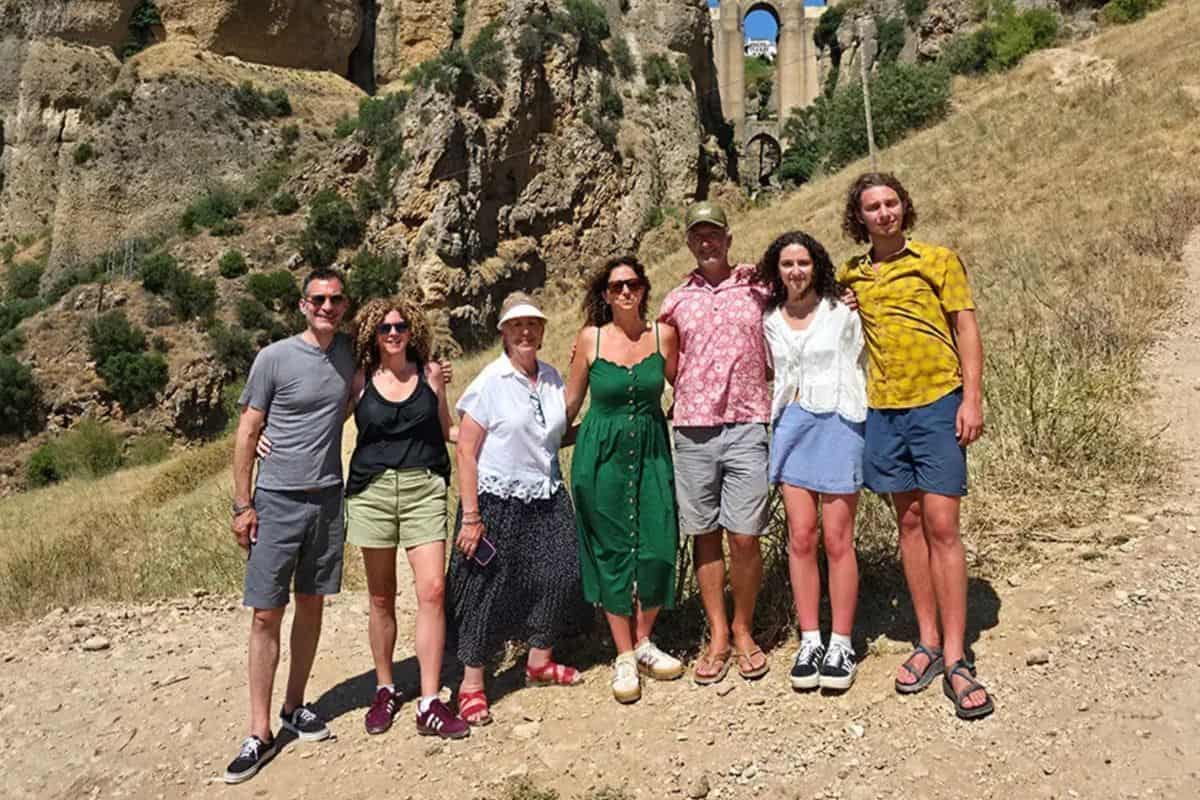
Ronda looks like its photographs. The Puente Nuevo spans a gorge nearly 100 metres deep, and the old town on both sides is easy to explore on foot. The main sights include the bridge and gorge viewpoints, the Arab Baths, the old Moorish quarter and the oldest bullring in Spain. The bullring entry is about €10 and is included in our private Ronda day trip. Ronda is also wine country, and our Ronda Winery & Tapas tour adds a winery visit with the tasting included.
Ronda does not have the artistic depth of the Alhambra, and it does not try to. It is a place to walk, look and eat well.
Who Ronda suits
First-time visitors, families, food lovers, travellers who prefer a flexible day, and anyone staying in Marbella.
The case for Granada
Granada is about the Alhambra, above all the Nasrid Palaces, with their carved plaster, wooden ceilings and courtyards with water. But the city is more than one monument. You can also walk the Albaicín quarter, enjoy the view of the Alhambra from the Mirador de San Nicolás, visit the Royal Chapel and eat tapas in the old town. The cost is logistics: a longer drive, a fixed time for the palaces and tickets that must be booked ahead.
Who Granada suits
Visitors who care about architecture and Islamic art, people who can plan ahead, and travellers based in Málaga. Our private Granada and Alhambra tour takes about 9 hours, with the Alhambra ticket included in the price.
The single biggest practical difference: Alhambra tickets
- What the general ticket includes: the Nasrid Palaces, the Alcazaba and the Generalife, on the same day.
- Fixed time for the Nasrid Palaces: your ticket shows an entry time for the palaces, and you must enter at that time.
- Availability: tickets are released up to a year ahead, and in busy periods they sell out weeks or months ahead, weekends first. We recommend securing them at least 2 months ahead.
- Same-day tickets: the ticket office sells same-day tickets, but availability is limited and often gone in busy periods. Do not rely on it.
- Name and ID: tickets are in your name, and ID is checked at access points. Bring the ID that matches the booking.
- Where to buy: only from the official Alhambra ticket portal, because resellers add large markups.
How to plan the visit around the Nasrid slot
- Check the entry time for the Nasrid Palaces on your ticket first.
- Arrive in good time, because queues form at the access point.
- Use the time before your slot for the Alcazaba, or for the gardens.
- Enter the Nasrid Palaces at your time, and allow around an hour for them.
- Finish with the Generalife and its gardens.
The whole Alhambra visit takes around 3 to 4 hours. With our private Granada tour, we organise the tickets and the order for you.

Food: different, not better
Eating well is a big part of both days, so it is worth deciding in advance which kind of meal you want.
Ronda is best for a long sit-down lunch with a view of the gorge, with dishes such as oxtail stew and reds from the Sierras de Málaga. Granada is best for street-level eating, with tapas and a Moorish influence in its sweets and teas. Neither wins outright, so the choice depends on what kind of meal you want.
Which is better for a visitor in Málaga, and which without a car?
| Situation | Best choice |
|---|---|
| Staying in Málaga, flexible planner | Ronda or Granada: both about 1h20–1h30 by road. |
| Staying in Málaga, the Alhambra is the goal | Granada, with tickets secured at least 2 months ahead. |
| Staying in Marbella | Ronda: about 1 hour, against about 2 hours for Granada. |
| No car, independent | Granada is easier by train. Ronda is harder by public transport. |
| No car, private tour | Either: we collect you at your hotel, apartment or cruise terminal. |
| Travelling with children | Ronda for a shorter day without timed entry. |
| Little time to plan | Ronda, because nothing needs booking weeks ahead. |
What if you have two days?
Two days is the ideal answer, because the two places complement each other rather than compete.
Do both, because they do not overlap. Day one is Ronda, about 1h20 to 1h30 each way from Málaga. Day two is Granada, by private tour or by train, with Alhambra tickets booked ahead. From Marbella, Granada is a longer day, but it is feasible with an early start.
What a typical day looks like
| Stage | Ronda | Granada |
|---|---|---|
| Pickup | Hotel, apartment or cruise terminal | Hotel, apartment or cruise terminal |
| Drive out | About 1h20–1h30 from Málaga, about 1 hour from Marbella | About 1h30 from Málaga, about 2 hours from Marbella |
| Main visit | Bridge, gorge viewpoints, old town, bullring | Alhambra at your fixed palace time, then the old town |
| Lunch | Long lunch in Ronda, with local wine | Tapas in the city centre |
| Free time | Wandering the old town | Albaicín and the Mirador de San Nicolás |
| Return | Back by evening | Back later in the evening |
The Ronda day has slack in it, so it can be stretched or shortened. The Granada day is built around a fixed time at the palaces, so it has less room to move, and arriving late can cost you the slot.
Mistakes to avoid
- Booking Granada last minute. The Alhambra is the one place on this list where waiting can leave you without a ticket.
- Buying from a reseller. Use the official Alhambra portal, because resellers add large markups.
- Expecting to do both in one day. Each needs a full day.
- Choosing Granada from Marbella without an early start. The drive is about 2 hours each way.
- Forgetting ID. Alhambra tickets are in your name and ID is checked.
Verdict: which should you choose?
- Choose Ronda if: you have not booked tickets, you are staying in Marbella, you travel with children or mixed energy levels, you value food and scenery, or you want a flexible day.
- Choose Granada if: the Alhambra is your main reason, you love architecture or Islamic art, you can plan ahead, you have about 9 hours and you are staying in Málaga.
- Choose both if: you have two days or plan to come back.
Book your private day trip
Costa Excursions runs private tours to both destinations from Málaga, Marbella and the Costa del Sol, with hotel pickup and flexible itineraries. The private Ronda day trip starts at €600 for 2 people and €890 for 7. The Granada and Alhambra tour starts at €800 for 2 people and €1,120 for 7, with the Alhambra ticket included. Prices are per group. Not sure which to pick? Message us on WhatsApp, or compare all day trips from Málaga.
Frequently asked questions
Is Ronda or Granada better for a day trip from Málaga?
Neither is better for everyone. Choose Ronda if you want an easier, more flexible day with no tickets to book ahead. Choose Granada if the Alhambra is your priority and you can plan weeks or months in advance. Both are about 1h20 to 1h30 from Málaga by road.
Which is better without a car, Ronda or Granada?
Granada is easier to reach independently from Málaga, because there is a fast train link of about 1h20. Ronda is harder without a car, because public transport is slower and less convenient. A private tour solves this for both, because we collect you at your hotel.
How far is Ronda from Málaga compared with Granada?
Ronda is about 100 km and 1h20 to 1h30 from Málaga, and Granada is about 158 km and 1h30 by car. From Marbella, Ronda is about 65 km and 1 hour, while Granada is about 185 km and 2 hours.
Is the Alhambra worth a day trip from Málaga?
Yes, if you are interested in architecture, Islamic art and history. The Nasrid Palaces are the reason to go. If the Alhambra is not a priority, Ronda usually gives a more relaxed day.
How far in advance should I book Alhambra tickets?
Tickets are released up to a year ahead, and in high season they sell out weeks or months in advance, weekends first. We recommend securing them at least 2 months ahead, and buying only from the official Alhambra ticket portal.
Can you buy Alhambra tickets at the entrance on the same day?
The Alhambra ticket office sells same-day tickets, but availability is limited and often sold out in busy periods, so it is a gamble. Do not plan a day trip around it.
Does the Alhambra general ticket include the Nasrid Palaces, Alcazaba and Generalife?
Yes. The general ticket covers the Nasrid Palaces, the Alcazaba and the Generalife on the same day, but the Nasrid Palaces have a fixed entry time shown on your ticket.
What ID do I need for the Alhambra?
Alhambra tickets are in your name, and ID is checked at access points. Bring the passport or ID that matches the booking, and for online purchases the card used to pay if you need to collect tickets.
Which is better for families, Ronda or Granada?
Ronda is usually easier for families: it is a shorter day with no timed entry, and children enjoy the gorge, the bridge and the bullring. Granada suits older children who can manage a long walking day.
Can you do Ronda and Granada in one day?
Not realistically. Each needs a full day, and the drives alone add several hours. If you have two days, do one on each.