Ronda is one of Spain’s most exciting emerging wine regions — and still one of the most overlooked. With more than 20 bodegas producing high-altitude reds, whites and rosés in the DO Sierras de Málaga designation, this mountain corner of Andalusia has quietly built a reputation for terroir-driven wines that compete with much more famous regions.
This guide covers the 10 best wineries to visit in Ronda — who they are, what they make, and how to visit them — written by a local tour operator who drives wine guests to these bodegas every week.
Book a Ronda Winery & Tapas Tour →
Table of Contents
Why Ronda Is a Serious Wine Region
Ronda sits 750 metres above sea level, with hot dry summer days and cool mountain nights — the “day-night swing” that premium-wine regions dream of. Grapes struggle, which means they concentrate flavour. Add limestone and clay soils, low rainfall, and old Phoenician wine-making traditions, and you have a region that since the 1990s has produced wines winning international awards.
Local growers focus on Petit Verdot, Tempranillo, Syrah, Cabernet Sauvignon and Merlot for reds, with Chardonnay and Sauvignon Blanc increasingly grown for whites. Several bodegas also work with lesser-known varieties: Tempranillo Blanco, Pinot Noir, Blaufränkisch and Zweigelt. The region’s wines carry the DO Sierras de Málaga designation.
Ronda’s ancient cousin Acinipo — the Roman town 14 km away — literally translates as “the city of wine.” So while the modern industry is young, the tradition runs very deep.
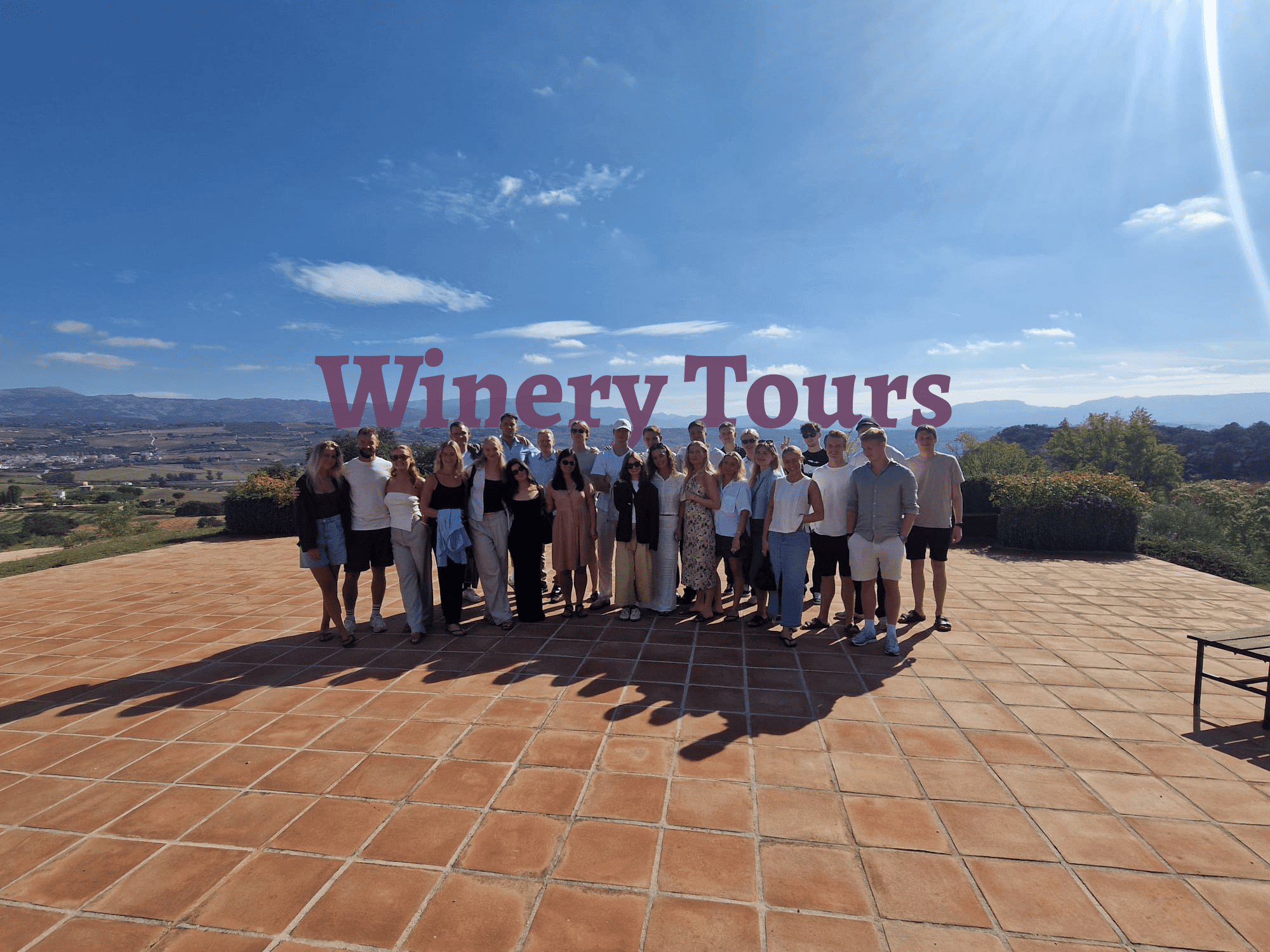
Tour group exploring a scenic winery in Costa del Sol, perfect for corporate retreats and team-building activities.
The Top 10 Wineries in Ronda
1. Bodega Doña Felisa
Located between La Cazalla and Setenil, Bodega Doña Felisa was founded by José Maria Losantos and his wife Gema Alonso. The setting is idyllic — rolling vineyards against the backdrop of the Serranía de Ronda mountains. They’re known for their Chinchilla line of wines and pair tastings with excellent traditional meals. Tours include a vineyard walk, cellar visit and seated lunch.
Signature wines: Chinchilla 8 meses, Chinchilla Doble 12 · Great for: a relaxed afternoon with food
2. Bodega Descalzos Viejos
One of our favourite bodegas to bring guests to. “Descalzos Viejos” (Old Barefoot Ones) is named after the 16th-century Discalced Carmelite monastery it’s built inside — the original frescoes are still on the walls of the tasting room. Just 5 minutes from Ronda’s centre, the views over the Tajo gorge are extraordinary. The wines are small-production blends of Syrah, Garnacha, Merlot and Cabernet Sauvignon, with a Chardonnay white.
Signature wines: DV (Syrah-led blend), XV (single-vineyard Syrah) · Great for: wine + architecture enthusiasts; book ahead — groups are small
3. Bodega F. Schatz
Friedrich Schatz moved from South Tyrol to Ronda in 1982, bringing with him generations of European winemaking tradition. Today, Bodega F. Schatz is one of Spain’s most respected biodynamic wineries, producing 9 grape varieties (including rare ones like Lemberger, Muskattrollinger and Pinot Noir) on small plots at high altitude. A visit here is as much philosophy as tasting — the Schatzes are deeply committed to natural agriculture.
Signature wines: Finca Sanguijuela, Schatz Rosado · Great for: biodynamic / natural wine lovers
4. Bodega Cortijo Los Aguilares
One of the most ambitious estates in Ronda — 1,000+ hectares of farmland with around 40 hectares of vineyards. Cortijo Los Aguilares focuses on Tempranillo, Syrah, Merlot, Petit Verdot and notably Pinot Noir (a rarity in southern Spain). Their wines consistently win national awards and have strong export success. The visit includes the vineyards, modern cellar and barrel room.
Signature wines: Tadeo (Petit Verdot), Pinot Noir, Tintos · Great for: serious wine enthusiasts wanting a proper technical tasting
5. Bodega Kieninger
Austrian-born Martin Kieninger moved to Ronda in 1998 and introduced three Austrian grape varieties — Blaufränkisch, Blauburgunder and Zweigelt — to the region’s terroir. That’s made him one of Ronda’s most distinctive producers. Small-batch, high-quality, and a warm personal welcome. Tastings should be booked at least 3 days in advance as the winery is small.
Signature wines: Zweigelt, Blaufränkisch Reserva · Great for: travellers curious about Central European grapes in Spanish soil
6. Bodega García Hidalgo
Family-owned, warm, and just 5 km from Ronda — García Hidalgo is one of our most popular recommendations for first-time wine visitors. The family takes you through the vineyards themselves, and tastings come with generous tapas. They grow Tempranillo, Syrah, Merlot and Cabernet, and the hilltop views over the countryside are stunning.
Signature wines: Zabel de García Hidalgo Crianza, Reserva · Great for: classic Andalusian hospitality and the warmest welcome in Ronda
7. Bodega Joaquín Fernández
One of Ronda’s most committed organic producers. Joaquín Fernández runs his estate with strict ecological principles and the wines reflect it — clean, expressive, true to the terroir. Alongside wine tastings, they offer horse riding through the vineyards and organic olive oil tastings, making this one of the more experiential bodegas.
Signature wines: Alvesis Crianza, Alvesis Reserva · Great for: organic wine drinkers; families; horse riders
8. Samsara Wines
A younger project by a group of wine enthusiasts, Samsara Wines overlooks Ronda’s iconic Puente Nuevo bridge. They focus on Spanish varieties — Tempranillo, Garnacha and Syrah — with a modern, contemporary style. Smaller production, limited visiting windows, but worth the effort if you can get in.
Signature wines: Samsara Tinto, Samsara Garnacha · Great for: small-group tastings with spectacular bridge views
9. Bodegas Morosanto
Sitting on the road between Ronda and Setenil de las Bodegas, Morosanto is built on a historic estate with both Moorish and Roman ruins on the property. The name combines “Moro” (Moor) and “Santo” (saint), reflecting Ronda’s layered past. The winery produces red, rosé and white wines from Tempranillo, Syrah, Petit Verdot and Cabernet Sauvignon.
Signature wines: Lucrecio (reds), Morosanto Blanco · Great for: combining wine with archaeology/history; easy stop en route to Setenil
10. La Melonera (Finca La Melonera)
Founded in 2003 by Javier Suqué and his cousin with a mission to revive Ronda’s pre-phylloxera grape varieties. La Melonera is now one of the region’s most visited bodegas — a fully organic estate producing limited-run wines using 19th-century techniques and recovered native grape varieties including Moscatel Morisco, Pedro Ximénez, Doradilla, Vijiriega and Blasco. Their tasting room and grounds are set up specifically to welcome visitors.
Signature wines: Payoya Negra, MH Selección Tintilla Málaga · Great for: travellers interested in heritage grape revival; our most-booked winery tour destination
👉 Our Ronda Winery & Tapas Tour visits La Melonera as its main stop.

Beautiful vineyard scene showcasing lush grape clusters in Malaga’s renowned wine region.
Best private winery tours near Ronda: how to choose
The best private winery tour near Ronda is one where the winery visit is pre-booked, a driver handles the roads, and tastings, tapas and free time in Ronda are in a single day. Most Ronda bodegas are small family operations that do not accept walk-ins, so a private tour removes the main obstacle: getting a confirmed visit and getting there without driving after tasting. Private winery tours from Málaga or Marbella start at €600 per group of two. Direct tastings at the bodega usually cost €15 to €40 per person.
Private tour, rental car, taxi or Wine Information Centre?
| Option | Best for | Main drawback |
|---|---|---|
| Private winery tour (from €600 per group) | Couples and groups who want tastings, pickup and no driving | Higher cost than a single tasting if you are travelling alone |
| Rental car | Full flexibility, several wineries | The driver cannot taste, and fatigue on mountain roads |
| Taxi plus one winery visit | A budget single visit | Limited to one winery, and return transport can be hard to arrange |
| Wine Information Centre in Ronda | A quick introduction to local wine | The vineyards are not included |
What a good private winery tour should include
- A pre-booked visit at a bodega that accepts visitors (about 10 to 12 of the 20+ wineries in the area do)
- Door-to-door pickup and a driver, so everyone can taste
- A vineyard and cellar visit, not just a tasting room
- Tapas or food with the wine
- Free time to see Ronda, such as the Puente Nuevo and the old town
- A clear price per group, with what is and is not included stated up front
Which winery suits you?
- First visit: Bodega García Hidalgo or Finca La Melonera.
- Heritage grapes and a story: Finca La Melonera, which revives native varieties.
- A historic setting: Bodega Descalzos Viejos (a 16th-century monastery) or Bodegas Morosanto.
- Biodynamic and Austrian-style wines: Bodega F. Schatz or Bodega Kieninger.
Winery tours for groups
Our private Ronda winery tour takes up to 7 people in one vehicle, with prices from €600 for 2 people to €925 for 7. Larger groups are possible on request, so message us on WhatsApp with your group size and date.
Our private Ronda winery tour
Our private Ronda Winery & Tapas tour visits Finca La Melonera for a vineyard walk, cellar tour, a tasting of 4 to 5 wines and a tapas pairing, then gives you about 2 hours in Ronda. It includes private pickup from Málaga or Marbella, an air-conditioned vehicle for up to 7 people and an English-speaking driver-guide. Prices run from €600 for 2 people to €925 for 7. Lunch in Ronda and optional bullring entry are not included. Not sure it fits your group? Message us on WhatsApp and we will tell you honestly.
How to Visit Wineries in Ronda
Most Ronda bodegas are outside the town, scattered across the countryside between Ronda, Setenil and El Burgo. Without a car, they’re genuinely hard to reach. The table above compares your options: a private winery tour, a rental car, the Wine Information Centre, or a taxi plus a single winery visit.
Our strong recommendation
Stick to 1–2 bodegas per day. Tasting fatigue is real, and the drives between wineries are slow mountain roads. For most visitors, a good sequence is:
- Morning visit to the Ronda Wine Information Centre (Centro de Interpretación del Vino) in the old town for an overview
- Afternoon visit to one bodega with a proper tour and lunch
- Optional: a shorter tasting at a second smaller bodega on the way back

Enjoy a relaxing day tasting local wines in Malaga’s beautiful wine country. Perfect for wine lovers exploring the region.
When Is the Best Time to Visit Ronda Wineries?
- April–June: vines budding and flowering, mild weather, lovely green landscape
- September (harvest): the most atmospheric time to visit — you may see the grape harvest (vendimia) in action, though some bodegas limit visits during peak harvest days
- October–November: golden autumn colour on the vines, mild temperatures, wineries less busy
- July–August: very hot (35°C+), but tastings in cool cellars are a welcome relief
- December–March: quieter season; many bodegas on reduced hours — always book ahead
Frequently Asked Questions
What is the best private winery tour near Ronda?
The best private winery tour near Ronda is one with a pre-booked bodega visit, door-to-door pickup so everyone can taste, a vineyard and cellar visit, tapas, and free time in Ronda. Ours visits Finca La Melonera and costs from €600 per group of 2 (up to €925 for 7 people).
How many wineries are in Ronda?
More than 20 bodegas in the DO Sierras de Málaga around Ronda. About 10–12 of them welcome visitors for tastings and tours on a regular basis.
How much does a Ronda winery tour cost?
Individual winery tastings range from €15 to €40 per person depending on the bodega and what’s included. Our private Ronda Winery & Tapas Tour starts at €600 per group (up to 7 pax) and covers transport, guide, winery visit, tapas pairing and Ronda old town.
Do I need to book Ronda wineries in advance?
Yes — almost always. Most Ronda bodegas are small family operations and don’t accept walk-ins. Book at least 1 week ahead, and 3 weeks ahead in high season (April–June, September–October).
What grape varieties are grown in Ronda?
Reds: Petit Verdot, Tempranillo, Syrah, Cabernet Sauvignon, Merlot, Pinot Noir. Whites: Chardonnay, Sauvignon Blanc. Several bodegas also grow rare varieties: Blaufränkisch, Zweigelt, and — at La Melonera specifically — recovered native varieties including Moscatel Morisco, Pedro Ximénez, Doradilla, Vijiriega and Blasco.
Can you walk to Ronda wineries?
Most bodegas are 5–20 km from the town, so not practical on foot. The exception is Bodega Descalzos Viejos, which is walkable (about 20 minutes down into the gorge from Ronda centre) — though the walk back up is steep.
Are Ronda wines any good?
Yes — increasingly so. Ronda wines regularly win Spanish national awards and feature in international wine publications. Producers like F. Schatz, Cortijo Los Aguilares and Descalzos Viejos are considered among the finest small-batch wineries in southern Spain.
Which Ronda winery is best for first-time visitors?
For a welcoming, classic experience: Bodega García Hidalgo or La Melonera. For architecture and views: Descalzos Viejos. For serious wine lovers: Cortijo Los Aguilares or F. Schatz.
Can I combine a winery visit with a tour of Ronda?
Yes — and it’s how most of our guests prefer to do it. A typical day combines 2–3 hours at a bodega with a walking tour of Ronda’s old town, Puente Nuevo and the bullring. See our full day trip from Malaga to Ronda guide for how to plan the day.
Book a Private Ronda Winery Tour
We’ve been running private Ronda Winery & Tapas Tours from Malaga and Marbella since 2015. Our guests visit Finca La Melonera for a full vineyard walk, cellar visit and guided tasting paired with local tapas, then explore Ronda’s old town with a licensed guide. Door-to-door pickup at your hotel or cruise terminal.
From €600 per group of 2 (up to €925 for 7 people)
Includes: private driver, licensed guide, winery visit & tasting, tapas pairing
Duration: ~8 hours
Pickup: Malaga, Marbella or cruise terminal